
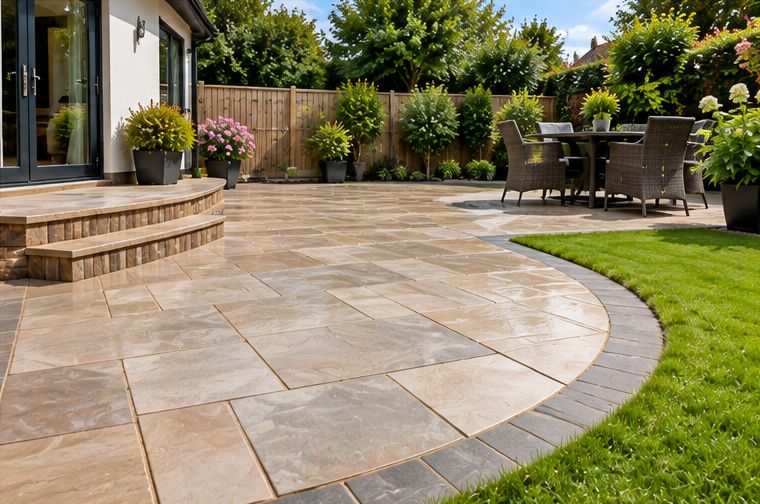
Paving is about as low-maintenance as a garden surface gets, but it is not no-maintenance. In a damp climate, leaves, soil and shade soon give algae and moss a foothold, and the way you clean can either help a patio age gracefully or wear it out before its time.
This guide covers what to do, and what to avoid, from the day the last joint is filled. The basics are the same for most materials, with a few differences we point out along the way. If you are still choosing a material, our guide to porcelain, sandstone or concrete compares how much looking after each one needs, and our patio and paving page covers the work we do.
The first few weeks
Mortar and jointing compounds carry on hardening for some time after they look dry. For the first couple of weeks it is best to go gently: walk on the patio, but hold off on dragging heavy planters or furniture across it, and do not pressure wash it. We protect fresh work from heavy rain while it goes off, and once it has set, ordinary wet weather will not harm it.
Some new paving shows a white, powdery bloom in its first months. This is usually efflorescence, where natural salts in the cement or the slab are drawn to the surface as the patio dries out. It looks alarming but is normally harmless and fades on its own with rain and time. Scrubbing hard at it rarely helps and can scuff the surface, so give it a season before you reach for an efflorescence remover.
A simple routine
Most of the work of keeping a patio clean is simply not letting dirt settle.
- Sweep regularly. A stiff brush once a week or so clears leaves, soil and seeds before they break down and stain or root in the joints.
- Clear leaves quickly in autumn. Wet leaves left in piles leave dark tannin marks, especially on pale stone.
- Wash a few times a year. Warm water, a mild detergent or a cleaner made for your paving, and a stiff brush are enough for most dirt.
- Deal with spills straight away. Oil, fat, red wine and rusty metal all stain porous stone faster than you would expect.
Pressure washers: handle with care
Pressure washers are satisfying to use, but they are the most common way patios get damaged. On porcelain and good concrete, a moderate setting held at an angle is usually fine. On natural stone, a high-pressure jet can pit the surface and strip away the weathered face, and on any patio it can blast out mortar and brush-in jointing, leaving gaps for weeds and water.
If you do use one, keep the nozzle moving, stay well back from the surface, avoid aiming straight into the joints, and check the manufacturer's advice for the paving and the jointing product. A soft wash with a suitable cleaner, left to work and then rinsed, is often kinder and does just as good a job.
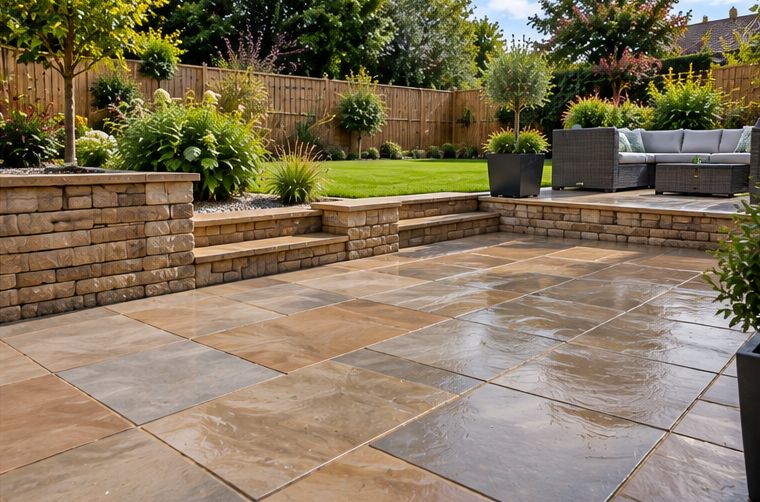
Green algae, moss and black spots
In shaded, damp South Wales gardens, a green tinge on the paving is almost inevitable over time. Improving light and air helps more than any product: trim back overhanging shrubs and trees, keep pots from sitting in one place for months, and make sure water drains off rather than lingering. Where cutting back trees is involved, our tree surgery and hedge care page explains what we can do.
Patio cleaners designed for algae are widely sold; follow the instructions, as some need to be left to work over weeks rather than scrubbed off. The small black spots that appear on Indian sandstone are usually lichens, and they are stubborn. Dedicated black spot removers exist, but test any product on a spare offcut or a hidden corner first, because some chemicals can mark certain stones. Acidic cleaners in particular should be kept off limestone and some other natural stones.
Joints and weeds
Keep an eye on the joints. If you notice gaps opening, crumbling mortar or weeds growing through, deal with them early. Pull weeds while they are small, rake out any loose material and repoint or refill with a jointing product suited to your paving. Well-filled joints are the best weed control there is, because they leave nothing for a seed to grow in.
On block paving, weeds tend to grow in the jointing sand. Brush it clean regularly and top up the kiln-dried sand in any joints that have dropped, which also keeps the blocks locked tight together. Our guide to block paving driveways explains why those joints matter.
Should you seal a patio?
Sealing is optional, and opinions differ. A good sealer can make porous stone and concrete easier to clean and more resistant to staining, and some people like the richer colour a colour-enhancing sealer gives. On the other hand, sealers need reapplying every few years, can change the look of the stone, and a poorly applied one may trap moisture or wear patchily. Porcelain does not normally need sealing at all.
If you want a sealed finish, the patio needs to be completely clean and dry first, and the sealer must be one made for your type of paving.
Winter care
Frost and ice are hard on any paving that holds water, so good drainage and sound joints matter most in winter. If you need to grit steps and paths, bear in mind that rock salt can mark or damage some natural stones, concrete products and fresh mortar; check the advice for your paving, and consider a stone-safe de-icer or sand for grip. Metal shovels can scratch softer surfaces, so a plastic one is kinder.
Tony and the team are always happy to give advice on caring for a patio we have laid, or to look at an older one that has lost its looks, whether you are in Newport, Aberdare or anywhere in between. Get in touch for free advice.
Talk to T J Landscapes about your garden
Free quotes and honest advice across South Wales.
Questions People Ask
What is the white powder on my new patio?
Usually efflorescence, natural salts drawn to the surface as the paving and mortar dry out. It is common in the first months and generally fades with rain and time.
Can I use bleach on my patio?
It is best avoided. Bleach can discolour some stones, harm plants and lawn at the edges, and does not always kill algae at the root. A cleaner made for paving is a better choice.
How often should I clean my patio?
Sweep it regularly, and give it a proper wash a few times a year, usually in spring and after autumn leaf fall. Shady patios need a little more attention than sunny ones.
Is it worth having an old patio professionally cleaned?
Sometimes a good clean and repoint brings an old patio back to life. If slabs are loose, sunken or cracked, cleaning will not fix that, and relaying the worst areas may be the better option.
Does porcelain need sealing?
Generally not. Outdoor porcelain absorbs very little water, so a sealer has little to do. Keep it swept and washed and it should keep its colour well.