Outdoor porcelain has changed what a patio can look like. The slabs are precise, flat and consistent, they barely absorb water, and they come in finishes that copy slate, limestone, concrete and even timber boards. For a garden that stays damp for much of the year, that low absorbency is the main attraction.
It is also one of the most demanding materials to lay, which is why a porcelain patio is only as good as the person fixing it. Here we explain what outdoor porcelain is, the choices you will face, the way we lay it as part of our patio slabbing and paving service, and what looking after it involves.
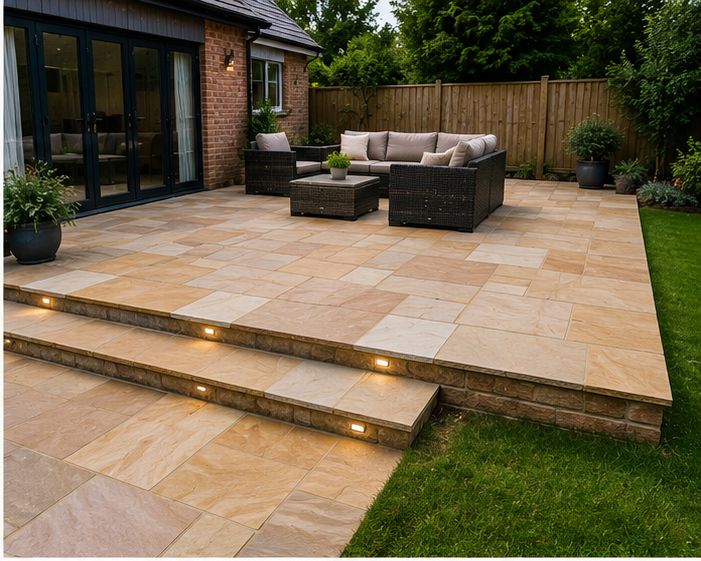
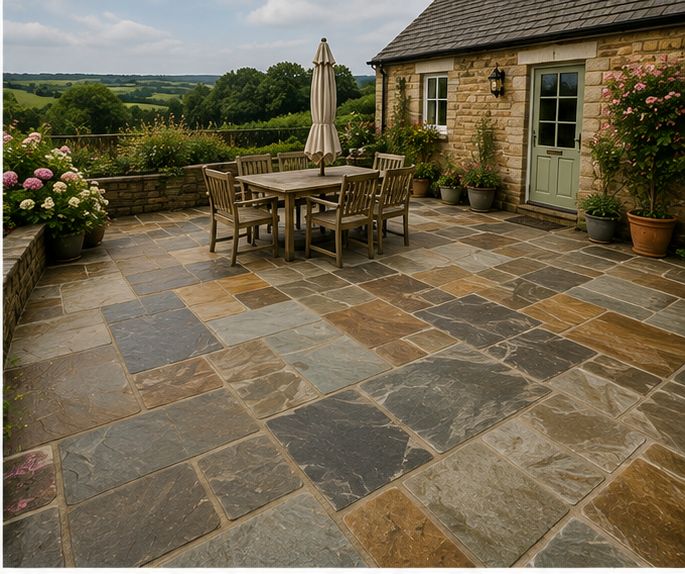
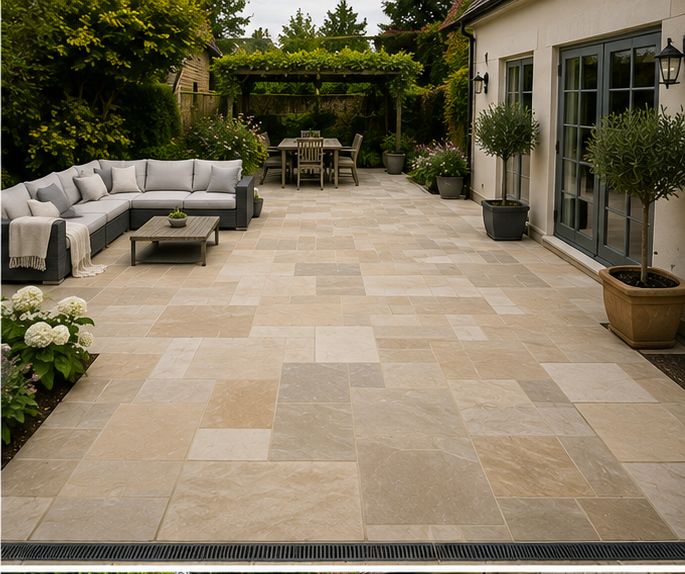
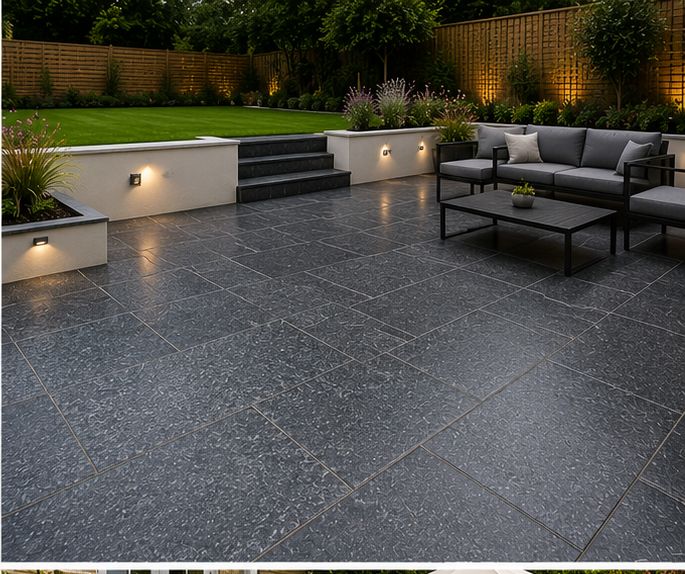
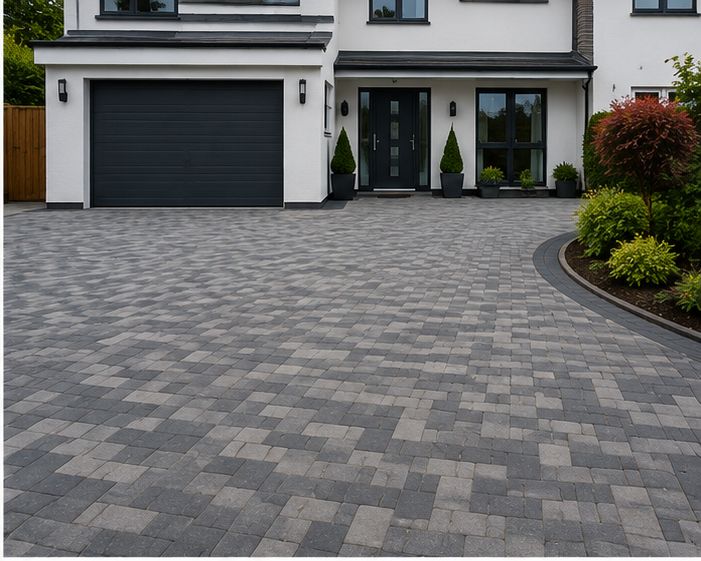
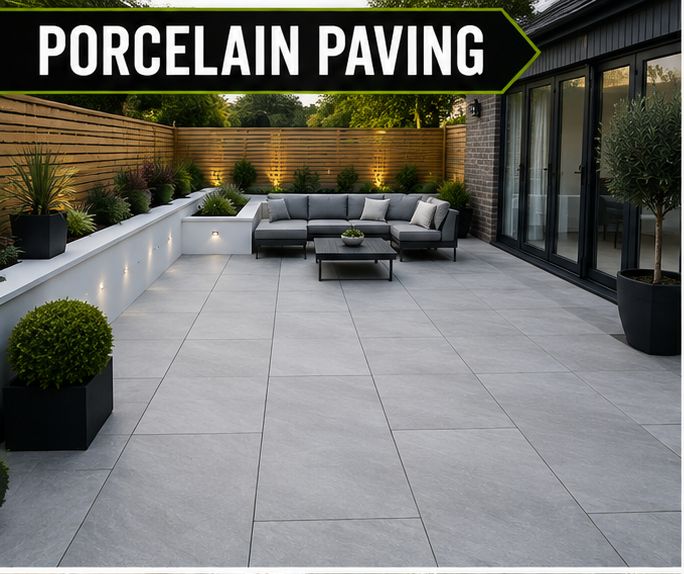
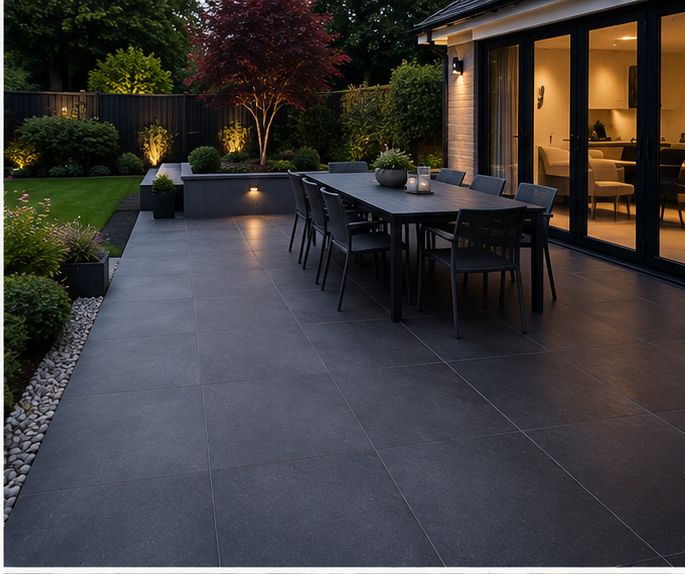
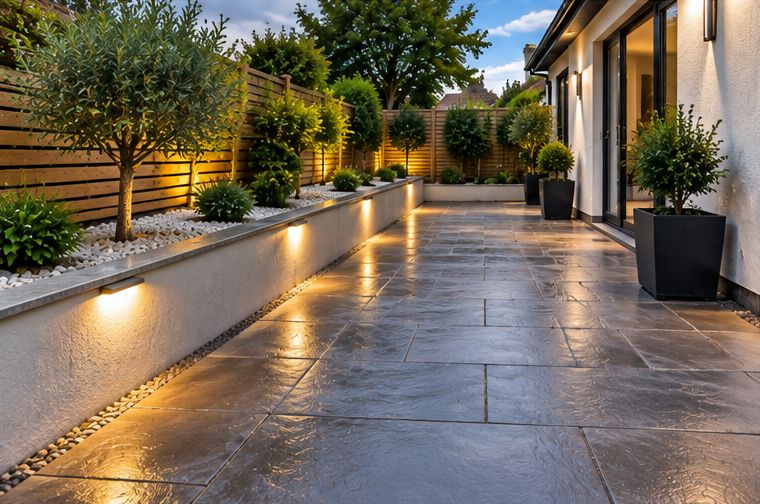
Porcelain in a few different finishes, from stone effects to clean, modern greys.
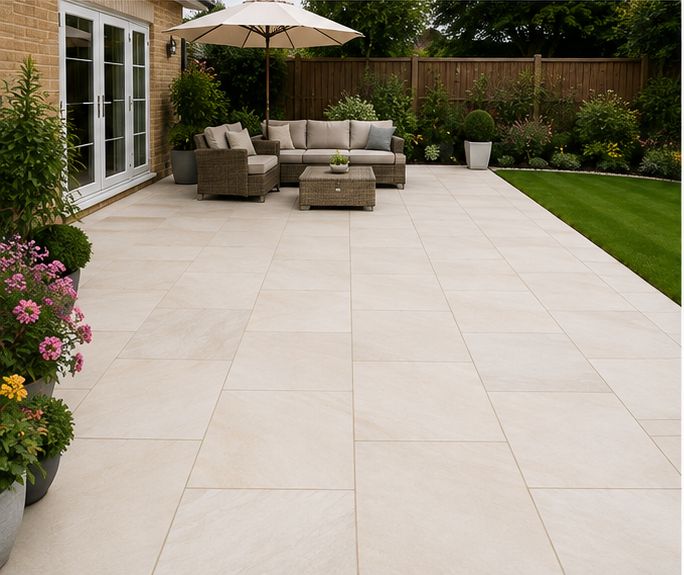
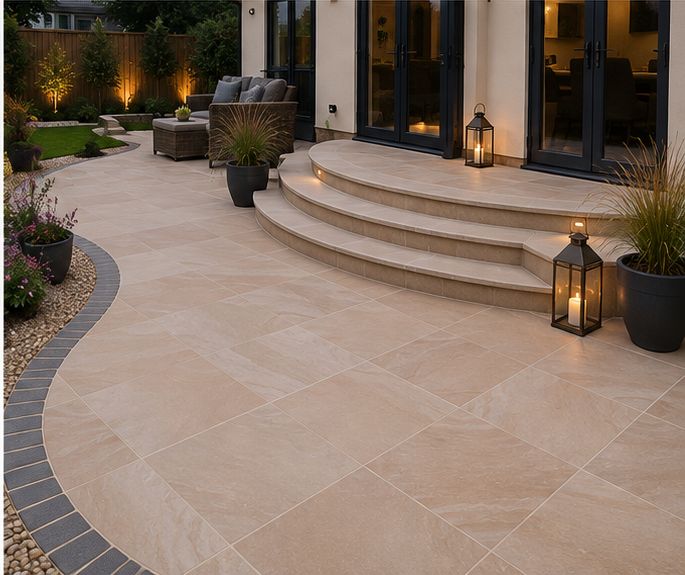
Porcelain is a ceramic. Fine clays and minerals are pressed and fired at very high temperatures until they become extremely dense. Good porcelain absorbs almost no water, which is why it resists staining, frost and moss so well compared with natural stone.
Outdoor porcelain paving is usually around 20mm thick, much thicker than an indoor floor tile, so it can take garden use. The edges are usually rectified, ground perfectly square, which allows narrow, even joints and a very neat finish. The look is printed into the surface during manufacture, so a stone-effect slab repeats a set of designs rather than being truly unique; better ranges use enough variations that the repeat is hard to spot.
Porcelain gives you far more control over the finished look than natural stone. The main decisions are:
Many ranges come with a matching indoor tile, so a kitchen floor can carry straight out through bifold or French doors onto the patio at the same level of finish. If you prefer the character of real stone with natural variation, compare our pages on Indian sandstone and natural stone paving.
The same density that makes porcelain easy to keep clean makes it harder to fix down. Normal mortar struggles to grip its smooth, non-absorbent back, and a slab that is not fully supported can crack under load. Our method is built around those two problems, and follows the principles in our guide to how a patio should be laid:
Because porcelain sheds water so readily, planning where the water goes matters even more than with stone. A channel drain across a doorway is often worth including where the patio meets the house.
This is where porcelain earns its keep. It does not need sealing, spills such as wine, oil or barbecue fat usually wipe off rather than soaking in, and algae has little to hold on to. A sweep and an occasional wash with water and a mild detergent is usually enough, and a pressure washer can be used without the worries that come with softer stone.
It is not completely maintenance free. Leaves and soil left on the surface can still grow a film of algae in shade, which is what makes any patio slippery, and the joints need an eye kept on them. Porcelain is hard but can chip if something heavy is dropped on an edge, so a spare slab or two from the same batch is worth keeping. For more detail, see our article on cleaning and looking after a new patio.
Porcelain comes into its own in modern and newer homes, around kitchen extensions, and in shady, damp gardens where porous stone would turn green, such as north-facing plots below a valley hillside in Ebbw Vale or Merthyr Tydfil. It also suits busy family gardens in Cardiff where easy cleaning matters more than anything.
It suits older cottages less well if you want the patio to blend with weathered stone walls. It pairs nicely with clean-lined decking, rendered walls and brick raised beds. If you are weighing it up against other slabs, our guide to porcelain, sandstone or concrete covers the choice, or ask us for free advice on site.
Not sure which material suits your garden? Compare the options, or see our patio slabbing and paving page for the full picture.
Real reviews from homeowners across South Wales — rated 4.8 out of 5 on Google from 69 reviews and 10/10 on Checkatrade.
“Had my patio done by the company and could not be happier. Top quality work done and quickly too.”
“I was pleased to find Tony and his lads were absolutely great! Tony responded quickly & was very polite.”
“We were delighted with the work and materials, which were of very high quality. Tony and team helped us.”
Guides that help when you are choosing and planning paving.
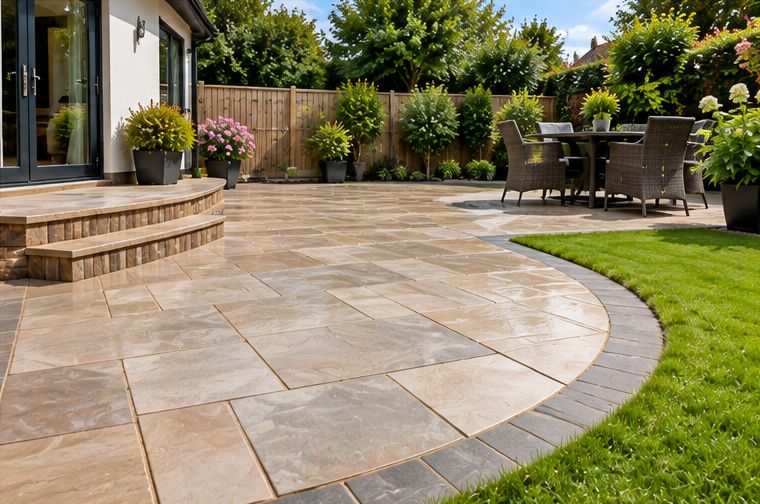
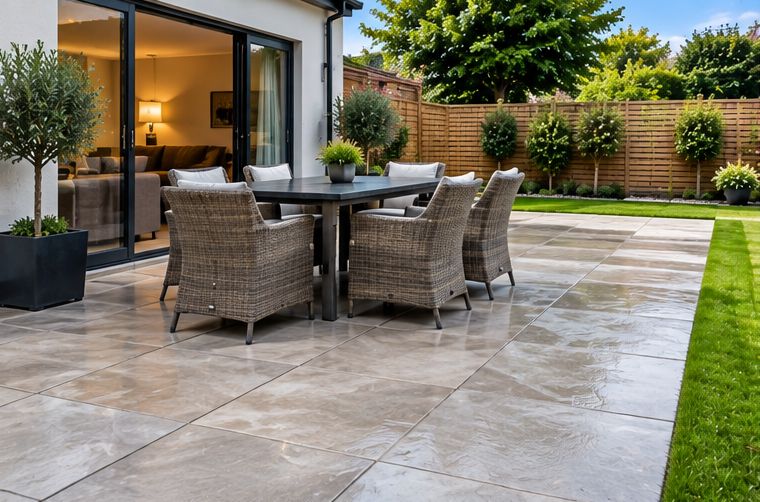
We lay paving right across South Wales. Choose your town to see patio paving there.
It depends on the product. Choose one with a good outdoor slip rating and a textured finish, particularly for steps and shaded areas, and do not let leaves or algae build up. Smoother finishes are best kept to sheltered, sunny spots.
Good outdoor porcelain absorbs so little water that frost has almost nothing to work on. Cracks are more often caused by hollow spots in the bed underneath, which is why we lay every slab on a full bed of mortar.
Sometimes, if the existing base is sound, level and at the right height below the damp-proof course, but often it is not. We will check the levels and the condition of the old patio and tell you honestly which approach makes sense.
No. The fired surface is already very dense, so sealing is not needed. Keeping it swept and giving it an occasional wash is usually all it takes.
Every slab needs priming, a full bed and very accurate levelling, because the flat, square edges show up any lip between slabs. Cutting is slower too. The extra care is what makes the finished patio look crisp and stay put.
Let us know the size of the area and the look you are after. Tony will visit, check the levels and access, and give you a free quote.