
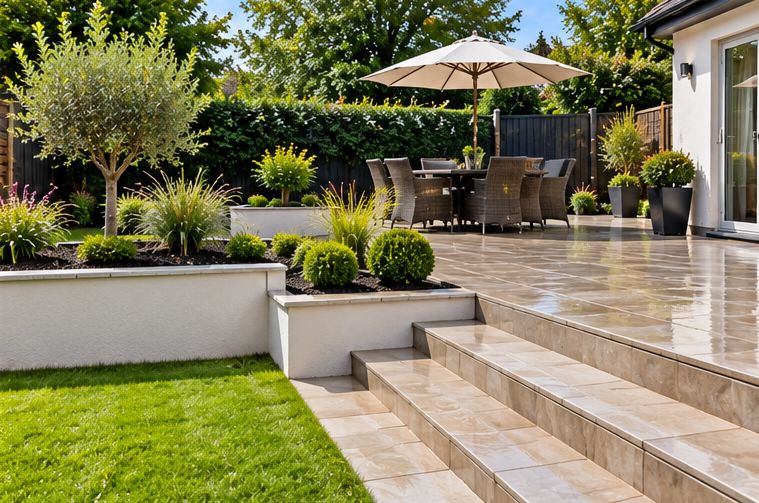
Pontypridd’s hillside gardens nearly always end up with a bank somewhere: between the patio and the lawn, between two tiers, or climbing away at the top of the plot. Where that slope faces the sun, it is often the warmest spot in the garden and one of the driest, even in a town that sees plenty of rain.
Grass on a steep bank is a nuisance to cut, and bare soil washes down in the first heavy shower. Planting is usually the better answer. This guide suggests plants and methods that suit a sunny Pontypridd slope, from a low-effort bank of shrubs to herbs and fruit on the top tier. For the layout of the levels themselves, see landscaping a hillside garden in Pontypridd.
Read the slope before you choose plants
Pontypridd sits where valleys meet, so a garden can face almost any direction. Which way your slope faces matters more than anything else. A bank facing south or west gets long hours of sun and dries quickly; one facing north may stay cool and damp most of the year and needs a different plan altogether.
Even on a sunny bank, conditions change from top to bottom. Water drains down through the soil, so the top of the slope is often thin and dry while the foot can stay moist, especially where it meets a wall or path. Plants that love dry, sunny ground go at the top, and those that like more moisture go lower down. Spend a wet day and a hot day looking at the bank before you plant, and you will learn a lot.
Plants that like a dry, sunny bank
Many of the plants that thrive on sunny slopes come from dry, rocky hillsides in the first place. They cope with thin soil and do not mind the wind. A few that tend to do well:
- Lavender, rosemary and thyme for scent, bees and evergreen structure near the top of the bank.
- Rock roses and other small sun-loving shrubs that spread into low mounds.
- Sedums and other succulents for the driest pockets and the tops of walls.
- Hardy geraniums, which cover the ground quickly and flower for months.
- Ornamental grasses that move in the breeze and bind the soil with their roots.
- Low creeping plants that knit over the surface and keep weeds down between larger shrubs.
Wet winters are the bigger threat to some of these than cold, so good drainage around the roots matters. Adding grit to heavy soil at planting time helps them through a damp Pontypridd winter.
Holding the soil while plants establish
For the first year or two, a newly planted bank is at its most fragile. Roots have not yet spread, and heavy rain can wash soil and mulch down onto the path below. There are a few ways to help.
- Biodegradable matting made from jute or coir, pegged over the slope and planted through, holds the surface while roots grow.
- Planting in pockets with a small flat step for each plant stops water running straight past the roots.
- Gravel or stone mulch stays in place better than light bark on a steep bank, and suits sun-loving plants.
- Planting close so that the ground is covered sooner.
Where the bank is too steep to stand on safely, it may be better to reduce it with a low wall or sleepers first. Our guide on retaining walls in Pontypridd helps with that decision.
Herbs, fruit and a kitchen corner on the top tier
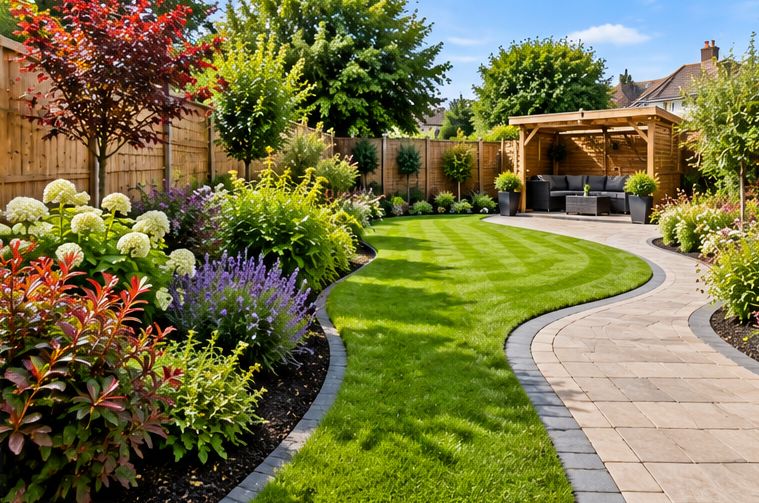
The top level of a Pontypridd hillside garden is often the sunniest place of all, and it can make a good spot for growing food. Raised beds built from sleepers or brick warm up quickly in spring, drain well in wet weather and save bending. Herbs, salads, strawberries and soft fruit all enjoy the sun up there.
The catch is carrying water, compost and tools up the steps. A water butt at the top, filled from a shed or greenhouse roof, saves a lot of trips. Our guide to building brick raised beds and planters explains how they are built.
A bank that looks after itself
If what you want is less work rather than more plants, a sunny slope can be planted with a handful of tough, spreading shrubs and groundcover, then mulched with gravel. Once it has filled in, it needs little more than an annual tidy and some weeding in the first couple of years.
This also suits rented houses. A planted, gravelled bank looks cared for between tenants without needing anyone to mow it. Our guide on garden ideas for Pontypridd student lets and rentals and the general low-maintenance garden guide both have more ideas.
Room for wildlife
Sunny banks full of flowering herbs and shrubs are busy with bees and butterflies from spring into autumn. Leaving a few dry stones or a gap in a wall gives shelter to insects, and a small shallow dish of water at the top helps birds on hot days. It costs nothing and makes the slope feel alive.
Try to avoid netting or plastic sheeting under the gravel on a wildlife bank if you can, as open soil lets plants self-seed gently and gives ground beetles somewhere to live. Where weeds are a real problem, a breathable membrane is the better compromise.
How we help
We can prepare a bank for planting, clear out old brambles and weeds, bring in topsoil and grit, fit matting, build any steps or low walls and plant the scheme, then finish with gravel or bark. If part of the slope would be better as lawn, our guide to turf laying for small Pontypridd lawns covers that.
See our landscaping and garden design page and our landscaping in Pontypridd page for more, and use the enquiry form to ask for a free visit and quote.
Talk to T J Landscapes about your garden
Free quotes and honest advice across South Wales.
Questions People Ask
What grows on a steep, dry bank?
Sun-loving plants from dry hillsides do best: lavender, rosemary, thyme, rock roses, sedums, hardy geraniums and ornamental grasses. Plant them into pockets and mulch with gravel so the soil stays put.
Should I use bark or gravel on a sloping bed?
Gravel or small stone generally stays in place better on a steep slope, and it suits drought-tolerant plants. Bark works on gentler banks but can wash down in heavy rain.
When is the best time to plant a bank?
In Pontypridd, autumn and spring usually work well. The soil is moist, and plants have time to root before a hot spell or a hard frost.
How do I water plants at the top of a steep garden?
A water butt on the top tier, filled from a shed or greenhouse roof, saves carrying cans up the steps. Once established, most sun-loving plants need little extra water.
What affects the cost of planting a slope?
The size and steepness of the bank, how much clearing and soil improvement is needed, whether matting, steps or walls are involved, the number and size of plants and the mulch. We quote for free.