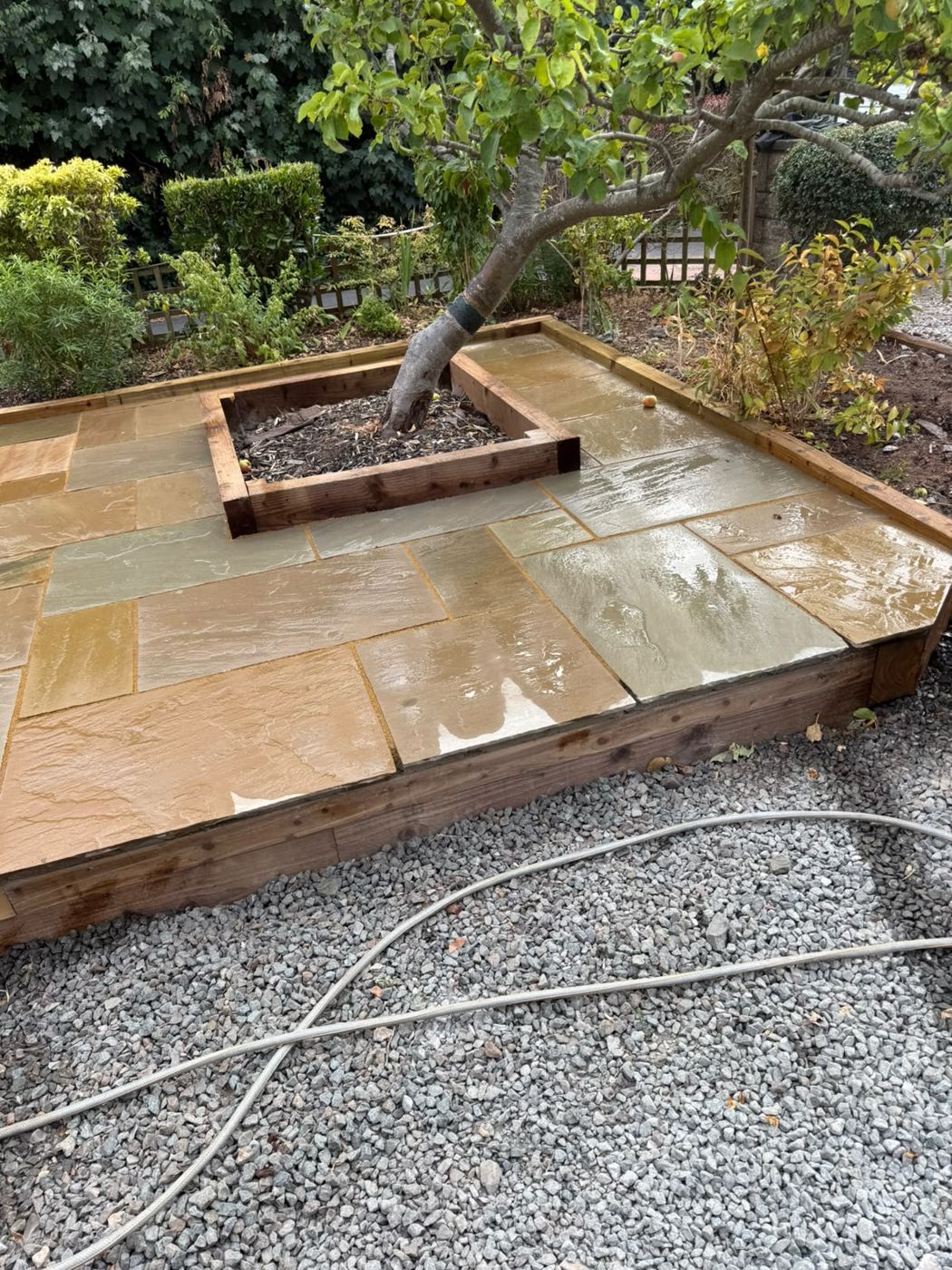
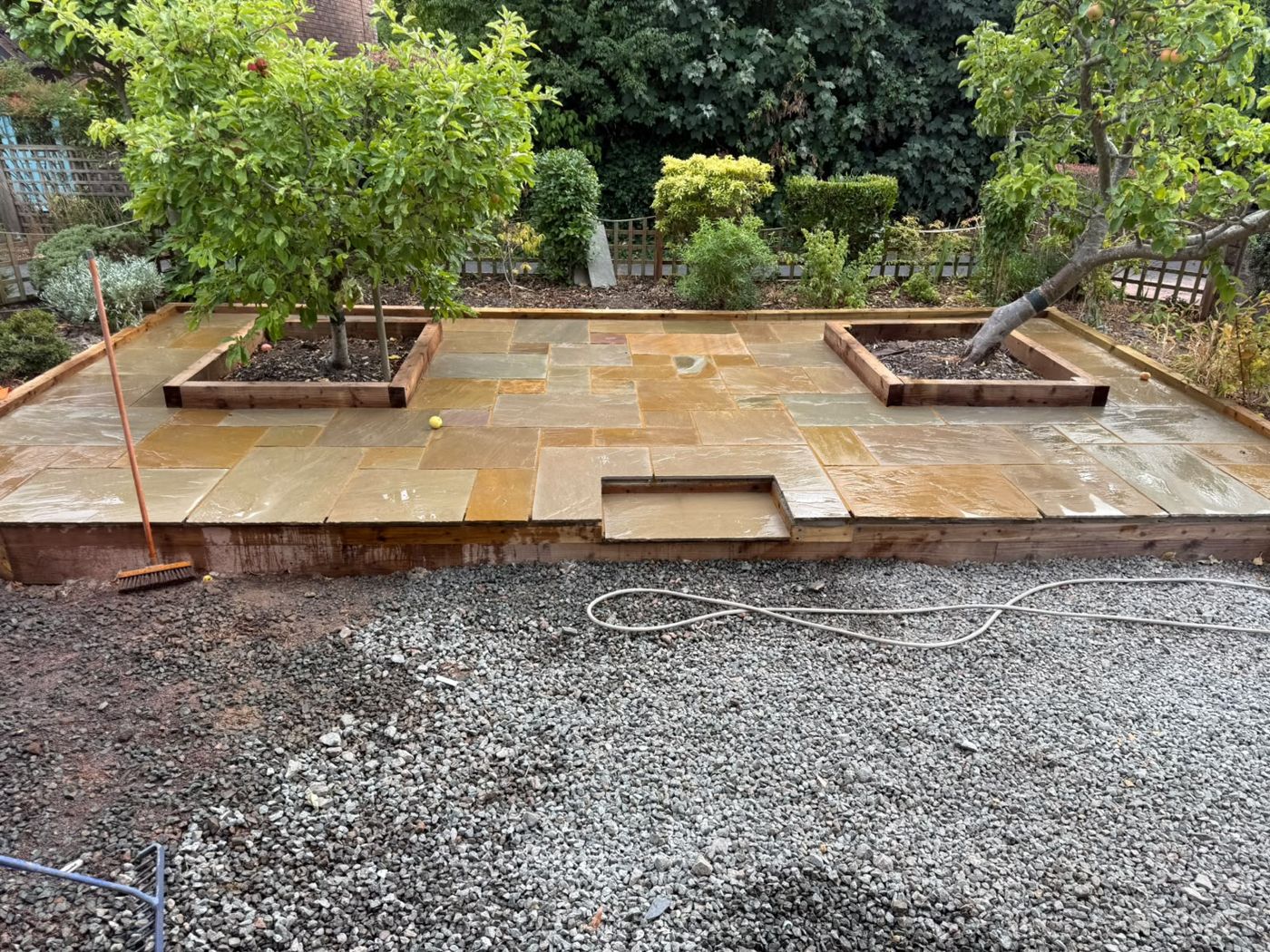
The most unusual thing about this Pontypool garden was the pair of established trees standing right where the new patio needed to go. Rather than lose them, we built the patio around them. Each trunk now sits in its own square planter made from timber sleepers, set into the paving, with soil left open around the roots.
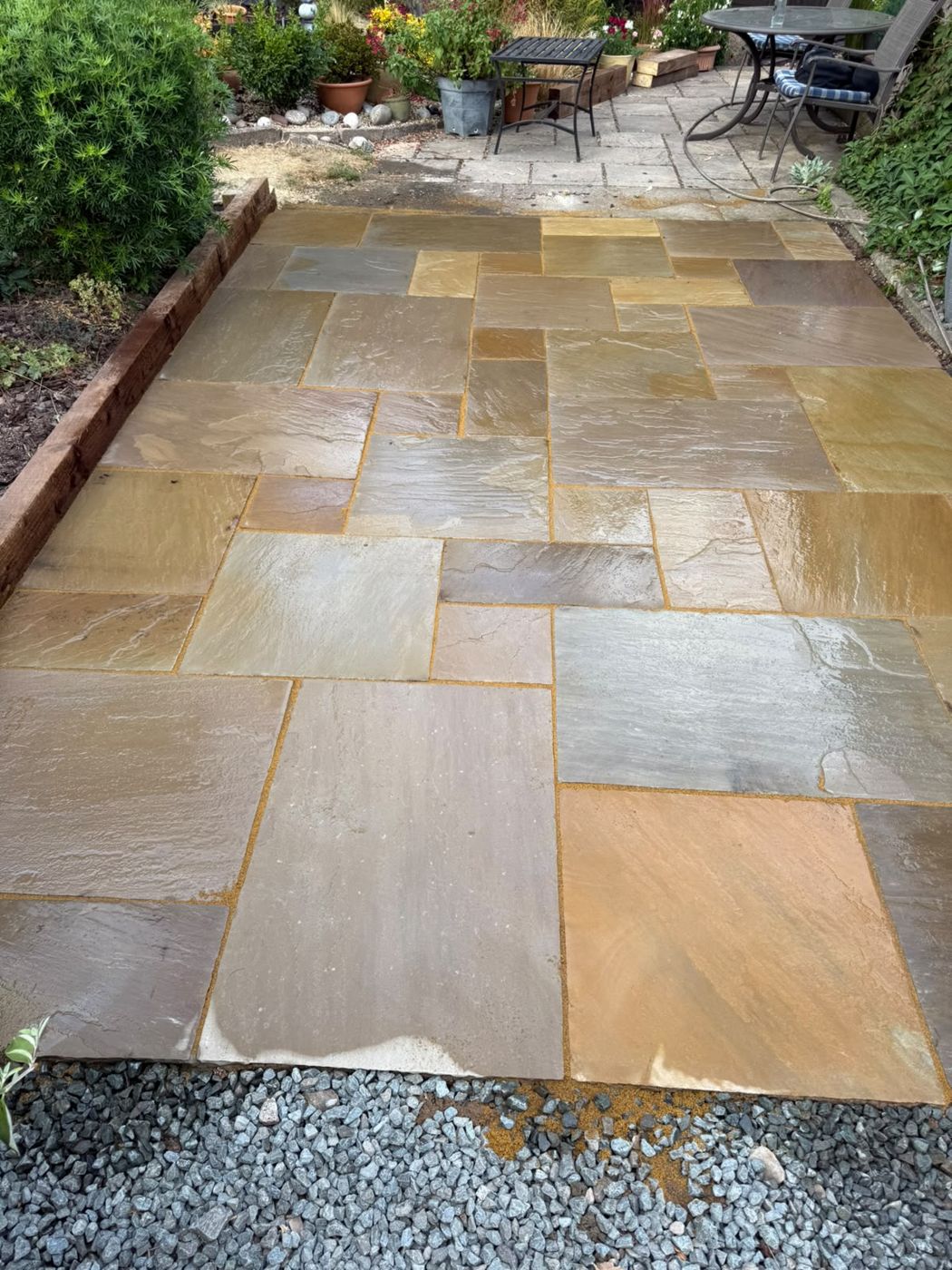
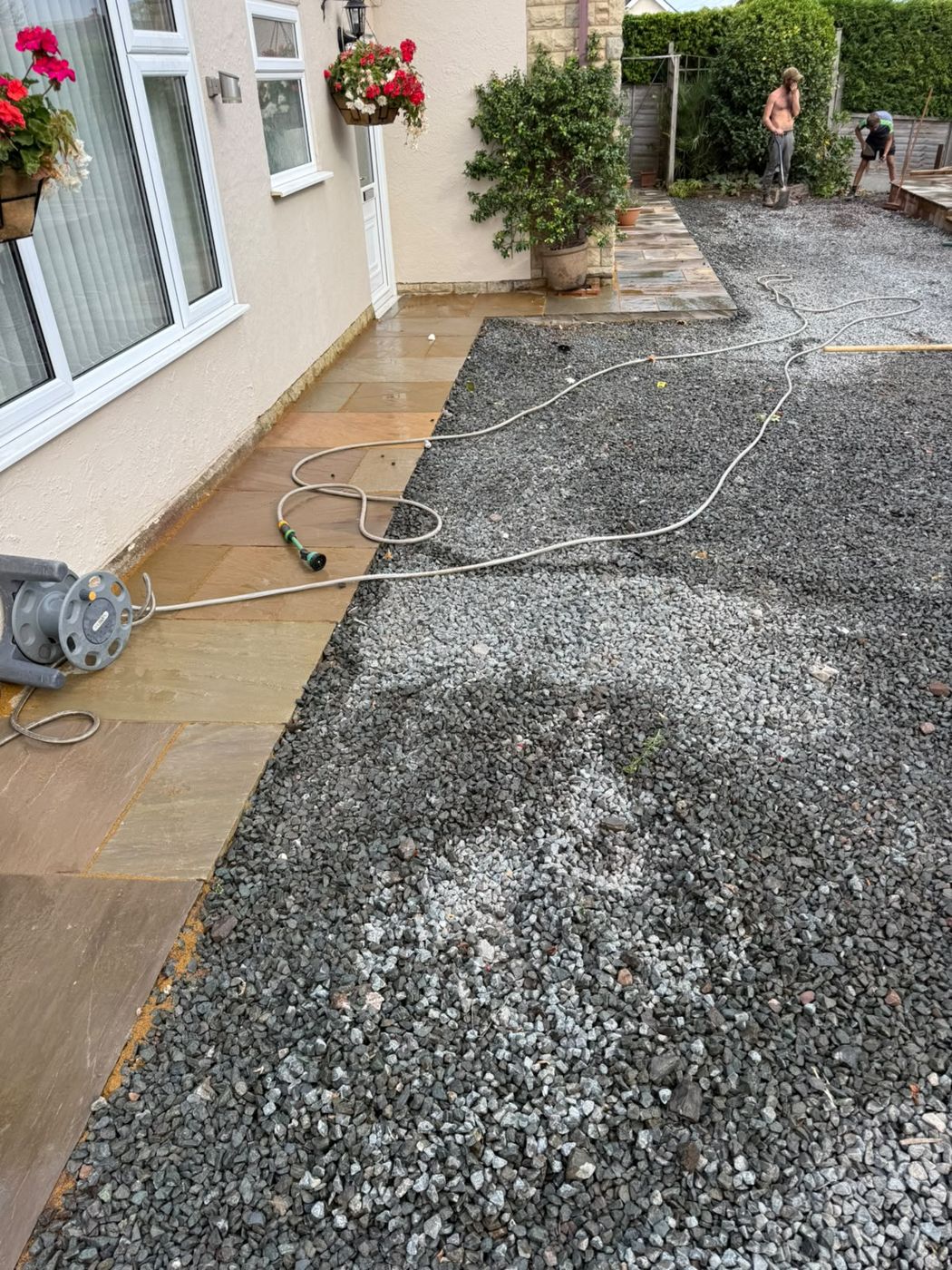
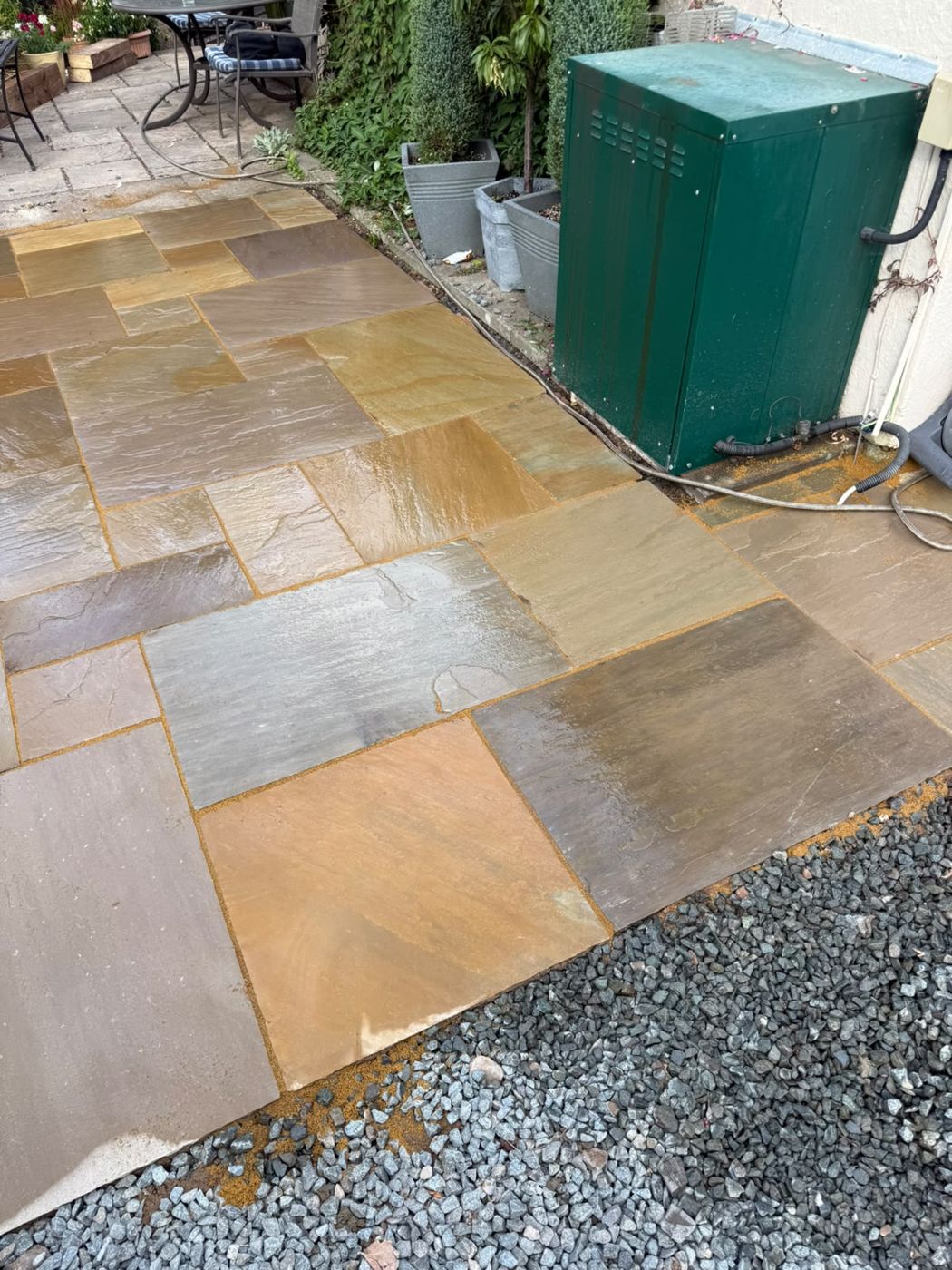
The slabs are riven stone in mixed buff, grey and amber tones, laid in a random pattern. Sleepers frame the whole raised area, a short step is let into the front edge, and slab paths link it to the house and to an existing seating area. Grey chippings fill the ground around the paving. It was all part of our patio slabbing and paving work, and there is more on local gardens on our Pontypool landscaping page.
Paving around trees without harming them
A tree growing through a patio is a common problem, and it is easy to get wrong. Slabs laid tight to the trunk get lifted as the tree thickens, and digging out a deep base over the roots can damage it. Leaving a planted square around each trunk gives the tree room to grow and lets rain reach the soil.
The sleeper edging does two jobs here. It holds the edge of the raised base, so the slabs have a firm line to finish against, and it matches the timber planters so the whole area reads as one piece. The step in the front sleeper gives an easy way up from the chippings.
- Two square sleeper planters set into the paving around existing trees
- Timber sleepers edging the full raised patio
- A step let into the front edge
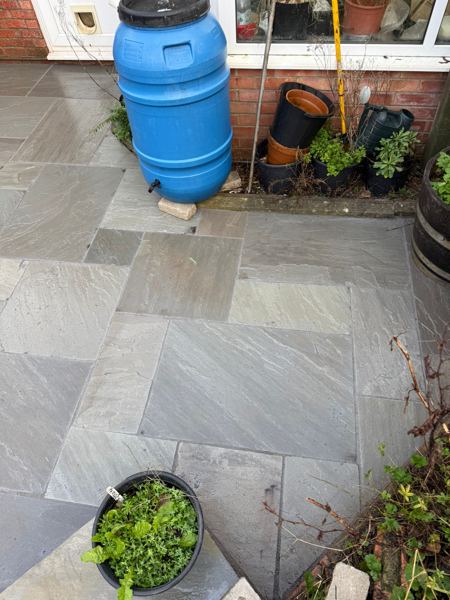
- Slab paths running along the house and past a green outdoor cabinet
- Grey chippings spread around the paved areas
What sits under slabs like these
Riven stone looks relaxed on top, but it relies on careful work underneath. The usual method is to dig out to a firm level, lay and compact a hardcore sub-base, then bed each slab on mortar with a gentle fall so water runs off rather than pooling. The joints are then pointed to keep weeds and water out. Our guide on how a patio should be laid goes through each layer.
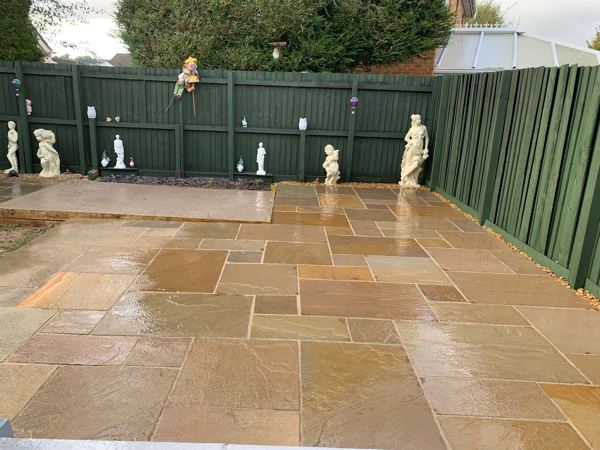
Mixed-tone stone like this shows its colours most when wet, and the slabs are still wet in several of these photos. If you like the look, our Indian sandstone paving page shows similar warm, varied colours. For the practical side of choosing, see porcelain, sandstone or concrete.
If you have trees, a slope or an awkward shape to work around, send us a message for free advice and a quote.
Questions About This Job
Can a patio be laid around an existing tree?
Often, yes. We leave an open planted area around the trunk rather than paving up to it, and keep the base shallow near the roots. Very large trees or roots right at the surface may need a different layout, and we will say so when we look.
Why use timber sleepers for the edge?
Sleepers give a raised patio a firm, straight edge and a softer look than brick or concrete kerbs. They also let you build planters and steps in the same material, as in this garden.
Are chippings a good choice around a patio?
Chippings drain freely, need no mowing and are easy to top up. A weed membrane underneath keeps most weeds down, though a light rake now and then keeps them looking neat.
How do I keep the slabs looking good?
A brush and a rinse will do for most of the year. Our guide on looking after a new patio covers cleaning, weeds and algae.