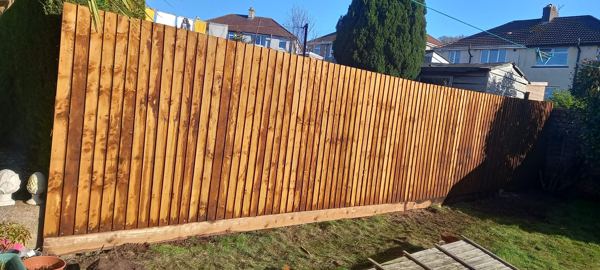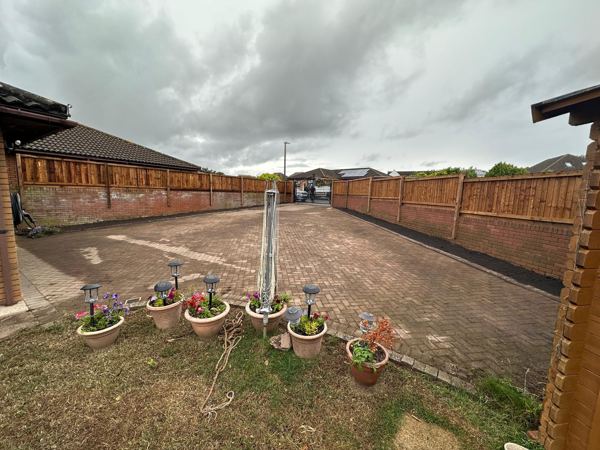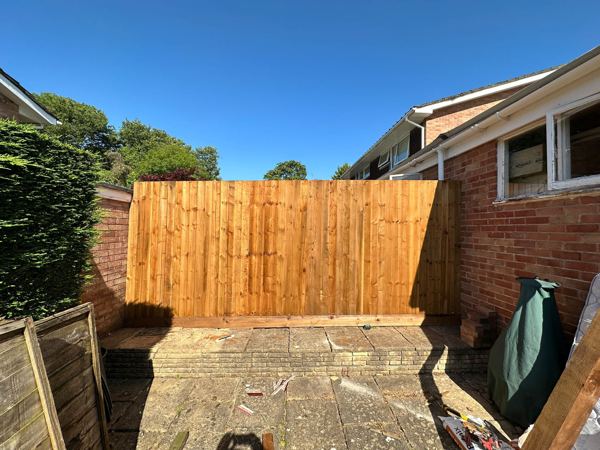
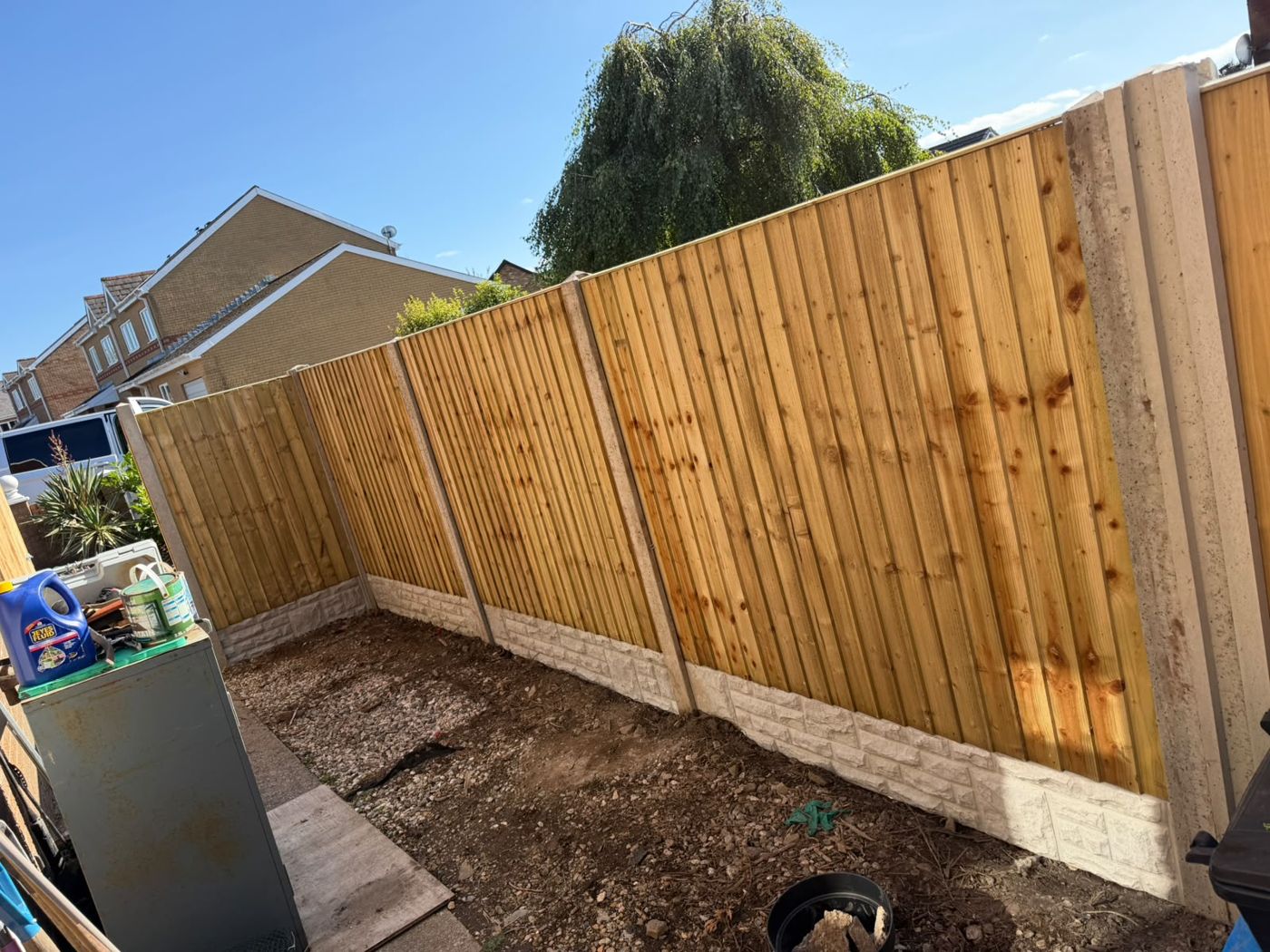
This Pontypool job was a new boundary fence for a back garden. The finished photo shows the result plainly: a straight run of close-board panels in fresh, pale timber, held in slotted concrete posts, with a concrete gravel board along the bottom of every bay.
The ground along the fence line was left as bare soil, ready for planting or a new border. For the full range of what we put up, see our fencing and gates page, or read about landscaping in Pontypool more generally.
What the finished fence is made of
Close-board panels are built from overlapping vertical boards on horizontal rails, so there are no gaps to see through. That makes them a good choice where a garden backs onto neighbours or a road and privacy matters. We compare this style with lapped panels and slatted designs in close board, panel or slatted fencing.
The posts here are concrete rather than timber. Concrete does not rot at ground level, which is where a wooden post usually gives up first, and a panel can be lifted out of the slots and replaced on its own if it is ever damaged. Our guide to concrete or timber posts covers the trade-offs.
- Slotted concrete posts, set in line along the boundary
- Close-board panels in fresh, pale timber
- Concrete gravel boards with a stone-effect face, keeping the timber off the soil
- A bare soil border left in front of the fence, ready for planting
Why the gravel boards matter
The strip of concrete at the foot of each bay does a quiet but useful job. Soil and wet grass sit against it instead of against the bottom of the panel, so the timber stays drier and lasts longer. When a gravel board eventually chips, it is a far cheaper piece to swap than a whole panel.
On a job like this the order of work is fairly standard. The old fence comes down and is taken away, the post positions are set out along the line, holes are dug and the posts are concreted in plumb and at the right spacing. The gravel boards and panels then drop into the slots bay by bay. On a sloping boundary each bay is stepped so the tops stay level, which is common across Pontypool. There is more on that in new garden fencing in Pontypool: what to expect.
If you have an old fence that is leaning or rotten, you can see another local job on our garden fence replacement in Pontypool page, or ask us for a free quote for your own boundary.
Questions About This Job
Can you reuse my existing concrete posts?
Sometimes. If the posts are upright, sound and at the right spacing for new panels, they can often stay. If they are cracked, leaning or a different size, it is usually better to replace them. We will tell you which when we look at the fence.
Do I need gravel boards under a close-board fence?
They are not compulsory, but we recommend them. They lift the panel clear of damp soil, which is the main reason the bottom of a fence rots, and they are easy to replace on their own.
Will you take the old fence away?
Yes. Removing the old panels and posts and taking them away is part of the job, so you are left with the new fence and a clear border.
Should I paint or stain the new timber?
Most new panels are pressure-treated and can be left to weather. If you want a colour, a water-based fence stain is fine once the timber has dried out. Our guide on making a garden fence last longer has more tips.