
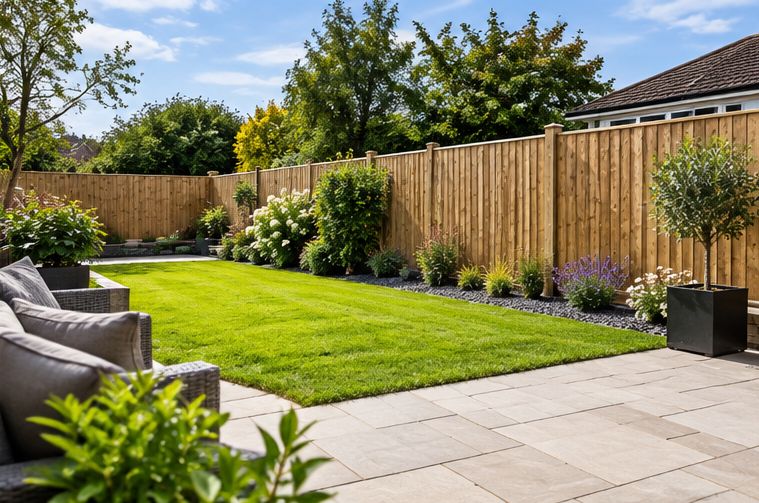
A new fence is one of the jobs we fit most often around Pontypool. Some people are replacing a boundary that blew over in a winter gale; others simply want privacy on a garden that is overlooked from the terrace above. Either way, the questions tend to be the same: what will you need from me, how long will it take, what happens to the old fence, and what will it look like on a slope?
This guide answers those in the order they come up. It is written for Pontypool gardens, where boundaries often climb the valley side and access is tight. For the rest of our local work, see landscaping in Pontypool.
Stage one: the visit and the quote
Tony comes out to walk the boundary with you. From Conway Road that is rarely more than a short drive. He measures the run, notes how much the ground falls along it, and checks what is there now: old posts, concrete, walls, tree roots and anything growing through the existing fence.
We talk about the style you want, how high it needs to be and what it has to cope with. A fence on an exposed ridge takes more wind than one in a sheltered yard, and that affects the choice of posts and panels. Our guide to which fence stands up best to Welsh wind is worth a read before the visit. You then get a free, written quote.
Stage two: neighbours, boundaries and heights
Before work starts, have a word with the neighbours on the affected side. In terraced rows a fence often runs between two gardens that both rely on it, and it helps to agree the line, the style and which side the posts will face. If you are not sure who owns a boundary, your deeds are the place to look, and a solicitor can advise if there is a dispute. That is not something a landscaper can settle.
Height is the other thing to check. As a general guide, a garden fence up to about two metres high, or one metre next to a road, does not usually need planning permission, but there are exceptions, for example near listed buildings or where permitted rights have been removed. If in doubt, check with Torfaen County Borough Council before we order materials.
Stage three: taking the old fence down
On the first day we remove the old panels and posts. Old concrete post bases are often the slowest part, because they have to be dug or broken out so the new posts can go in the right place. Where the old fence was on concrete posts that are still sound, we may be able to reuse them, and we will tell you so at the quote stage.
The old timber, concrete and any overgrowth along the line are taken away. If the whole garden needs attention, we can combine the fence with a garden clearance so it all goes in one trip.
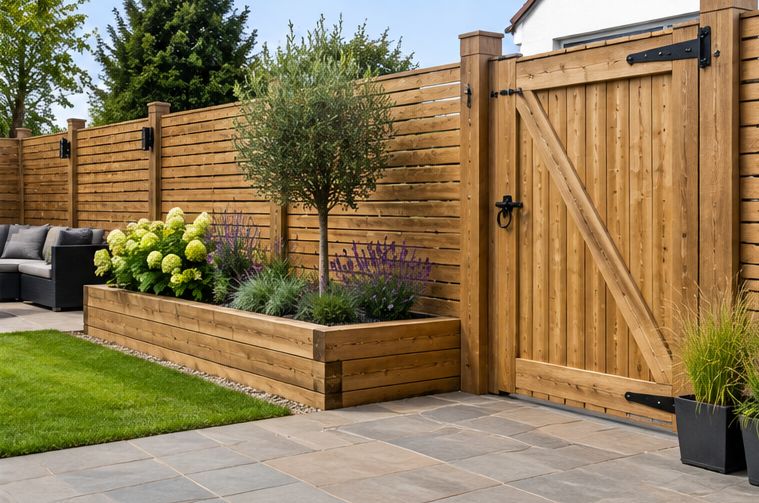
Stage four: posts and panels on sloping ground
This is where Pontypool gardens differ from flat ones. Panels are rectangular and do not bend, so on a slope they have to step down in level sections, like a staircase. Each post is set deeper and more firmly than on flat ground, because the soil on the downhill side offers less support.
- Stepped panels keep a crisp, tidy line and suit most terraced gardens.
- Gravel boards at the base keep the timber off wet soil and fill the triangular gaps left by each step.
- Close board built on site can follow the slope more smoothly, since each board is fixed individually.
- Concrete posts are popular on windy, wet sites; timber posts suit some styles better. See concrete or timber posts.
Where the fence sits on top of a retaining wall, the fixings go into the masonry rather than the ground, and we check the wall is sound first. Our guide to retaining walls for sloping Pontypool gardens explains why that matters.
What the fitting days are like
A typical back garden run is fitted in a day or two, though long boundaries, lots of old concrete or difficult access add time. We need to get posts, panels and bags of post mix to the back of the house, so if there is no side or lane access, expect us to come through the house with floor protection down.
There is some noise from digging and cutting, and the boundary is open for a short while between taking the old fence down and putting the new one up. If you have a dog, it is worth planning where it will be for those hours. We tidy up at the end of each day and leave the garden clear when we finish.
Gates, trellis and the finishing touches
Many people add a gate at the same time, especially where a terrace backs onto a lane. A gate needs sturdier posts than a panel and has to be hung so it clears the ground when it swings, which on a slope takes some care. Trellis along the top can add a little height and a place for climbers without making the boundary feel like a wall.
Post caps and a neat capping rail along the top help shed rain, which counts for a lot in a Pontypool winter. Our guide to choosing and fitting a garden gate covers latches, hinges and widths if you are adding one.
Looking after it once it is up
New pressure-treated timber is usually fine for a while before it needs a stain or preservative, but check what the supplier recommends. Keep soil and leaves from piling against the base, cut back climbing plants before they get heavy, and check the fixings after a big storm. Our guide on making a garden fence last longer has more. For the full range of styles we fit, see our fencing and gates page.
Talk to T J Landscapes about your garden
Free quotes and honest advice across South Wales.
Questions People Ask
Do I need to be at home while the fence is fitted?
Not all day, but we need access to the back garden, and if materials have to come through the house someone needs to let us in. Many Pontypool customers are around for the start and finish and leave us to it in between.
Which side of the fence faces me?
By custom, the smooth face often goes towards the neighbour and the posts and rails towards the owner, but it is not a legal rule. Agree it with your neighbour before we start.
What affects the cost of a new fence?
The length and height of the run, the style and materials, whether old concrete has to be broken out, how steep the ground is, access to the garden and how much waste has to be taken away. We set this out in a free quote after seeing the boundary.
Can you fit a fence on top of a garden wall?
Often, yes, if the wall is sound and wide enough for fixings. If it is leaning or cracked, it should be repaired first. We will look at it when we visit.
How do I book a visit?
Use the enquiry form and tell us roughly how long the fence is and what is there now. Photos of the boundary help us plan the visit.