
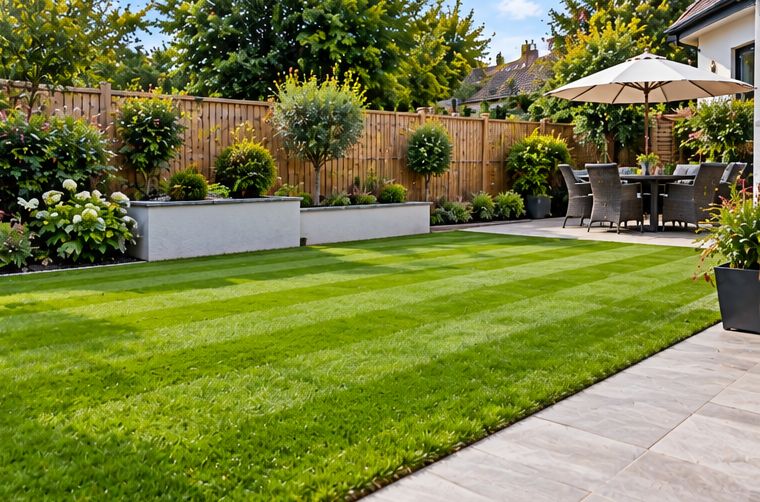
A patch of green makes a terrace yard feel like a garden rather than a passage to the lane. In Tonypandy that patch is often small, it often slopes, and it spends part of the year in the shadow of the hillside or the row of houses behind. Those conditions are hard on grass, which is why so many people ask us whether they should go artificial instead.
There is no single right answer for the whole town, but there is usually a clear answer for each yard. This guide sets out how we weigh it up on a Rhondda terrace. For the lawn work itself, see our turf laying service, or our local page on turf laying in Tonypandy.
Stand in the yard at midday in winter
The quickest test is light. The valley sides above Tonypandy are steep, and a yard tucked behind a two-storey terrace, with a rear wall and the next row of houses above it, can get very little direct sun from late autumn to early spring. Real grass copes with a bit of shade, but not with months of it on cold, wet ground.
If the spot you want to green over sits in shadow for most of a winter day, turf will probably thin out, go soft underfoot and fill with moss within a season or two. If it catches the sun for a good part of the day, turf has a fair chance and gives you a living lawn that feels cool and soft in summer.
Many yards are a mix: sunny at the top, shaded by the back door. That matters, because the green area does not have to be where the old lawn was.
Rhondda rain and what lies underneath
The Rhondda is a wet place, and the ground in an old terrace yard is rarely good garden soil. It is often a thin layer over clay, stone, old ash or builders’ rubble from a century of use. Water sits in it, then runs downhill along the surface.
- For turf, that means clearing the rubble, bringing in fresh topsoil and giving the water somewhere to go, or the new lawn sits in mud each winter.
- For artificial grass, it means digging out and laying a compacted, free-draining stone base, because the grass is only as flat and dry as what lies under it.
- For both, a slope towards the house is a warning sign. Water heading for the back door needs a channel or a drain before any surface goes down.
If the yard is already boggy, our guide on stopping a garden waterlogging explains the usual fixes.
Grass on a slope: level it first
A lawn on a steep bank is awkward whichever kind you pick. New turf can slip before it roots, and mowing a slope in a tiny space is no fun. Artificial grass will go on a gentle incline, but on a steep one the base can creep and rain races across the top.
In a Tonypandy yard, the answer is usually to cut in a level area first, held by a low wall or sleepers, then decide what goes on top. We cover the levels and steps in paving a sloping Tonypandy back yard, and the same thinking applies to a lawn.
Getting it in through the lane
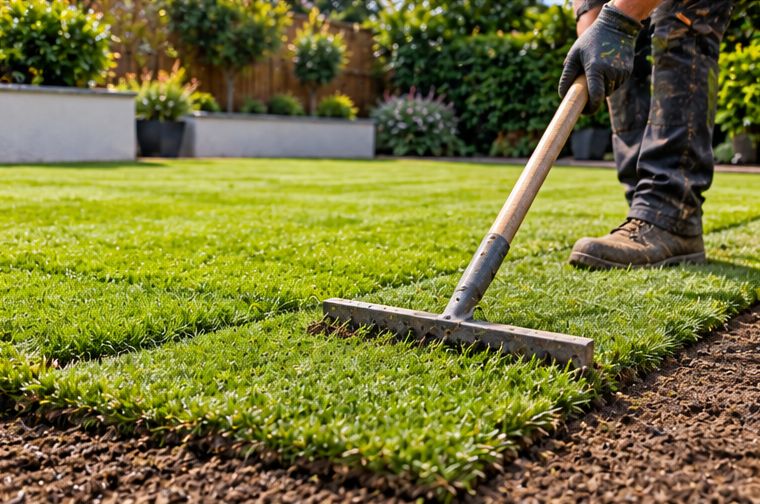
Access shapes this decision more than people expect. Turf comes in heavy rolls that need laying within a day or so of delivery, along with bulk bags of topsoil. Artificial grass comes on one long, heavy roll, plus stone for the base, and the roll has to be carried round corners and through a gate.
Most Tonypandy yards are reached from the back lane, so we check the lane width, the gate and any steps on the first visit. It is rarely a reason not to do the job, but it does affect how the materials are delivered and how the old soil and rubble are taken away. Our article on fencing and gates onto a Tonypandy back lane is worth a look if the gate is too narrow to be practical.
The weekly reality of each
Real turf needs mowing from spring into autumn, some feeding and raking, and a mower stored somewhere. In a terrace that often means a shed that eats into a small yard, or a mower carried through the house. On the plus side, a worn patch can be reseeded, and a looked-after lawn keeps going for years.
Artificial grass needs less, but not nothing. It wants brushing so the pile stands up, leaves and moss clearing from the edges, and a rinse if you have a dog. It also wears out eventually and has to be lifted and replaced. For a busy household with a tiny shaded yard, that trade is often worth it.
How we would usually call it in Tonypandy
These are the patterns we tend to see, rather than hard rules:
- Small, shaded, well used by children or a dog: artificial grass on a properly drained base.
- A sunny top terrace with room for a mower: real turf, laid on fresh topsoil.
- A yard that is mostly paving with a strip to soften it: either works, or planting instead of grass.
- Someone who wants a garden for wildlife: real grass and borders, as plastic feeds nothing.
If you would rather keep the upkeep right down, our guide to low-maintenance terraced gardens in the Rhondda looks at the options beyond grass.
Next steps
Tony and the team can look at the light, the ground and the access and give you an honest view on your Tonypandy yard, free of charge. You can read more about our work in the area on our landscaping in Tonypandy page, or send us a message to arrange a visit.
Talk to T J Landscapes about your garden
Free quotes and honest advice across South Wales.
Questions People Ask
Will real turf grow in a north-facing Tonypandy yard?
It can struggle. If the area gets little direct sun for months at a time, turf tends to thin and fill with moss. A shade-tolerant mix on good topsoil helps in light shade, but deep shade usually points to artificial grass or planting.
Does artificial grass drain in heavy Rhondda rain?
It does when it sits on a compacted stone base over ground that lets water away. Where the soil below is clay or rubble that holds water, we deal with that first, otherwise puddles form on top.
Can you lay a lawn if the only way in is the back lane?
Yes. Nearly all of our Tonypandy work comes in and out through the lane. We plan deliveries so turf is laid soon after it arrives and the dug-out soil is taken away with us.
Is artificial grass safe for dogs?
Generally yes, but it needs rinsing regularly and a base that drains freely, or it can start to smell in warm weather. Some owners keep a small gravel area for the dog alongside it.
What decides the cost?
The size of the area, how much digging and levelling the slope needs, the quality of turf or synthetic grass, drainage, and how much waste has to leave through the lane. We explain each of those in a free quote.