
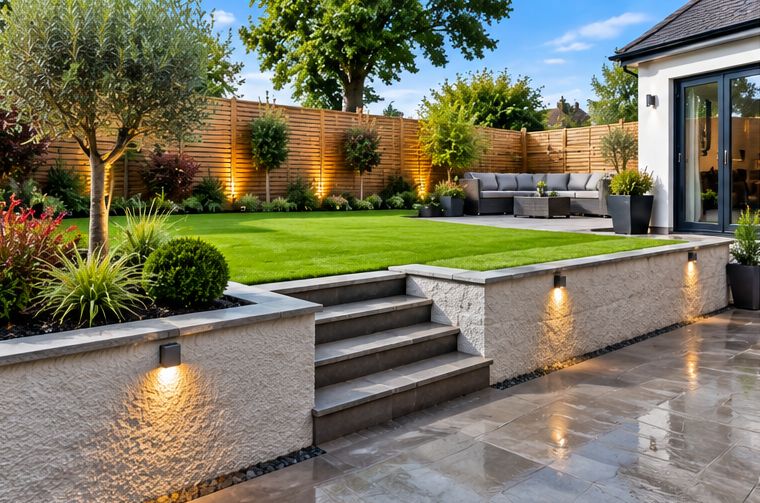
Most of the terrace gardens we see in Tonypandy are small, which helps. There is less ground to cover and fewer materials to buy. But small does not always mean simple: slopes, old walls, poor drainage and lane-only access can all add work before a single slab goes down.
This guide is about making good choices with whatever you have to spend, and about phasing a makeover so each stage stands on its own. It links in with our landscaping and garden design service and our free quotes, which set out the options in plain terms.
Decide what the yard is for
A clear idea costs nothing and saves more than any material choice. Before spending anything, write down the three things you most want from the space. In a Tonypandy terrace the list usually includes somewhere to sit, somewhere for the bins, and a safe way through to the lane. Growing a few vegetables, a play area or a spot for the dog might be on it too.
Anything not on the list can wait. It stops money going on features you will not use, and it gives us a clear brief for a quote. Making a small Tonypandy terrace garden work harder has more on getting several uses from one small space.
Spend first on what is hidden
On a Rhondda hillside, the parts of a garden that matter most are the ones you do not see once it is finished. Cutting corners here is the most expensive saving there is, because it has to be done again.
- Drainage: water heading towards the house needs dealing with before anything else.
- Walls: a leaning back or retaining wall should be made safe before new paving goes up against it.
- Sub-base: a patio laid on a thin base in wet ground will rock and sink, whatever the slabs cost.
- Levels: getting the steps and falls right once saves rebuilding them later.
Our guides on rebuilding a back wall in a Tonypandy terrace and paving a sloping Tonypandy back yard explain what is involved.
Where you can save without regret
Once the ground work is sound, there is plenty of room to be sensible:
- Choose a mid-range slab rather than the most premium stone. A well-laid concrete or porcelain slab looks smart in a small yard.
- Keep what is sound. Old stone steps, a solid wall or decent slabs can often be cleaned, repointed or relaid rather than replaced.
- Use sleepers for raised beds and low retaining edges instead of new brickwork where the height allows.
- Plant small. Young plants grow quickly and cost far less than mature ones.
- Do the easy bits yourself. Painting, planting and mulching are jobs many people are happy to take on.
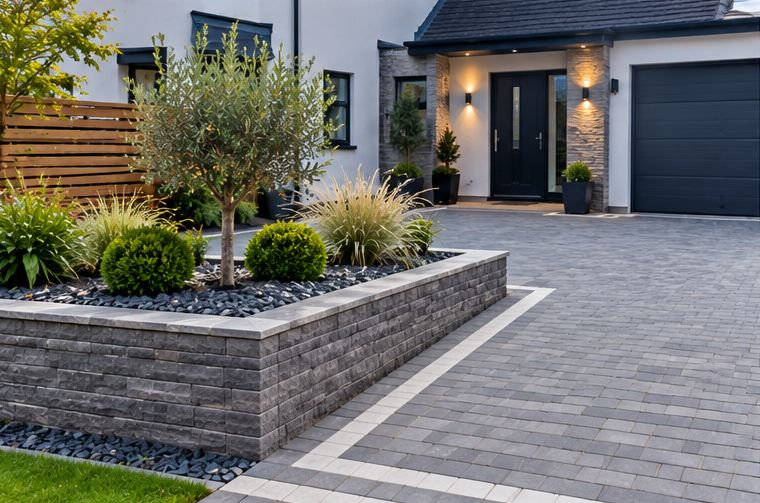
Phase it so each stage stands alone
A makeover does not have to happen all at once. In a typical Tonypandy yard we might suggest three stages, each leaving the garden usable:
- Stage one: clearance, drainage, any wall repairs and the main levels.
- Stage two: paving by the house, steps and a straight path to the gate.
- Stage three: raised beds, planting, a small deck or lawn, lighting and finishing touches.
Doing the heavy work first means later stages do not have to disturb what is already finished. Clearance is often the natural starting point; see garden clearance through a Tonypandy back lane.
Access and waste: the hidden budget items
In Tonypandy almost every material comes in through the back lane and every bag of spoil goes out the same way. Digging out a slope can produce a surprising amount of soil and rubble, and moving it by hand takes time. A design that balances the levels, reusing dug soil in raised beds rather than taking it away, can make a real difference to the total.
It is also why a compact deck is sometimes cheaper than paving on a steep yard: it bridges the slope instead of removing it. Compact decking ideas for Tonypandy gardens looks at that option.
Materials that suit a Rhondda yard for years
Spending a little more on the right material can be the thrifty choice in the long run. The weather in Tonypandy is wet for much of the year, and a small shaded yard stays damp. Surfaces that stay grippy and shed water, timber that is properly treated, and fixings that do not rust all last longer here than bargain alternatives.
A few rules of thumb we use when helping people choose:
- Pick a slab with a textured or riven finish for steps and shaded areas, so it stays safe underfoot.
- Use treated timber rated for ground contact wherever wood touches soil.
- Choose plants that suit the light you actually have, rather than the light you wish you had.
Our patio paving in Tonypandy page has more on slabs for local yards.
Keeping the running costs down too
A budget makeover should not create a garden that is expensive in time to look after. Fewer surfaces, good drainage and tough planting keep upkeep low for years. Our guide to low-maintenance terraced gardens in the Rhondda covers that side.
It is also worth asking, before you commit, how each part will look after five winters in the Rhondda. A surface that needs pressure washing twice a year, or timber that needs staining every spring, carries a cost in weekends that is easy to forget when comparing quotes.
Getting a quote that helps you plan
When Tony visits, he will look at the slope, the walls, the drainage and the lane, talk through what you want, and explain which parts are essential and which can wait. The quote is free and broken down so you can see where the money goes and choose what to do now.
You can see more of our local work on landscaping in Tonypandy, or tell us about your yard and we will arrange a visit.
Talk to T J Landscapes about your garden
Free quotes and honest advice across South Wales.
Questions People Ask
What is the first thing to spend money on?
Usually drainage and any unsafe walls. Everything else in a sloping Tonypandy yard depends on those being sound, and fixing them later means disturbing new work.
Can you split the job over a few months?
Yes. We are happy to plan a makeover in stages and quote for each one, so you can start with the essentials and add the rest when it suits you.
Is decking cheaper than paving on a slope?
Sometimes. On a steep yard, a deck that bridges the drop can avoid a lot of digging and carrying waste through the lane. On gentler ground, paving is often the better long-term value. We will compare both in a quote.
Can I reuse my old slabs?
If they are sound and not too thin or cracked, often yes. They can be lifted and relaid on a proper base, or used for a path or bin area while new slabs go by the house.
What affects the overall cost?
The size of the yard, how steep it is, the state of the walls, drainage, the materials you choose and how much has to be carried in and out through the lane. A free quote explains each one.