
The front of a Tonypandy terrace faces the street, but daily life at the back happens through the lane. Bins go out that way, bikes come in, deliveries arrive, and any garden work means carrying everything through the rear gate. When that gate drags on the ground or the fence beside it leans into the lane, it gets in the way of all of it.
This guide looks at the rear boundary as a working part of the garden. It covers gate size and swing, security, posts on sloping ground and how to handle the bits of wall that often sit along the line. For the styles we fit, see our fencing and gates page, and for local context, landscaping in Tonypandy.
Start with what has to fit through
The single most useful measurement is the width of the largest thing you regularly move through the gate. For most households that is a wheelie bin, but a mobility scooter, a bike trailer or a garden barrow may be wider. Add a little room for your hands either side.
Many older gateways in the Rhondda were built for a person on foot, not a bin. If the opening in the wall is narrow, it can sometimes be widened when the wall or gate posts are being redone anyway. Our guide to rebuilding a back wall in a Tonypandy terrace covers that kind of work.
Which way should it open?
A gate that swings out into a narrow lane can block it for neighbours and catch on passing cars. In most cases the rear gate should open inwards into the garden. On a steep plot, though, the ground often rises just inside the gate, and an inward gate will scrape unless it is hung high or the ground is dug down to make a level landing.
A small flat pad of paving or concrete where the gate swings solves that and gives you somewhere firm to stand the bins. If the yard is being paved too, see paving a sloping Tonypandy back yard so the two can be planned together.
Security from the lane side
A back lane is quieter than the street, which is exactly why the gate needs to be secure. A few details make a real difference.
- A solid timber gate on a strong frame, with no rails on the lane side to climb
- Hinges fixed with coach bolts or security screws, ideally on the garden side
- A lock or heavy bolt that can be opened from inside without a key
- Gate posts set deep in concrete, or bolted to sound masonry, so the gate cannot be levered off
- A fence either side at least as high as the gate, so the gate is not the easy way round
Wind in the valley
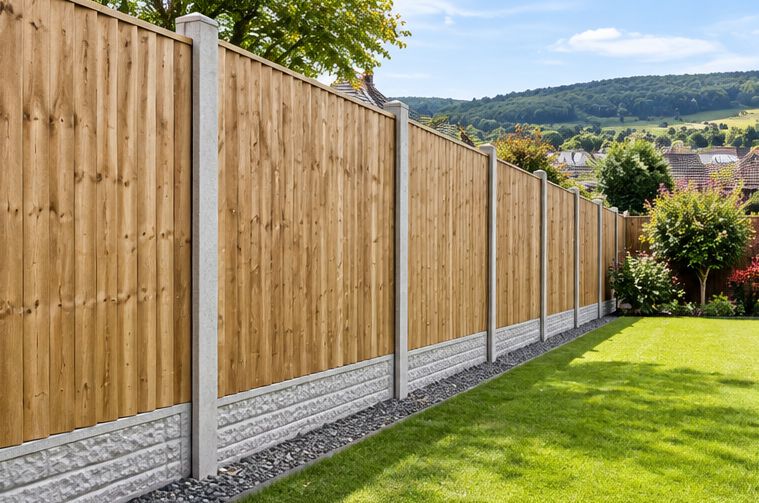
The Rhondda Fawr is a deep, narrow valley, and wind tends to funnel along it. A rear fence on a Tonypandy hillside can take a battering, particularly where the terrace faces up or down the valley. Solid panels act like a sail. Close board fencing built on site, or slatted designs that let some wind through, usually stand up better.
The posts are where most fences fail. On the edge of a lane they also face the odd bump from vehicles and water running down the lane surface. Concrete posts with gravel boards are hard-wearing here; treated timber posts can work if they are set deep and the concrete is shaped to shed water. Compare the options in which garden fence stands up best to Welsh wind and concrete or timber posts.
When the boundary is half wall, half fence
Plenty of lane boundaries in the town are a mix: a stone wall along part of the run, a fence where a section fell down years ago, and a gate hung on a pair of old posts. It is tempting to top the whole lot with fence panels for height, but an old wall may not take the extra wind load.
Where the wall is sound, a light trellis on top usually works. Where it is leaning, it is better to sort the wall first and set new fence posts in their own footings behind it, rather than fixing them into the wall.
Neighbours and the rules
A rear fence in a terrace usually meets the boundaries of the houses on either side, so it is courteous and sensible to agree heights and styles with your neighbours first. As a general guide, boundary fences next to a lane or road used by vehicles have lower height limits than those between back gardens, and the rules can differ in other situations, so check with Rhondda Cynon Taf Council if you are planning anything tall. We are landscapers, not planners.
If you are not sure who owns the lane or the wall along it, check your deeds before work starts. It also helps to let the neighbours who use the lane know when the work is booked, since a van and a pile of posts can narrow it for a few hours.
Getting it fitted
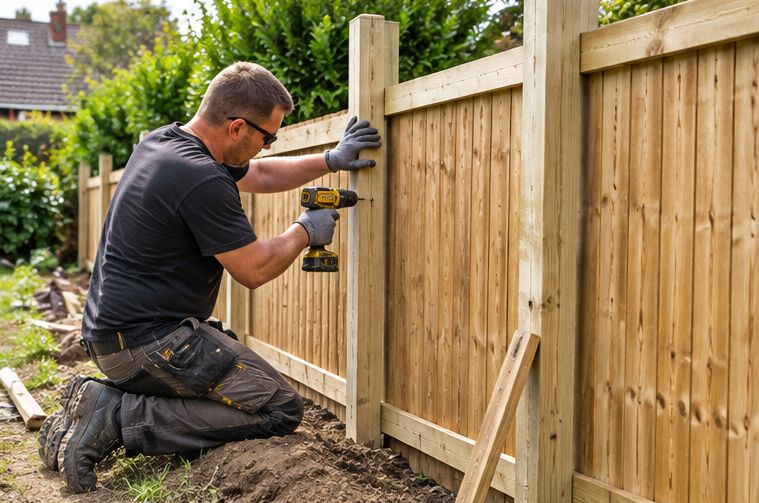
Replacing a rear boundary is usually a short job, but it leaves the garden open while the old fence comes down, so we plan to close it up again the same visit wherever we can. Old panels and posts go out through the lane with us. Our guide to choosing and fitting a garden gate covers styles and hardware, and our fencing in Tonypandy page shows the local work we do.
For a free look at your lane boundary and a clear quote, get in touch with Tony and the team.
Talk to T J Landscapes about your garden
Free quotes and honest advice across South Wales.
Questions People Ask
How wide should a back gate be for wheelie bins?
Wide enough for your biggest bin with a comfortable gap either side for your hands. We measure your bins and the opening on the first visit in Tonypandy and suggest a size that works.
My gate scrapes the ground when it opens. Can that be fixed?
Usually. The gate can be rehung higher, the ground inside can be lowered to make a level landing, or the gate can be changed to open the other way if the lane allows it.
Is a metal gate better than timber for a lane?
Both can be secure. Metal gates are strong and slim but let you see through; solid timber gives privacy. In many Tonypandy terraces a close-boarded timber gate on strong posts suits the look of the row.
Can you replace just the gate and not the fence?
Yes, as long as the posts are sound. If they have rotted or are leaning, it is worth replacing them with the gate. Our guide to fence repair or replacement helps you judge.
What affects the cost of a new lane fence and gate?
The length and height of the run, the fence style, the post type, the gate size and fittings, how steep the ground is, any wall repairs and removal of the old boundary. We explain all of it in a free quote.