
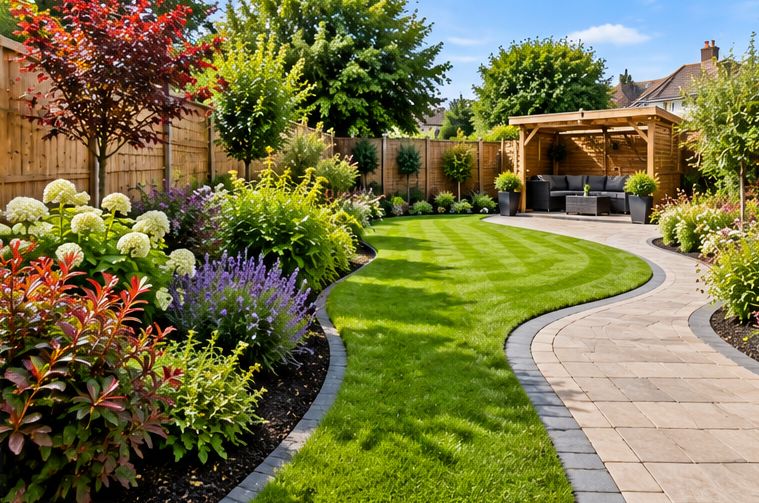
Designing a garden a short walk from the esplanade is different from designing one twenty miles inland. The same breeze that makes a Penarth summer evening pleasant can flatten young plants in March, and the salt it carries finds its way onto every leaf, hinge and paving slab on the seaward side of the house.
The good news is that coastal gardens can be some of the most rewarding to live with. Mild winters mean many tender plants get through the cold months, the light is bright, and a well-sheltered corner in Penarth can feel almost Mediterranean. Here are the ideas we come back to again and again when we plan landscaping and garden design for homes along this stretch of the Vale of Glamorgan coast.
Start by reading your own plot
Before sketching anything, spend a windy afternoon in the garden and notice where the gusts come from, where leaves pile up and which corners stay calm. Two houses on the same Penarth street can behave very differently. A garden tucked behind a tall terrace may be quite still, while one on a corner or on rising ground takes the full force of weather coming up the Channel.
It also helps to note where the sun falls through the day, where water sits after rain and which views you want to keep or hide. Those few notes shape the design far more than any photo from a magazine.
- Which direction does the worst weather come from, and does it hit the patio or the lawn?
- Are there sheltered spots already, such as the lee of a wall, an outbuilding or an old hedge?
- Can you see the sea, the marina or the Cardiff skyline from anywhere worth sitting?
- How do materials and tools get in: through the house, a side passage or a rear lane?
Shelter comes first, style second
Almost every successful seaside garden has a layer of shelter around its most exposed edge. That can be a hedge of tough evergreens, a slatted screen, a run of trellis with climbers, or a combination of all three. The aim is to slow the wind down rather than block it completely, because a solid barrier creates swirling eddies on the far side that can be worse than the original gust.
Once that outer layer is in, smaller pockets of calm can be created inside the garden with low walls, raised beds or clipped shrubs. Our guide to fencing that survives sea winds in Penarth covers the boundary side, and salt-tolerant planting lists shrubs that make good living windbreaks.
Layouts that suit a period villa
Many Penarth homes are tall Victorian and Edwardian houses with long, fairly narrow back gardens. A layout that works well with that shape breaks the length into rooms: a terrace next to the house, a lawn or planted middle, and a destination at the far end, such as a bench, a summer house or a small gravel garden catching the evening sun.
Formal touches often suit these houses better than sweeping curves. A straight central path, symmetrical beds or a pair of clipped shrubs either side of a step echo the proportions of the building. Softer, looser planting inside that framework stops it feeling stiff.
Front gardens deserve a thought too. Many villas have a short front plot behind a low wall, sometimes with a tiled path. Keeping the wall, the path and a simple planting scheme in character does more for the look of the house than anything clever.
Hard landscaping that stands up to the air
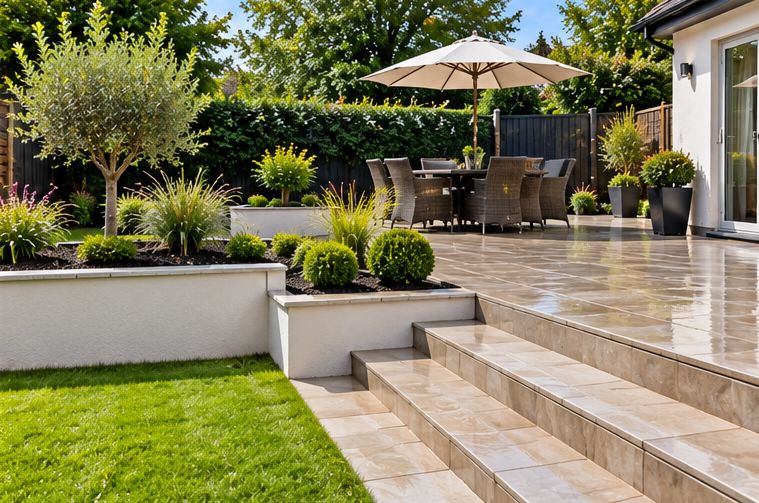
Salt air is hard on cheap materials. Bright steel screws rust and weep, thin timber greys and splits, and some paving picks up green algae on the shady side of the house. None of this means avoiding wood or stone, only choosing well and allowing for a little care each year.
- Paving: natural stone and good porcelain both do well near the sea. Our article on which patio stone suits a Penarth Victorian villa compares them, and our patio and paving page shows the range.
- Fixings and metalwork: stainless steel or hot-dip galvanised wherever possible, including gate hinges and bolts.
- Timber: heavier sections, well treated, and fitted so water drains off rather than sitting in joints.
- Gravel: a sensible choice for exposed corners, since it does not blow about like bark and it suits drought-tolerant planting.
Making the most of a view
If you can see the water from the garden, design around that line of sight. Keep the tallest shelter planting to the sides rather than straight in front of the view, and set a seat or a raised terrace where the outlook is best. For sloping gardens, a deck lifted above the lawn can be a lovely place to sit, though it will be windier up there. Our piece on planning a raised deck in Penarth covers screening and height.
Where there is no sea view, look for other things to frame: a mature tree next door, a church spire or simply the sky at the end of a long garden. Borrowed views make a Penarth plot feel bigger than it is.
Planting with a seaside feel
Coastal planting does not have to mean a handful of grasses in pebbles, though grasses do look wonderful moving in the breeze. Silver and grey-leaved plants, tough shrubs with leathery leaves, and late-flowering perennials all enjoy the conditions. Behind good shelter, the range widens a great deal, and the mild climate lets many plants flower late into autumn.
Soil matters as much as salt. Ground in older gardens can be tired after decades of the same planting, so we often improve beds with topsoil and organic matter before anything goes in. Raised beds built with sleepers or brick are a good answer where the soil is poor or where you want to lift plants closer to eye level.
Talk to T J Landscapes about your garden
Free quotes and honest advice across South Wales.
Questions People Ask
How far from the sea do coastal conditions reach in Penarth?
There is no fixed line. Salt spray is heaviest close to the shore and on exposed high ground, but strong winds carry salt some way inland. The best guide is your own garden: browning on the seaward side of hedges and rust on metal fittings are clear signs. We look at exposure on every Penarth visit before suggesting materials.
Can a small Penarth garden still have a windbreak?
Yes. In a small plot, a slatted screen or trellis with climbers takes up far less room than a hedge and filters the wind nearly as well. Even a single well-placed screen beside the seating area makes a noticeable difference.
Is artificial grass a good idea by the sea?
It can be, particularly on small, shady or heavily used lawns. It needs a well-drained base and will need rinsing now and then to keep salt and sand off the pile. On sunny, open ground real turf usually feels cooler underfoot. See laying a new lawn in an exposed Penarth garden for the real-grass route.
Do we need to redesign the whole garden at once?
Not at all. Many people put the shelter and main paving in first, then add planting, lighting or a deck over the next year or two. We are happy to plan the whole thing and build it in stages. Look at our Penarth landscaping page for the full range, then ask for a free quote.
What drives the cost of a coastal garden design?
Mainly the size of the garden, how much hard landscaping is involved, access for materials and whether there are levels to deal with. Tougher fixings and shelter planting add a little. Our guide to what affects the cost of landscaping a Penarth garden explains more.