
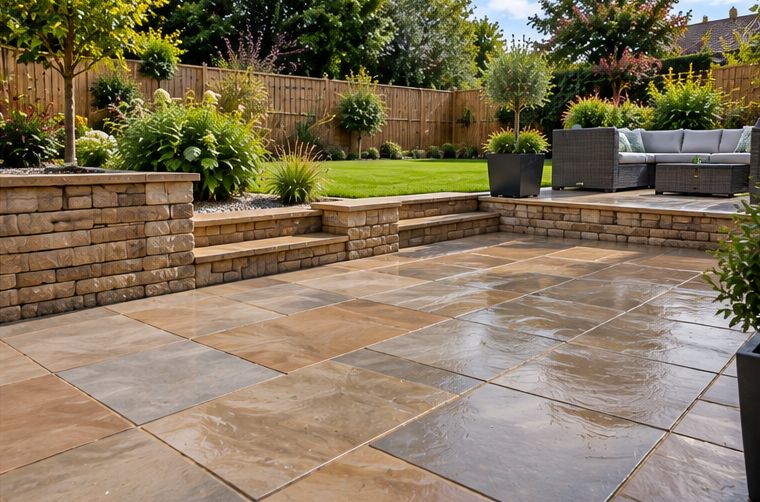
A new patio is the biggest single surface in most gardens, so it sets the tone for everything around it. Against the red brick, bay windows and stone dressings of a Victorian or Edwardian house in Penarth, the wrong paving can look like it came from a different street. The right one can make a new terrace look as though it has always been there.
We lay a lot of patio slabbing and paving, and the question of material comes up at every visit. Here is how we help Penarth homeowners choose, with the local weather and the age of the house in mind. For a general comparison of man-made and natural options, see porcelain, sandstone or concrete.
Take your lead from the house
Walk round the outside of the house before looking at samples. Most period villas in Penarth have a mix of red or buff brick, painted render, stone sills and slate roofs. The patio does not need to match any of them exactly, but it should sit in the same family of colours. Warm buffs and soft greys usually suit red brick, while cooler greys and blue-black tones work with slate and white render.
Look at the ground floor too. A patio stepping out from tall French doors or a garden room needs to meet the threshold neatly, and old houses often have awkward levels, air bricks and damp courses close to the ground. We keep new paving safely below the damp course and set a slight fall away from the walls, which matters more on an old house than on a new one.
Sandstone: the natural first choice
Sandstone is the stone most people picture on a period terrace, and for good reason. It comes in warm, varied colours that look at home against Victorian brick. Indian sandstone is the most widely available today, in riven finishes with a natural textured face or sawn finishes with a smooth, crisp edge.
Riven sandstone suits a relaxed, cottage-style garden; sawn sandstone with tight joints looks more tailored and works well in the formal layouts many Penarth villas suit. Being a natural stone, sandstone is porous, so in shady, damp spots it can pick up green growth and some staining. A sealer can help, and so can a sensible cleaning routine, which we cover in how to clean and look after a new patio.
Limestone and granite for a crisper look
Limestone is usually denser and smoother than sandstone, often in blue-grey or black tones. It suits villas with painted render or slate details and gives a calm, even finish. Some darker limestones fade a little in strong sun, so it is worth looking at a weathered sample.
Granite is very hard wearing and copes well with wet, salty weather. On a period garden it often looks best used for details rather than the whole terrace: setts for an edging band, a step tread or a strip along a path. Those small touches tie a modern patio back to the Victorian street outside.
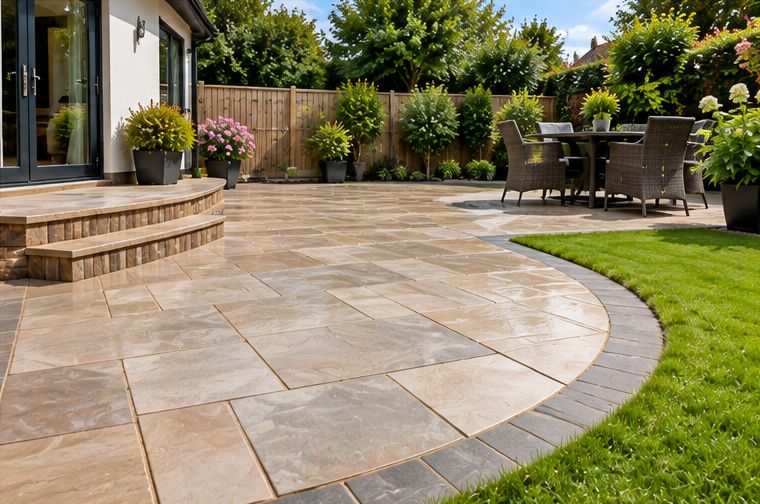
Porcelain: modern, but it can still work
Porcelain is the lowest-maintenance option for a seaside garden. It absorbs very little water, so algae and salt have far less to hold on to, and it cleans easily. The worry with a period house is that it looks too clean and too modern.
That depends on the product. Many porcelain ranges now imitate sandstone or limestone closely, with a textured face and varied tones. Laid in a traditional pattern, a good stone-look porcelain can sit comfortably beside an Edwardian house. We would steer away from very large, glossy or bright white tiles on most Penarth villas, but for a garden room extension or a rear terrace out of sight of the street, a sleek finish can look right.
Brick and clay pavers for paths and edges
Clay pavers laid in herringbone or basketweave are a natural partner for red-brick houses. They are ideal for paths down a long garden, a small courtyard or an edging band around a stone patio. Using a brick that picks up the colour of the house ties the whole garden together.
- Use clay pavers rather than concrete blocks where the look matters: they keep their colour far better.
- Match the paving pattern to the scale of the space. Herringbone suits paths; larger courtyards can take a stretcher bond.
- Check front paths first. If your house still has an original tiled path, it is usually worth repairing rather than replacing.
Laying stone properly on older ground
Whatever the stone, the patio is only as good as the base underneath. Gardens behind old Penarth houses can hide all sorts of things: old paths, coal cellars, soft made-up ground or roots from mature trees. We dig out to firm ground, build a compacted sub-base and lay each slab on a full bed of mortar, which stops slabs rocking and holding water. The full method is in how a patio should be laid.
Drainage is worth extra thought on the coast. A patio that sheds water quickly dries faster, which means less algae and fewer slippery patches through the winter. On a big terrace next to the house, a channel drain at the threshold is often a good idea.
Making the choice
In practice, most villa owners we talk to end up with sandstone for warmth and character, or stone-look porcelain for easy care, often with a brick or granite detail to connect the two. Ask to see samples wet as well as dry: many stones change colour a great deal after rain, and in Penarth your patio will spend a fair amount of the year damp.
The patio also needs to fit the wider design. If you are planning shelter, planting or a deck at the same time, our coastal garden design ideas for Penarth homes will help you think about the whole garden before choosing the stone.
Talk to T J Landscapes about your garden
Free quotes and honest advice across South Wales.
Questions People Ask
Which patio stone needs least upkeep near the sea?
Porcelain, because it absorbs so little water. Granite comes close. Sandstone needs more care in shady spots but ages beautifully if it is cleaned now and then.
Will salt air damage natural stone?
Salt air on its own rarely damages good paving, but in exposed Penarth gardens it can leave a haze or encourage staining on porous stones. A light wash with clean water a few times a year and a sealer where suitable keep most stone looking good.
Can you match new paving to an old stone path?
Often we can get close, either by choosing a stone in similar tones or by reusing original flags in a feature area. Weathered stone takes time to match exactly, so we talk that through at the quote.
Do I need permission to pave a front garden in Penarth?
It depends on the area, the size and whether water drains away onto the garden or into the road. Rules on front garden paving and conservation areas vary, so check with the Vale of Glamorgan Council first. We are landscapers, not planners, but we can build with drainage in mind.
How do we get a price?
Stone choice, patio size, access through or around the house, levels and how much needs digging out all shape the figure. See our Penarth landscaping page for what we do locally, then book a free quote and we will bring samples.