
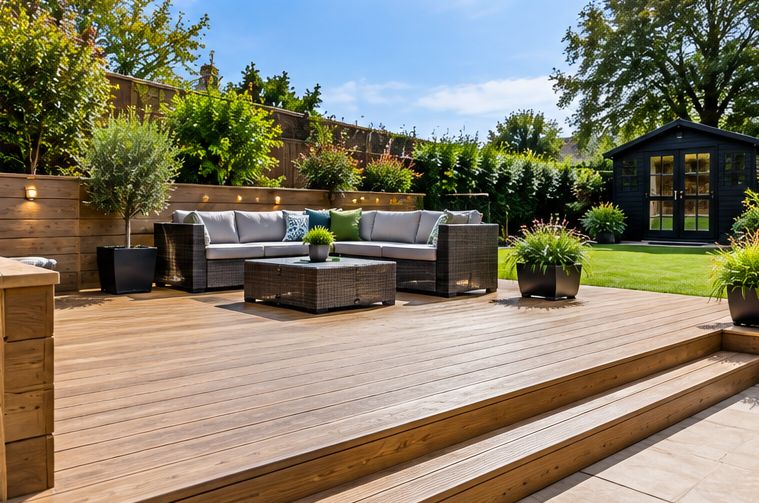
Some of the nicest spots in Penarth are a few feet above the lawn. From a sloping back garden you might catch the water, the lights of the marina or the long line of the Cardiff skyline, but only if you are standing at the right height. A raised deck is often the simplest way to put a table and chairs exactly there.
It is also one of the garden projects that needs the most thought before building starts. Height changes the rules, the wind and the view into neighbouring gardens. Here is how we approach garden decking for a view in Penarth, from the first site visit to the finishing touches.
Find the viewpoint before the design
The first job is simple: stand in different parts of the garden, at different heights, and see what you can actually see. Sometimes the best outlook is from a spot near the house where a modest platform off the back door is enough. In other gardens it is halfway down a slope, where a free-standing deck works better.
Think about the sun as well as the view. A west-facing deck catches the evening light, which is when most people sit out. A deck that looks north over the water may have a wonderful view but feel cool, so it might suit morning coffee more than long dinners.
Height, planning and building rules
Height is where raised decks get complicated. As a general rule, decking or a raised platform more than about 30cm above the ground usually needs planning permission, and parts of Penarth fall within conservation areas where extra controls can apply. The rules change from time to time, so check with the Vale of Glamorgan Council before committing to a design. We are landscapers, not planners, but we can give you the heights and drawings to help that conversation.
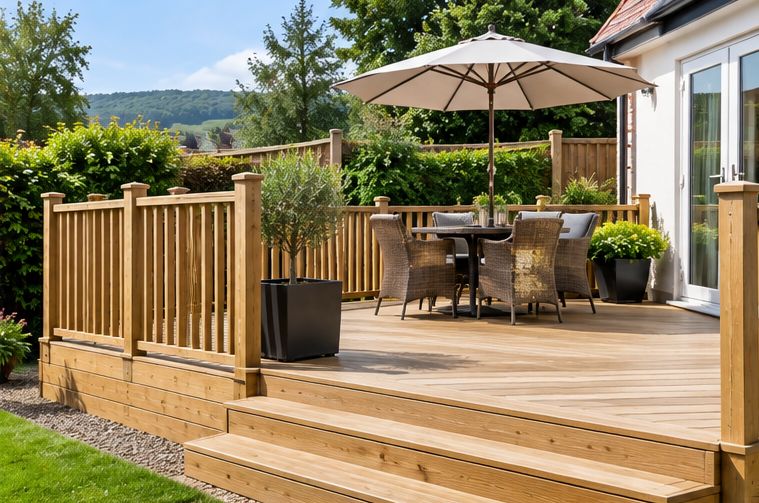
Even where permission is not needed, a high deck needs a safe balustrade and well-built steps. We plan those from the start rather than adding them afterwards, because they shape the whole look. Our general guide to raised decking covers frames, posts and steps in more detail.
Keeping neighbours onside
Many Penarth houses stand close together, with long gardens running side by side. A deck that lifts you above the fence line can look straight into the garden or windows next door, which is the most common reason raised decks cause friction.
- Set the deck back from the boundary where you can, and face it towards the view rather than along the gardens.
- Use screens, trellis or tall planters on the sides that overlook neighbours.
- Keep the height to the minimum that gives you the view: sometimes a step or two is enough.
- Have a friendly word next door before work starts. It saves a lot of trouble later.
A frame and fixings for salt air
What you cannot see matters most on a coastal deck. We build the frame from pressure-treated timber, set posts on solid concrete footings, and use stainless steel or suitably coated screws and brackets throughout. Cheap fixings are the first thing to fail in the sea air around Penarth, and a rusted joist hanger is not something you want under a raised platform.
On a slope, the posts on the low side can be quite tall, so bracing is important to stop the deck swaying. The ground under older gardens can also be uneven or soft, so each footing is dug to firm ground.
Don't forget the space underneath
A deck lifted well off a slope leaves a void below it, and that space needs a plan. Left bare, it fills with weeds, wind-blown leaves and litter. We usually lay a weed membrane topped with gravel, and where there is enough headroom the space can make useful dry-ish storage for garden chairs or bins. Skirting boards or trellis around the edges tidy the look and stop the wind whistling underneath.
Drainage matters here too. Rainwater running down a Penarth slope should pass under the deck freely rather than pooling around the footings, so we check the natural fall before setting the posts.
Timber or composite boards by the sea
Both work in Penarth. Composite boards stand up well to salt and damp and need little more than a wash now and then. Good timber looks natural, weathers to a soft silver and can be sanded and re-oiled, but it needs more care on an exposed site. Our article on composite or timber decking goes through the pros and cons.
Whichever you choose, grip matters. A raised deck that stays damp through the winter can get slippery, and a fall from height is more serious than a slip on the lawn. Grooved or textured boards, good gaps for drainage and regular cleaning all help; see how to stop decking going slippery.
Balustrades that keep the view
The balustrade is where you choose between shelter and outlook. Glass panels keep the view almost completely clear and cut the wind, but they take a lot of load in a gale and show every speck of salt spray, so they need cleaning often. Stainless steel wire or slim metal rails keep the view open without catching much wind. Timber spindles are the traditional option and suit period houses, though they block more of the view.
A mix often works best: something solid or screened on the windward side and open rails facing the view. That gives you a sheltered corner to sit in without losing the reason the deck was built.
Finishing touches
Low lighting on steps and edges makes a raised deck safer after dark and lovely on summer evenings. Planters built into the edges soften the structure and can double as a windbreak if filled with tough coastal shrubs. For more ideas, see decking lighting, planters and finishing touches, and for how a deck fits into the wider garden, our coastal garden design ideas for Penarth homes.
Talk to T J Landscapes about your garden
Free quotes and honest advice across South Wales.
Questions People Ask
How high can a deck be without planning permission in Penarth?
Generally around 30cm above ground level, but conservation areas and other local factors can change that. Check with the Vale of Glamorgan Council before building anything higher.
Will a raised deck be too windy to use?
It will be windier than the lawn, but screening on the exposed side makes a big difference. We look at where the prevailing wind comes from and place screens or planting to create a sheltered corner.
Can a deck be built on a steep Penarth garden?
Yes. Decks are one of the easiest ways to create level space on a slope, because the frame can be built up on posts rather than digging and building retaining walls. The steeper the slope, the more bracing it needs.
Is glass balustrading worth it by the sea?
If the view is the whole point, it can be. Just expect to clean it regularly, as salt spray and rain spots show clearly on glass.
What affects the price of a raised deck?
Height, size, the slope, access for materials, the boards and balustrade you choose, and how many steps are needed. Our Penarth cost guide and our Penarth landscaping page give more background, or ask us for a free quote.