
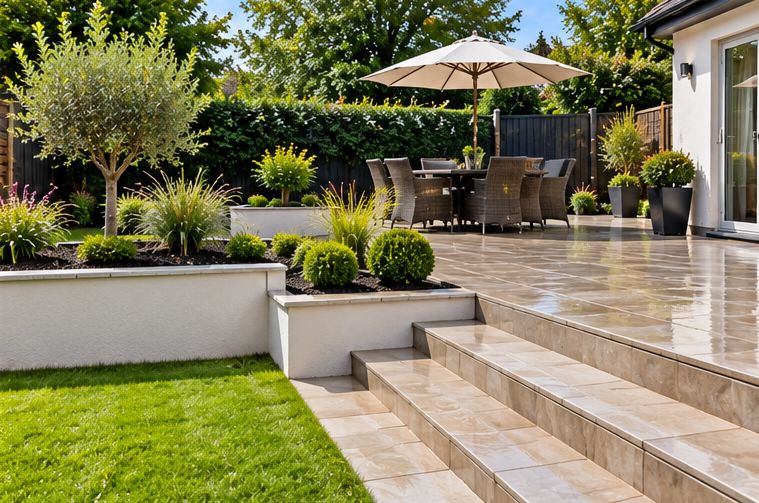
If you have ever seen a hedge in Penarth that is green on one side and scorched brown on the other, you have seen salt wind at work. Fine spray carried off the Bristol Channel settles on leaves, draws moisture out of them and burns soft growth, especially after an autumn gale. Add drying wind and a sunny, open plot, and plenty of popular garden plants simply give up.
The answer is not to avoid planting, but to choose the right plants for the front line and let them shelter everything else. This is how we approach planting as part of landscaping and garden design in Penarth, with plant suggestions that are widely grown in coastal gardens. Plant names and varieties vary, so a good nursery is always worth asking too.
How seaside plants cope
Plants that handle salt usually have leaves that stop the spray doing damage. Thick, leathery or waxy leaves shed it; silver and grey leaves are often covered in fine hairs that keep salt off the surface; narrow or needle-like leaves offer less to catch. Once you know the signs, you can spot likely candidates in any garden centre.
Even so, shelter makes a huge difference. A tough outer layer takes the brunt of the weather, and behind it a much wider range of plants will grow. In most Penarth gardens that means thinking in layers: windbreak, then shrubs and perennials, then the softer plants closest to the house.
The front line: shelter hedges and shrubs
These are the plants we look to for the most exposed boundary. They are widely planted along the British coast and generally take salt wind in their stride.
- Griselinia: glossy, apple-green leaves and a neat, dense habit. A popular seaside hedge, though it can be touched by a very hard frost.
- Escallonia: evergreen with small pink, red or white flowers through summer. Clips well and is a classic coastal hedge.
- Elaeagnus: tough, leathery leaves with a silvery underside and scented autumn flowers. Grows quickly into a thick screen.
- Olearia (daisy bush): grey-green leaves and masses of white daisy flowers; many types are very wind-hardy.
- Sea buckthorn and Rosa rugosa: good for informal, wilder boundaries, both thorny and both happy in salty air.
- Euonymus japonicus: glossy evergreen that copes well near the sea and suits a more formal clipped look.
Shrubs and perennials behind the shelter
Once the wind is filtered, a Penarth garden can hold a surprising range of colour. The mild climate near the sea often lets plants flower well into autumn.
- Hebes and pittosporums for evergreen structure and neat shapes.
- Lavender, rosemary, santolina and cistus for sunny, well-drained spots, with scent and a Mediterranean feel.
- Hydrangeas and hardy fuchsias, which do surprisingly well in sheltered coastal gardens.
- Agapanthus, crocosmia, sea holly and sedums for late summer colour.
- Thrift and Mexican fleabane for edges, walls and gaps in paving.
Grasses and movement
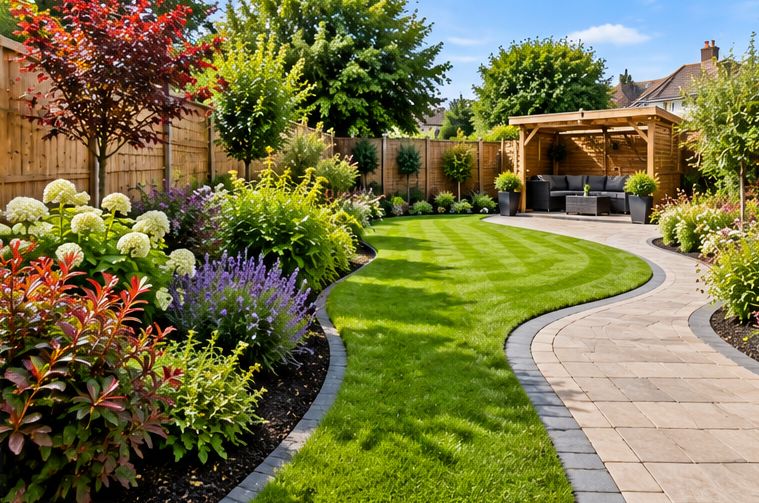
Grasses suit exposed gardens because they bend rather than break. Blue fescue, pheasant grass and fine-leaved stipa all look good moving in the breeze and pair well with gravel. For height and a more architectural look, phormiums and cordylines are common in seaside planting, though a young cordyline may need a sheltered spot in its first winters.
A gravel garden with grasses and silver-leaved plants is also one of the lowest-maintenance ways to plant a sunny, open corner. There are more ideas in how to plan a low-maintenance garden.
Plants to think twice about on exposed plots
Some garden favourites struggle in the most exposed parts of Penarth. That does not mean they cannot be grown, only that they belong in the calmest corners, close to the house or behind a good hedge.
- Large, soft-leaved plants such as hostas and many ferns, which tear and scorch in wind.
- Japanese maples and other delicate trees, whose thin leaves brown quickly in salty air.
- Tall perennials that need staking, such as delphiniums, which get flattened in the first autumn gale.
- Camellias and rhododendrons on open sites, which prefer shelter and moist, acidic soil.
Trees for shelter in bigger gardens
Many of the larger villa gardens in Penarth have room for a tree or two as part of the windbreak. Hawthorn, rowan and some pines are commonly planted in coastal areas and cope with exposure well. Plant young trees, stake them low so the trunk can flex, and give them plenty of room from the house and neighbours. If you already have a large, mature tree that needs attention, our guide on pruning large trees in Penarth gardens explains what to check first.
Planting so it settles in
Most failures in exposed gardens happen in the first year, before roots have spread. A few simple steps give new plants the best start.
- Plant in autumn or early spring, when the soil is moist and the plants are not trying to cope with summer heat.
- Start with younger, smaller plants for hedges. They establish faster in wind than big specimens.
- Improve tired soil with topsoil and organic matter, and loosen compacted ground before planting.
- Use a temporary windbreak mesh on the seaward side for the first season on very exposed plots.
- Water well through the first summer, because wind dries soil much faster than people expect.
- Mulch with gravel or a heavier bark that will not blow away.
Looking after a coastal border
After a big storm, some browning on the seaward side is normal, even on tough plants. Wait until spring to cut back damaged growth, as it gives the plant some shelter over winter. Hedges are best trimmed outside the bird nesting season where possible; our guide to hedge trimming covers timing.
If a border has been left to its own devices for years, it may be quicker to clear and start again than to rescue it. See clearing a long-neglected Penarth garden, and for how planting fits into the bigger picture, coastal garden design ideas for Penarth homes.
Talk to T J Landscapes about your garden
Free quotes and honest advice across South Wales.
Questions People Ask
What is the best hedge for a windy Penarth garden?
Griselinia, escallonia and elaeagnus are three of the most reliable for seaside boundaries. The right one depends on how formal you want the hedge, how much space you have and how exposed the spot is.
Why has my hedge gone brown on one side?
In Penarth, browning on the seaward side after a gale is very often salt scorch rather than disease. Tough hedges usually recover with new growth in spring. If a hedge keeps browning badly, it may be the wrong plant for the spot.
Can I grow vegetables in an exposed coastal garden?
Yes, with shelter. Raised beds behind a hedge or slatted fence, in the lee of the house, give crops the protection they need. Sleeper beds also warm up faster in spring.
Will a hedge give better shelter than a fence?
Often, yes, because it filters the wind rather than blocking it. A fence gives instant privacy, though. Many Penarth gardens use both; see fencing that survives sea winds in Penarth.
Do you plant as well as build?
Yes. Planting is part of most of our garden projects, from a new hedge to fully planted borders around a new patio. See our Penarth landscaping page, then ask for free advice and a quote.