

Grass is tougher than most garden plants, which is why a lawn is often the first thing people want when a Penarth garden has been cleared or rebuilt. The catch is that fresh turf has almost no roots when it arrives. For the first few weeks it depends on the soil underneath and the weather above, and on the higher, seaward streets of Penarth that weather includes a steady drying wind and the odd mist of salt off the Bristol Channel.
This guide covers the local side of the job: how exposure changes the way we prepare and lay a lawn, and what you can do afterwards to help it knit down. For the general method, our guides on preparing the ground before laying turf and turf or seed go through the basics, and our turf laying page shows the work Tony and the team do.
What a sea breeze does to a young lawn
Wind is the bigger problem, not salt. Moving air pulls moisture out of the leaf and the top few centimetres of soil far faster than still air does, so newly laid rolls can shrink at the edges and open up gaps within a couple of warm, breezy days. Once the joints open, the edges dry, curl and go brown, and those lines can show for months.
Salt matters mainly in gardens that face the water directly or sit high and open. Spray carried inland on a strong onshore wind can scorch the tips of the grass, especially where it lands on a lawn that is already short of water. A well-rooted lawn usually shakes this off after the next rain. A lawn laid a fortnight ago has less in reserve.
Checking how exposed your plot really is
Not every Penarth garden is exposed. Plenty of long back gardens behind terraces and villas are well sheltered by walls, trees and the houses themselves. Before we plan a lawn, we look at the particular plot rather than assuming the worst:
- Which way the garden faces, and whether it looks out towards the Channel or back inland.
- How high it sits, and whether there is anything between it and the prevailing south-westerly wind.
- Where the gaps are: side passages, low boundaries and open corners often funnel the wind across the grass.
- Signs on existing plants, such as hedges browned on one side or shrubs that lean away from the sea.
- Shade from large trees, which brings its own problems for grass and can matter as much as the wind.
That tells us whether ordinary preparation will do or whether the lawn needs extra help from the soil, the timing and some shelter.
Soil deep enough to hold water
On an exposed site the soil is the lawn’s water tank. Garden soils around Penarth vary a lot from one street to the next, and many older gardens have a thin layer of topsoil over heavier or stonier ground, sometimes with builders’ rubble left from long ago. Grass rooted in a few centimetres of soil will dry out quickly whatever you do with the hose.
So we dig or rotavate deeper where it is needed, take out stones and rubble, break up compacted patches and bring in good topsoil if the existing layer is poor. Heavy ground may need organic matter or sharp sand worked in so it drains in winter but still holds moisture in summer. Where the lawn sits lower than the rest of the garden and stays wet, our guide on stopping a garden waterlogging covers drainage options.
The finished surface is raked level and firmed evenly, then given a pre-turf feed. A firm, even bed matters more on a windy plot, because any hollow under a roll dries out first.
Picking the right weeks on the coast
Turf can be laid for much of the year in South Wales, and our guide to the best time to lay turf explains the general picture. For an open coastal garden in Penarth we lean firmly towards autumn and early spring. The ground is still warm or warming, rain does much of the watering, and the drying winds of a bright spring or summer spell are less of a worry.
We also watch the forecast for the days either side of laying. A calm, damp spell is ideal. If a dry, blustery few days are forecast, it is often better to move the delivery than to fight the weather, because turf should go down as soon as it arrives.
Laying it tight, and giving it some shelter
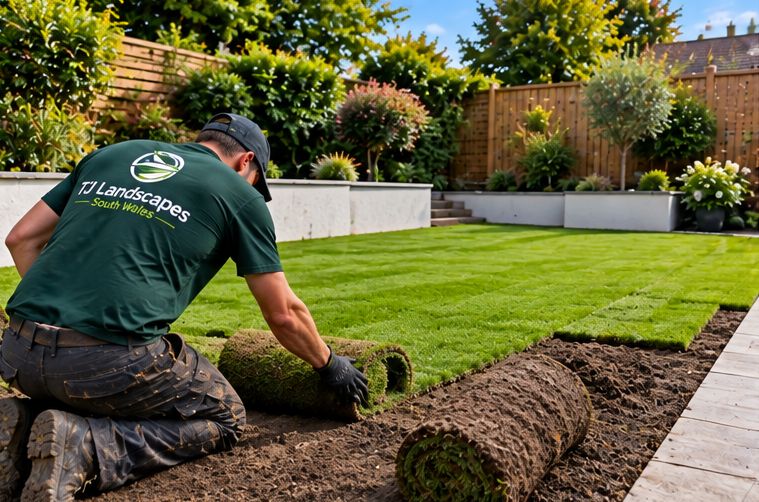
How the turf goes down makes a real difference in the wind. We stagger the joints like brickwork, butt every roll tightly against the next, and avoid small offcuts at the edges where they dry out fastest. The whole lawn is firmed down so the roots are in full contact with the soil, then watered straight away.
Longer term, shelter helps the lawn as much as the people using the garden. A hedge, a slatted fence or a planted border on the windward side slows the air across the grass without creating the swirling gusts a solid wall can cause. Our guide on fencing that survives sea winds in Penarth explains why filtering the wind works better than blocking it, and salt-tolerant planting suggests shrubs that can form a windbreak.
The first six weeks in a windy garden
Aftercare is where most new lawns succeed or fail. On a sheltered plot a good soak every day or two in dry weather is usually enough. On an open Penarth garden, expect to water more often in the first fortnight, especially on breezy days when it does not feel particularly hot. The test is simple: lift a corner. If the soil underneath is dry, water deeply.
- Water early in the morning or in the evening, so less is lost to wind and sun.
- Pay extra attention to edges and joints, which dry out first.
- Keep off the lawn until the roots have gripped, usually two to three weeks.
- Make the first cut a light one, with the mower blades set high.
Our guide to caring for new turf in the first six weeks goes into more detail.
When a lawn is not the answer
Sometimes the most exposed strip of a Penarth garden, often the far end with the view, is simply a hard place for grass. Rather than fight it every summer, it can make sense to keep the lawn in the more sheltered part and use that end for a paved or gravelled seating area, tough coastal planting or a raised deck. We are happy to talk through the options as part of a wider landscaping plan, and the Penarth garden page shows how we approach coastal plots generally.
Talk to T J Landscapes about your garden
Free quotes and honest advice across South Wales.
Questions People Ask
Can turf be laid in Penarth in summer?
It can, but on an exposed plot it takes a lot of watering and some luck with the wind. Where there is a choice, autumn or early spring gives the roots a much easier start.
Will salt spray kill my new lawn?
Rarely. It can scorch the tips on the most open, seaward gardens, but good soil, regular watering and some shelter on the windward side usually mean the grass recovers quickly.
Should I choose a special turf for the coast?
A good hard-wearing garden turf suits most Penarth lawns. The preparation, timing and aftercare matter far more than the variety. For heavily shaded areas we may suggest a shade-tolerant mix.
Is artificial grass better on a windy plot?
It avoids the watering, and some people prefer it for a small, open area. It still needs a properly prepared base with drainage, and it gets hot in full sun. We can talk through both options on a free visit.
How do I arrange a visit?
Tell us roughly how big the lawn area is and how exposed the garden feels, and ask for a free quote. Tony will come and look at the ground, the aspect and the access before suggesting anything.