
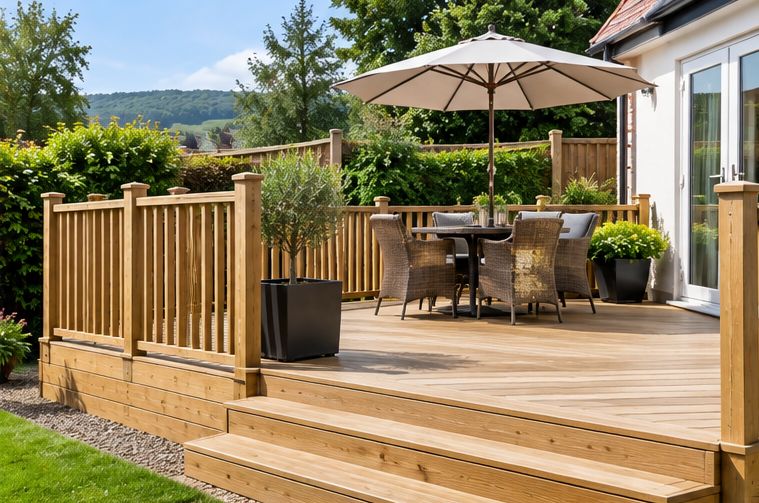
A deck is a lovely way to enjoy the long light evenings on the coast, and in Port Talbot it has some real advantages. It goes down quickly, it lifts a seating area above damp or uneven ground, and it can turn an awkward corner into the best spot in the garden. What it has to cope with is salt carried on the wind off Swansea Bay, fine sand that gets into every gap, and a good deal of rain in between.
This guide covers the parts of a deck that matter most on the coast, and how we build decking for Port Talbot gardens so it stays solid and good to look at. Our garden decking page shows the kinds of decks we build, and composite or timber decking compares the two main board types.
What salt actually does to a deck
It helps to know where the damage comes from. Salt settles as a fine film on every surface near the sea, and it pulls moisture out of the air. On metal, that keeps a thin wet layer in place for longer, and ordinary steel screws, nails, joist hangers and bolts start to rust. The rust stains the boards, weakens the fixing and eventually lets the board lift or the frame loosen.
Treated timber and composite boards usually cope with salt far better than cheap metal does. The weather still takes its toll on the wood, through sun, wind and wet, but the first thing to fail on a poorly built coastal deck is usually a fixing, not a board.
The metalwork: small parts, big difference
On decks in Port Talbot, especially those within sight of the sea, we use stainless steel screws and properly galvanised or coated hangers, brackets and bolts. The extra cost is small compared with the whole deck, and it is the single biggest thing you can do to help a coastal deck last.
- Stainless or coated deck screws for fixing boards to joists.
- Galvanised or coated joist hangers and post brackets.
- Stainless or coated handrail and balustrade fittings on raised decks.
- Hidden clip systems on composite boards that are designed for outdoor use.
If you already have a deck with rust stains spreading from the screws, it is often possible to replace the fixings before the frame is affected. We check each joist connection at the same time, because a rusted hanger hidden under the boards is easy to miss until the deck starts to bounce.
Footings on sandy ground
Close to Aberavon Beach, a lot of gardens sit on light, sandy soil. It drains well, which helps keep a deck frame dry, but it is loose and can shift if posts are simply sunk in a shallow hole. We set support posts or pads on firm, compacted footings, going deeper where the sand is soft, and keep all timber off the ground with a gap underneath for air to move.
Further inland the ground can be heavier and hold water, and on those plots we pay more attention to drainage under the deck and a weed membrane with gravel to stop growth coming up between the boards. Either way, a frame that stays dry and well ventilated lasts far longer.
Many Port Talbot decks also sit against the back wall of the house. Here we keep the deck surface below the damp-proof course and leave a small gap at the wall, so rain can drain away rather than being trapped against the brickwork.
Timber or composite by the sea?
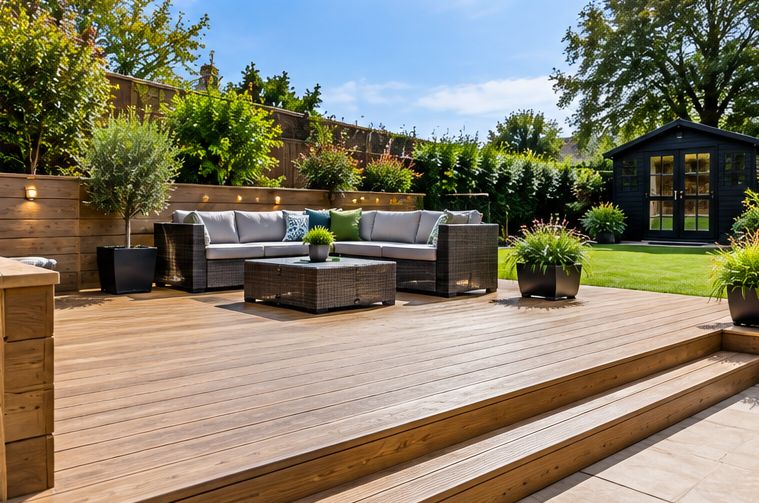
Both work in Port Talbot when they are fitted properly. Pressure-treated softwood is the traditional choice. It looks natural, can be stained, and a well-treated frame and board will last many years if it is cleaned and re-treated regularly. It will weather to a silvery grey if left, which suits a seaside garden well.
Composite boards need less upkeep. They do not need staining, they resist rot and most modern boards cope well with salt and sun. They can get warm underfoot in strong sun, and the frame beneath is often still timber, so the footings and fixings still matter. Our guide to how long garden decking should last covers what to expect from each.
Grip, sand and slippery boards
Salt, blown sand and algae all affect how a deck feels underfoot. On shaded parts of a Port Talbot garden, a green film can build up over winter and make boards slippery, and sand trodden in from the beach works into grooves and acts like sandpaper on the surface.
Grooved boards, anti-slip inserts or textured composite all help. A regular sweep and a wash with a suitable deck cleaner keep the surface safe. Our guide on how to stop decking going slippery goes into more detail.
Shelter and where to put the deck
A deck in the full path of the wind is rarely used. The calmest corner of the garden is usually the best spot, with a slatted screen, trellis or planting on the windward side. Built-in planters along the edge can hold tough, salt-tolerant plants that soften the look and add shelter at the same time.
A small raised deck can also make the most of a view, while a low deck beside the house makes an easy step out from the back door. Our article on coastal garden ideas for Port Talbot homes and our guide to planting for wind and salt have more on shelter.
Keeping a coastal deck in shape
A short routine goes a long way. In spring, sweep off sand and leaves, wash the boards, check for loose or rusting screws and look underneath for any damp or soft timber. Re-treat timber boards every year or two, depending on how exposed they are. After a big storm, check handrails and balustrades on raised decks.
If you are weighing decking against paving, our patio paving for Port Talbot homes guide covers the other option. Our decking in Port Talbot page shows what we build locally, and you can ask for a free quote any time.
Talk to T J Landscapes about your garden
Free quotes and honest advice across South Wales.
Questions People Ask
Will decking rot quickly in Port Talbot?
Not if it is built well. Pressure-treated timber, a frame kept off the ground, good ventilation and regular cleaning keep rot at bay. Salt tends to attack cheap fixings before it troubles the wood.
Is composite decking better by the sea?
It needs less upkeep and resists rot, which suits a busy family or holiday home. Well-maintained timber can last just as well. The fixings and frame matter in both cases.
Can you build a deck on sandy ground near the beach?
Yes. We set the supports on firm, compacted footings and go deeper where the sand is soft, so the deck stays level. Sandy ground drains well, which helps keep the frame dry.
What affects the cost of a deck in Port Talbot?
Size, height, the boards and fixings you choose, the ground conditions, access for materials and extras such as steps, balustrades and lighting. A free quote sets it all out.
Can you add decking to the rest of a garden makeover?
Yes, alongside paving, fencing, turf and planting. See our Port Talbot landscaping page for the full range, or get in touch for a visit.