
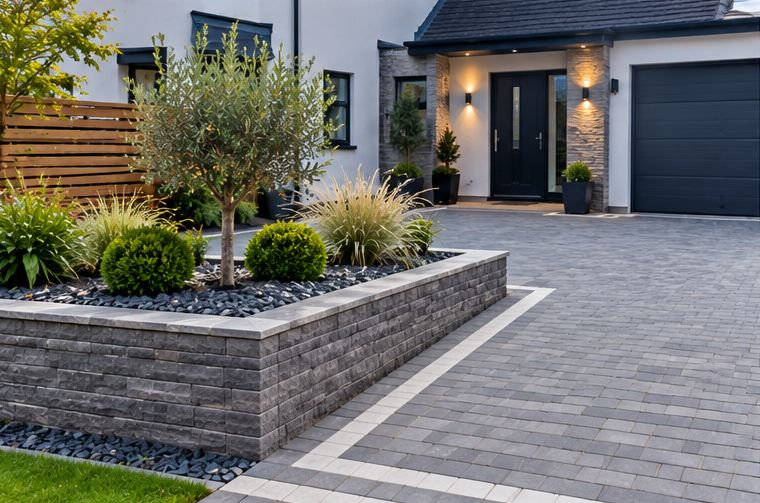
Living near the sea brings big skies, bright light and fresh air, and it also brings a garden that has to put up with a lot. Across the seaward side of Port Talbot, the wind comes in off Swansea Bay with very little to slow it down, and it carries salt and fine sand with it. Plants lean, furniture blows over and a seat that looked perfect on a calm day in June can be the coldest spot in the garden by October.
None of that means a coastal garden has to be bare or dull. It just means the ideas that work in a sheltered inland plot need adjusting. Below we set out the approach we take when planning a Port Talbot garden near the coast, from the first sketch to the finishing touches. For the wider picture of the town and the services we offer, see our landscaping in Port Talbot page.
Start by reading the wind
Before drawing anything, it pays to spend a little time watching how the garden behaves. Stand in it on a breezy afternoon and notice where the gusts hit hardest, where litter and leaves collect, and which corner stays calm. Wind rarely blows straight across a plot. It funnels down gaps between houses, curls over walls and drops into the garden a few metres behind them.
In Port Talbot the difference between streets is striking. A home with an open view of the bay may feel exposed on most days, while one tucked behind a couple of rows of terraces, or further inland towards Margam, gets a far gentler version of the same weather. That is why we look at every garden on its own rather than applying one coastal formula to the whole town.
Split the garden into sheltered rooms
One large open lawn is the hardest layout to shelter. Breaking the space into two or three smaller areas, each with its own screen, gives you calm pockets to sit in and helps plants establish. It also makes a modest terrace or semi garden feel larger, because you cannot see everything at once.
- A seating area in the calmest corner, screened on the windward side by a slatted panel, trellis or a low wall.
- A working area for bins, washing and storage near the back door, where wind matters less.
- A planted zone of tough shrubs and grasses on the exposed edge, acting as the first line of shelter for everything behind it.
- Paths linking the areas so they are usable all year, even when the grass is wet.
Screens that filter rather than block
It is tempting to put up the tallest, most solid barrier you can. The trouble is that wind hitting a solid fence has to go somewhere, and it tends to tumble over the top and swirl on the sheltered side. A screen with gaps of roughly a quarter to a half of its surface slows the air instead, and the shelter stretches further into the garden.
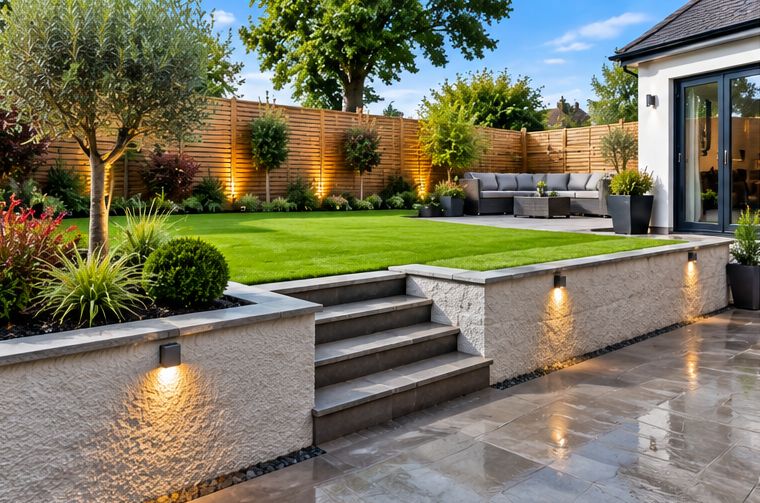
Hit-and-miss fencing, horizontal slats, woven willow and trellis with climbers all work well. A low brick wall topped with a slatted screen is a handsome and very durable option, and a thick hedge behind a fence gives shelter that improves with age. Our article on fencing that handles sea wind in Port Talbot goes into posts and fixings, and garden walls for Port Talbot homes covers masonry windbreaks.
Hard surfaces for a salty, sandy site
Salt spray and blown sand find their way into everything. On the hard landscaping we favour materials that are dense, easy to rinse and slow to stain: porcelain, good-quality sandstone or granite for patios, and block paving for drives and paths. Joints should be well filled, because open joints soon fill with sand and weeds.
Decking can work very well by the sea if the fixings are right, and a raised deck is a useful way of getting a seat out of the dampest ground. The detail is in decking in a salty Port Talbot garden, and paving for smaller plots is covered in patio paving for Port Talbot semis and terraces.
Planting that likes the seaside
Plenty of plants are perfectly happy by the coast, and many of them look their best there. Silver-leaved and grey plants, tough evergreen shrubs and ornamental grasses tend to cope with salt and wind far better than soft, large-leaved plants. The rule of thumb is to put the toughest on the windward side and let them shelter the rest.
Near Aberavon Beach the soil is often light and sandy, so beds benefit from plenty of organic matter and a bark mulch to hold moisture and stop the surface drifting. We cover plant choice in more depth in planting for wind and salt in Port Talbot, and lawns on sandy ground in sandy soil and new lawns near Aberavon.
Small touches that suit the coast
Some finishing details make a seaside garden easier to live with. Heavy furniture, or pieces that can be folded and stored, will not end up in next door's garden after a storm. Stainless or coated metalwork keeps its looks, and a hose point near the patio makes it easy to rinse salt off surfaces and fixings every so often.
Low-level lighting along paths and steps lets you use the garden on long summer evenings, and raised beds built from brick or sleepers give herbs and vegetables a sheltered, well-drained spot. If you would rather spend less time on upkeep, our guide to low-maintenance gardens for Port Talbot homes has ideas.
Turning ideas into a plan
When we visit, we walk the garden with you, look at how exposed it is, check the ground and access, and talk through how you want to use the space. From there we can suggest a layout and the landscaping and garden design work involved, whether that is a full redesign or a few changes that make the existing garden more comfortable.
Every Port Talbot garden is quoted individually, because size, access, ground conditions, materials and how much waste needs removing all affect the work. Quotes and advice are free, so get in touch with a rough idea of what you would like and we will take it from there.
Talk to T J Landscapes about your garden
Free quotes and honest advice across South Wales.
Questions People Ask
What is the first thing to change in an exposed Port Talbot garden?
Shelter. Until the wind is slowed down, plants struggle and seating areas go unused. A well-placed slatted screen or low wall around one seating area often makes the biggest difference for the least disruption.
Is a lawn worth having by the sea?
Yes, if the ground is prepared properly. Grass copes with wind better than many plants, but sandy soil near the beach needs topsoil and organic matter worked in first so the turf can root and hold moisture.
Which paving copes best with salt air?
Dense materials such as porcelain, granite and good-quality sandstone generally cope well and are easy to rinse. Whatever you choose, well-filled joints matter, because blown sand soon finds any gaps.
Do coastal gardens need more upkeep?
A little more, mainly rinsing salt from furniture and fixings and checking fences after storms. Choosing the right materials at the start keeps that to a minimum.
Do you work on gardens across Port Talbot?
Yes, from the seafront near Aberavon to the streets further back from the bay. See our Port Talbot page or ask for a free quote.