
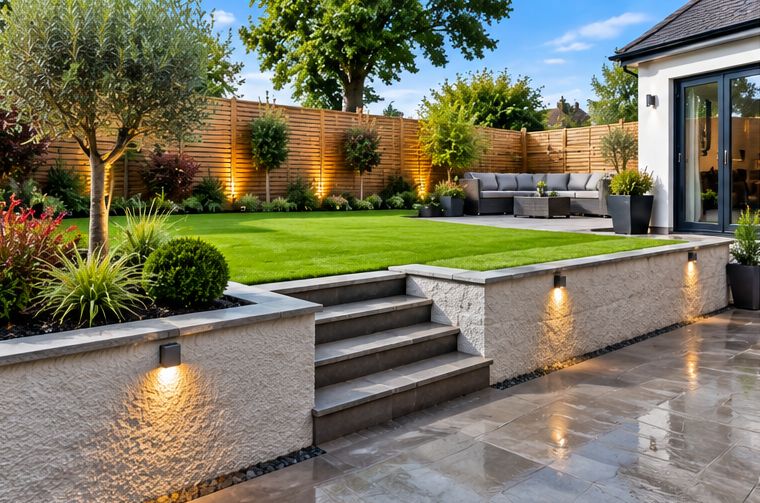
Just outside Monmouth the houses spread out and the gardens get much bigger: cottages with an orchard behind them, farmhouses with a paddock that has become a lawn, and newer homes on plots of half an acre or more. They are wonderful places, but they can be daunting when the whole lot needs rethinking.
Owners often tell us they do not know where to start. This guide explains how we approach a large makeover as part of our landscaping and garden design work, from the first walk round to a garden that is easier to live with. You can read about our wider work in the town on the landscaping in Monmouth page.
Walk the whole plot before planning any of it
The first visit to a rural garden takes longer than most, and it should. We walk every boundary, look at where water collects, note the trees and hedges, check how a vehicle could get in and ask how you actually use the space. Where do you sit in the evening? Where do the dogs run? What do you avoid mowing because it is too wet or too steep?
From that we build a list of everything that needs doing, then sort it into what must come first and what can wait. It is much easier to plan a budget and a timescale when you can see the whole picture, even if the work is done over two or three seasons.
The order we usually work in
On a large plot, doing things in the wrong order costs time and money. Laying a new lawn and then driving a digger across it to put in a drain is the classic mistake. We generally follow this sequence:
- Clear and assess. Cut back overgrowth and remove rubbish so the real shape of the land is visible.
- Drainage and levels. Deal with wet areas and any regrading while machinery can move freely.
- Boundaries. Fences, gates and hedges, so the garden is secure and defined.
- Routes. The drive, main paths and any steps, which set how you move around.
- Hard features. Patios, walls, raised beds and decking.
- Soft landscaping. Topsoil, turf, planting and bark, which go in last so they are not damaged.
This order is flexible. If the priority is a terrace by the house for this summer, we can do that first and leave the far paddock for autumn, provided the later work will not need to cross it.
Machinery, lanes and soft ground
Bigger jobs often need a mini digger, a tracked dumper and bulk deliveries of stone and soil. Country lanes around Monmouth can be narrow, with tight gateways and soft verges, so we check how a lorry will reach the property and where materials can be dropped without blocking the road.
Timing matters too. Heavy machinery on waterlogged ground leaves ruts and compacts the soil. On low land near the rivers, winter can be the wrong time for earthworks, and our guide to gardens near the Wye and Monnow explains why. Late spring through early autumn usually gives firmer ground, though planting and turfing have their own best windows.
Boundaries, hedges and old trees
A rural garden may have hundreds of metres of boundary: overgrown hedges, sagging stock fencing and gates that no longer close. Sorting these early makes the garden feel cared for straight away and keeps pets and livestock where they should be.
Our guide to post and rail or close board fencing for Monmouth plots compares the main options, and our fencing and gates service covers the installation. Established hedgerows and mature trees are part of the character of the countryside here; laying or trimming a hedge and lifting a tree's crown are often better than removal. See caring for mature trees in Monmouth gardens for more.
Drives and paths that stand up to country use
Long drives on rural plots take a lot of punishment from cars, delivery vans and sometimes tractors. Gravel on a properly built sub-base is the traditional country choice: it drains freely, looks right with stone houses and is simple to top up. A cellular grid underneath keeps it from rutting on soft ground.
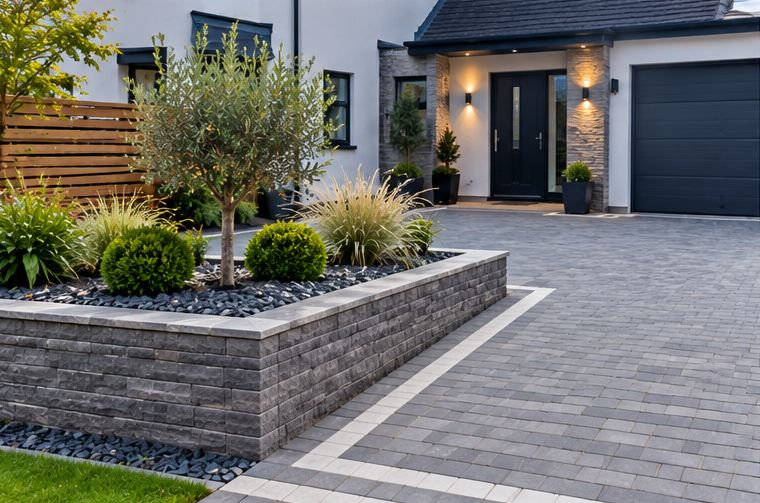
Near the house, where you want a cleaner surface for parking and walking, block paving or a stone apron works well. We lay paths, patios and driveways in a range of materials, and we can use edging to stop gravel spreading onto lawns and borders.
Deciding how much lawn you really want
It is easy to inherit an acre of grass and assume it all has to stay that way. A large lawn looks lovely but takes hours of mowing each week in the growing season. Many owners keep a generous, well-made lawn near the house and let the further areas become rough grass or wildflower meadow with mown paths through it.
Meadow areas are not simply grass left to grow. They do best on poorer soil, with the cuttings taken away after a late summer cut, and they may need the thick rye grass of an old lawn knocked back before wildflowers can compete. Done well, they bring in insects and birds and need attention only once or twice a year.
Where you do want a proper lawn, preparation is everything: good topsoil, drainage in the wet spots and a level finish. We cover that in laying a lawn in a large Monmouth garden.
Keeping the finished garden manageable
The most successful makeovers on big plots are the ones the owners can keep on top of. Wide borders mulched with bark, shrubs chosen for their mature size, raised vegetable beds at a comfortable working height and hard surfaces where you walk most all reduce the weekly workload.
Our general guide on planning a low-maintenance garden has more ideas. Once the main work is done, occasional help with a big cut-back in autumn or a hedge trim in late summer keeps things in shape without undoing the investment.
Talk to T J Landscapes about your garden
Free quotes and honest advice across South Wales.
Questions People Ask
Can a large garden makeover be spread over more than one year?
Yes, and on big plots around Monmouth it often makes sense. We plan the whole scheme first, then agree which stages to do now and which later, so nothing done early has to be undone.
Do you bring your own machinery?
We arrange the equipment the job needs, such as a mini digger or dumper, and check access along the lane and through gateways before anything is booked.
What drives the cost of a rural makeover?
The size of the plot, access for machinery and deliveries, ground conditions, drainage, levels, the materials chosen and the amount of waste to remove. We set all of that out in a free quote.
Can you clear the garden before the new work starts?
Yes. Our garden clearance service cuts back overgrowth and takes the green waste away, which is usually the first stage of a big project.
How do we get started?
Use the contact form to tell us about the plot and what you would like from it. We will arrange a visit to walk the whole garden with you and give free advice and a quote.