
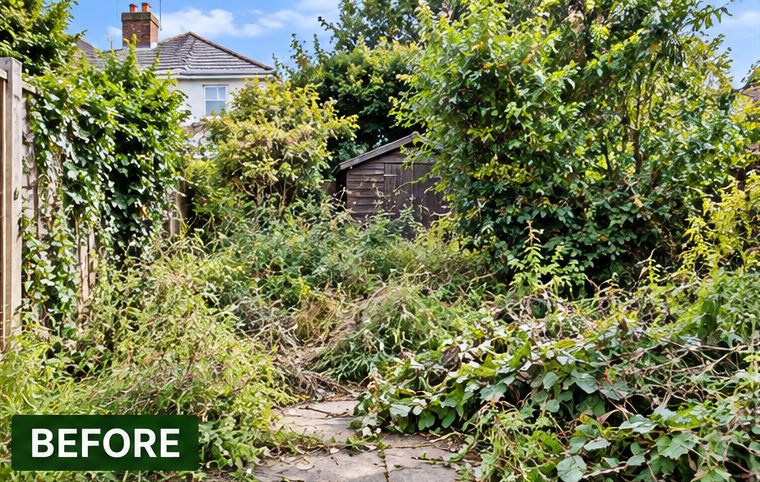
Most gardens need a proper clear-out now and then, whether it is a town garden that has been left for a couple of years or a large plot on the edge of Monmouth where the brambles have crept in from the hedges. The work itself is similar whenever it is done, but the season changes what makes sense to tackle, what should be left alone and what you end up with afterwards.
This guide walks through the year from a Monmouth point of view. For how a clearance works from start to finish, see our garden clearance page and the general guide on what happens during a garden clearance.
Late winter: the clearest view of the garden
January and February are often the best time to see what a garden is really like. With the leaves off, the shape of the borders, the state of the fences and the extent of any brambles or self-sown saplings are easy to judge. It is also a good time for heavier cutting back of shrubs and hedges, before birds start nesting.
The catch is the ground. After a wet winter, low-lying gardens near the Wye and the Monnow can be too soft to work without churning up the lawn. We plan routes across the garden and use boards where needed, and on very wet sites some jobs are better left until the ground firms up.
Spring: a tidy-up with care
Spring clearances are about getting the garden ready for the year: clearing dead growth from borders, lifting weeds while the roots are still shallow, edging lawns and taking away the debris from winter storms. It is a good time to clear a vegetable patch, empty old pots and sort out a neglected corner before the growth takes off.
From early spring onwards, birds are nesting in hedges, shrubs, climbers and even compost heaps. Active nests are protected by law, so we check carefully before cutting and leave anything with a nest until the young have flown. Heavy hedge and shrub work is usually best saved for late summer or winter. Our guide on hedge trimming: how often and when has more detail.
Summer: keeping on top of growth
By midsummer, a garden that was under control in April can look overgrown again. Brambles, nettles and bindweed grow fast, and on bigger rural plots around Monmouth, hedges and field edges can creep in by a surprising amount in a single season. A summer clearance cuts back the worst of it so the garden stays usable.
It is also the time to deal with anything that has got out of hand before it seeds. Some riverside areas in Wales are affected by invasive plants such as Himalayan balsam. Japanese knotweed is a separate issue: it must not be mixed with ordinary green waste, and it needs a proper treatment plan. If you think you have it, tell us before we visit.
Autumn: leaves, cutting back and getting ready
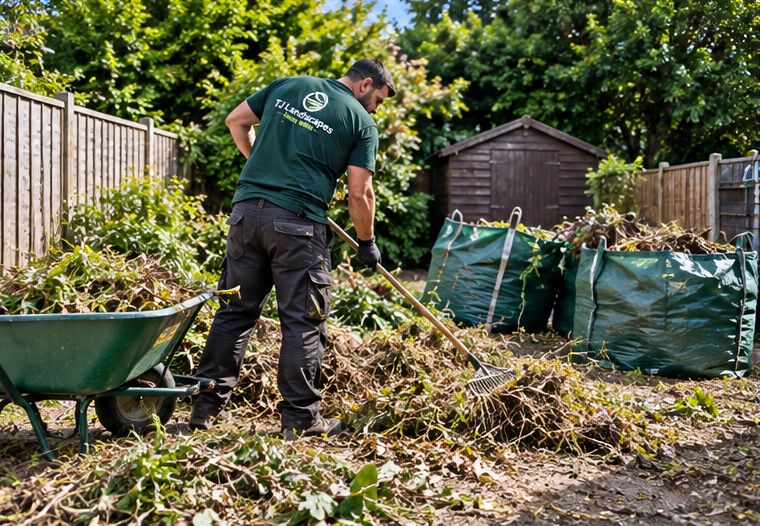
Many Monmouth gardens have large trees in or near them, and autumn brings a lot of leaves. Left on lawns, paths and patios, they smother grass and make paving slippery. A thorough autumn clearance gathers leaves, cuts back spent growth, clears gutters on sheds and outbuildings and leaves the garden tidy for winter.
Autumn is also a good time for larger jobs: clearing an overgrown area to make way for a new lawn or patio, removing old sheds and greenhouses, or taking out tired shrubs. Our guide Getting an Overgrown Garden Back Under Control covers the bigger clear-outs.
- Keep some leaves in a corner or under hedges, where they help wildlife and rot down into leaf mould.
- Leave a few seed heads standing for birds through the winter.
- Cut back soft, collapsed growth, but leave woody plants for their proper pruning time.
After the rivers have been high
When the Wye and the Monnow rise, gardens on the lowest ground in and around Monmouth can be left with silt, flattened plants and debris washed in from elsewhere. Once the water has gone and it is safe to work, a clearance can remove the mess, lift ruined plants and get the garden back into order.
Floodwater can carry contamination, so wear gloves, keep children and pets off affected areas until they are cleared and follow any guidance from Natural Resources Wales and Monmouthshire County Council. If flooding is a regular problem, talk to us about how the garden is laid out. Our article on gardens near the Wye and Monnow looks at planning for wet ground.
Where it all goes
Green waste from a big clearance adds up quickly, especially on a larger Monmouth plot. We take it away so you are not left with heaps to deal with. Garden waste is best composted or recycled rather than burnt, and some items, such as soil, rubble, old paint or asbestos, need different handling. Our guides on what can and cannot go in a garden clearance and where garden waste goes explain the details.
If you are clearing a garden because you are selling or letting a property, timing can matter even more. See clearing a garden before selling or letting a house.
Book a clearance at the right time
Tony and the team can take on one-off clearances or help you set up a pattern of seasonal visits, and can follow a clearance with tree and hedge work, new turf or a fresh layout. Read more about our work in the town on our Monmouth landscaping page, or ask for free advice and a free quote.
Talk to T J Landscapes about your garden
Free quotes and honest advice across South Wales.
Questions People Ask
When is the best time of year for a garden clearance?
There is no single answer. Late winter is good for seeing the shape of the garden and for heavy cutting back before nesting starts, while autumn suits big clear-outs before new work. Spring and summer clearances need extra care around nesting birds.
Can you clear a garden during the bird nesting season?
Yes, but carefully. We check hedges, shrubs and climbers for active nests before cutting, and anything with a nest is left until the young have gone. Some heavy hedge work is better moved to a different time of year.
Do you take all the waste away?
We take away the green waste from the clearance. Items such as rubble, soil, old paint or hazardous materials may need different arrangements, so please tell us about them when you book.
What affects the cost of a garden clearance?
The size of the garden, how overgrown it is, access, the amount and type of waste, and whether trees, stumps or outbuildings are involved. We explain it all in a free quote.
Can you clear a garden after a flood?
Yes, once the water has gone and it is safe to work. We clear silt, debris and damaged plants and take them away. For anything involving contaminated water or damage to the house, follow official guidance first.