
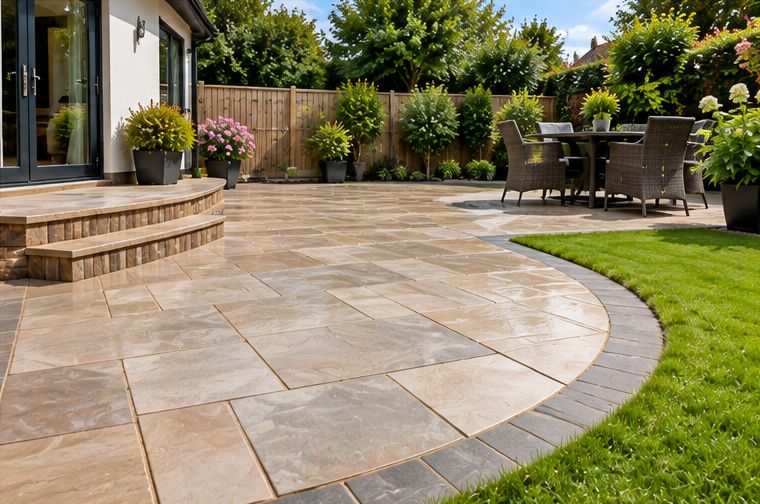
Semi-detached houses are a familiar sight on Cwmbran's estates, and their back gardens tend to share a pattern. There is a small paved area by the kitchen or back door, often only a slab or two deep, then a lawn, then a shed. It was fine for hanging washing and putting out a chair. It is not big enough for a table that seats the family, a barbecue and a few pots.
Extending the patio is a popular answer, but it is worth thinking beyond simply adding more slabs in the same place. This guide sets out the ideas we most often suggest for Cwmbran semis, and the practical points that make an extension last. You can see more of our work in the town on the landscaping in Cwmbran page.
Follow the sun, not the back door
The obvious place for a patio is right outside the house, but on a semi that faces north or east, that spot can be in shade by mid-afternoon. Before deciding on size, spend a day noticing where the sun sits at the times you would actually use the patio, usually early evening.
Sometimes the best answer is a modest patio by the door for the bins and the washing line, and a second seating area further down the garden where the evening sun lands, linked by a path. On a semi, the side of the garden away from the shared wall often gets more light, which can shift the whole layout to one side.
Ideas that work on a Cwmbran semi
Every garden is different, but these are the extensions we find ourselves suggesting most often on the town's estates:
- Wrap-around paving: taking the patio round the corner of the house into the side passage, so the passage becomes part of the seating area rather than a dark strip of concrete.
- An L-shape: a deeper section for the table on the sunny side, and a narrower path along the back of the house.
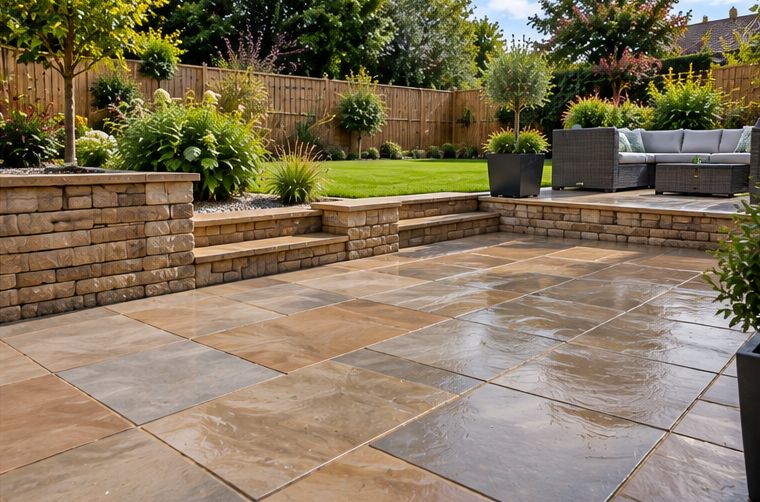
- A raised or sunken terrace: on sloping plots, a level patio held by a low wall with a step or two, which adds interest and can double as seating.
- A patio with built-in beds: raised beds or planters along one edge to soften the paving and give some privacy from next door.
- A patio and deck combination: paving by the house with decking further out, where the ground drops away.
Joining new paving to the old
A common question is whether the original slabs can stay. Sometimes they can, if they are sound and level, but the original concrete slabs on many estates have sunk, cracked or developed a slope back towards the house. Matching new paving to concrete that has been down for decades is rarely convincing either.
In most cases it is better to lift the old patio and lay the whole area again on a proper base, so the finish, levels and falls are consistent from end to end. If budget is tight, the old slabs can sometimes be reused as a sub-base or for a path behind the shed. Our guide to how a patio should be laid explains what should be under a good one.
Levels, damp courses and drainage
A patio against the house must sit below the damp-proof course, normally at least two brick courses below it, so rain splashing off the paving does not soak the wall. On some Cwmbran semis the existing ground is already too high, and the patio has to be dug down to get the level right.
Every patio also needs a gentle fall so water runs away from the house, into a border, a drain or a soakaway. On heavy, slow-draining ground, a bigger patio means much more water to deal with, so a channel drain at the lower edge may be needed. Where gardens climb the valley sides, water also arrives from the neighbours above, which is worth planning for at the start rather than after the first wet winter.
Choosing a material that suits the house
Most semis on the town's estates are brick or render, and they suit clean, simple paving. Porcelain gives a smart, even finish and is easy to keep clean. Indian sandstone has more variation and a softer look. Good-quality concrete slabs are a practical choice on a tighter budget. Our patio and paving page covers each in more depth, and which patio paving copes best with Welsh rain compares how they deal with the weather.
Whatever you pick, choose a textured or riven finish rather than a polished one if the patio will be in shade, because a smooth surface stays slippery when it is damp.
Keeping space for the rest of the garden
Family life in Cwmbran still revolves around the back garden, and a patio that swallows half the lawn can leave nowhere for the children to play. As a rough guide, size the seating area around the furniture you actually own, plus room to pull the chairs out and walk past, and keep the rest for grass and planting. If you have young children, child-friendly garden layouts for Cwmbran homes has ideas for balancing play space with a patio.
Planning your patio with us
Tony will look at the garden, the sun, the levels and the access, then suggest a size and layout that suits the house. We handle the whole job: lifting the old slabs, digging out, drainage, sub-base, laying and pointing, and taking everything away. Most semis have a side passage, which makes deliveries and waste far simpler than on a terrace, though a narrow gate or a step can still decide how big a machine we can use. If there is no side access, we will explain how materials get in and out. Many people pair a new patio with fresh turf on the rest of the lawn, so the whole garden looks finished at once. Send us a message and Tony will come and measure up, free of charge.
Talk to T J Landscapes about your garden
Free quotes and honest advice across South Wales.
Questions People Ask
Do I need planning permission for a bigger patio?
A ground-level patio in a back garden usually does not, but a raised patio or platform can. If your extension will be built up well above the ground, check with Torfaen council first.
Can you extend my patio without lifting the old one?
Sometimes, if the old paving is sound, level and falls away from the house. Often it has sunk or tilted, and re-laying the whole area gives a better, longer-lasting result.
What affects the cost of extending a patio?
The area, the paving you choose, how much has to be dug out, the levels, drainage, access to the back garden and whether old slabs and soil need removing. The quote is free.
How long will the work take?
A typical patio extension behind a semi usually takes a few days to a week, depending on size, levels and the weather. We will give you a realistic idea when we quote.
Can you add a path to the shed at the same time?
Yes. A firm path to the shed or back gate, in the same paving, ties the garden together and saves a muddy track across the lawn.