
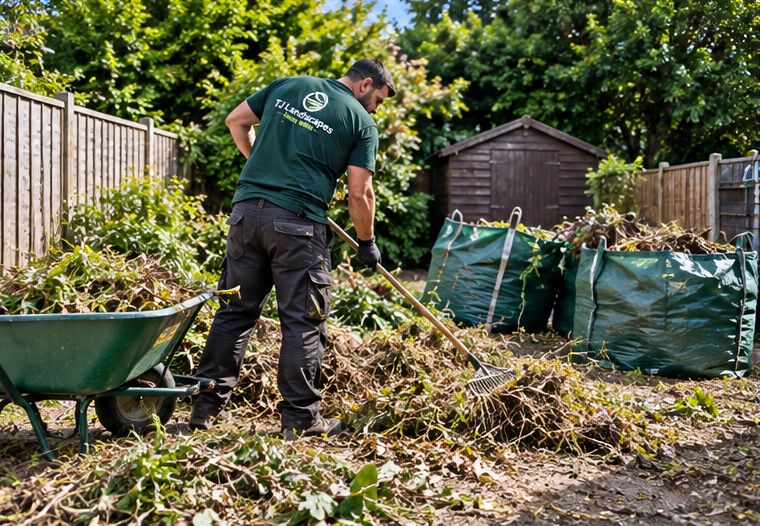
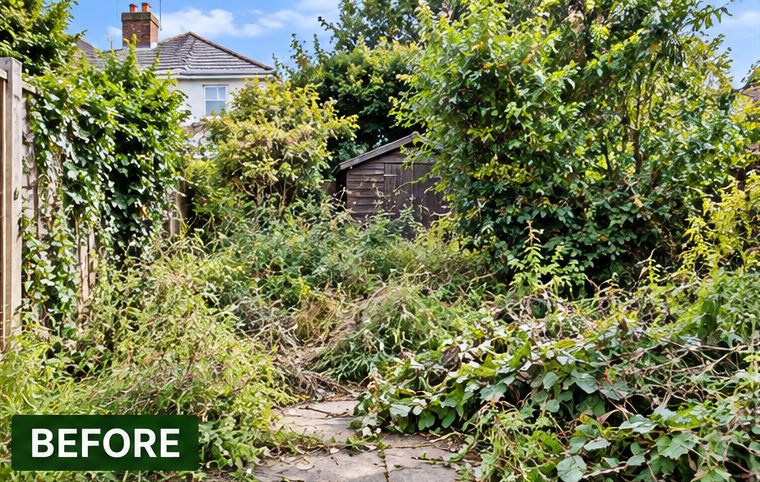
Terrace gardens in Tonypandy have a habit of filling up. Brambles take the top of the yard, an old shed gives up, a pile of rubble from a past job sits in the corner, and after a few wet Rhondda summers it is hard to see the ground. The good news is that a small yard can usually be cleared in a short time once the plan is right.
The plan starts at the back gate. Here is how we approach a clearance where the lane is the only way in and out. The work is part of our garden clearance service; see also garden clearance in Tonypandy.
Look at the lane before the garden
On the first visit we walk the lane as well as the yard. Rhondda back lanes vary a great deal: some are wide enough for a van to reach the gate, others narrow down, climb steeply or have steps, and some are shared paths rather than proper lanes. What we find decides how the waste leaves.
- Can a vehicle get close? If so, we load straight from the gate.
- Is there somewhere for a skip? Often there is not, and a skip on a public road may need a permit from the council, so we usually take waste away ourselves.
- How wide is the gate? A narrow or rotten gate slows everything down, and sometimes it is worth replacing at the same time.
- Who else uses the lane? Bin days and neighbours’ parking matter when planning the day.
Sorting as we go
In a small yard there is no room for one big heap, so we sort as we clear. Green waste, soil and rubble, timber, metal and general rubbish go into separate bags or piles near the gate, ready to be carried out. This keeps the lane clear and means each type goes to the right place afterwards.
Our guides on what can and cannot go in a garden clearance and where garden waste goes explain the rules. Some items, such as asbestos sheeting on an old shed roof, must be handled separately by a licensed contractor, so point out anything you are unsure of.
The usual order of work
Most Tonypandy clearances follow the same sequence, top to bottom and back to front:
- Cut back brambles, ivy and overgrowth so the ground and walls can be seen.
- Take down and remove any collapsed shed, old fencing or rotten structures.
- Clear rubbish, old slabs and loose rubble.
- Dig out roots and stumps where the ground is being replanted or paved.
- Leave a clear, safe yard, with any problems we found pointed out.
Working from the top of a sloping yard down towards the gate means we are never carrying waste back over ground we have just cleared. On a steep Tonypandy yard it also keeps loose soil and cuttings from sliding down onto the path we are using.
What a clearance tends to uncover
Once the growth is off, a Tonypandy yard often reveals things that were hidden for years: a back wall leaning or cracked where roots have got in, old steps that have come loose, or paving that has sunk. We will tell you what we see and whether it needs attention now or can wait.
If the wall is the issue, rebuilding a back wall in a Tonypandy terrace explains the options. Trees or large shrubs rooted into masonry are covered in tree and shrub removal in Tonypandy.
How to get your yard ready
There is not much you need to do before we arrive, but a few things help a Tonypandy clearance run smoothly and keep the day short.
- Mark what stays. A favourite shrub, a pot or an old bench can easily disappear under brambles, so point out anything you want to keep.
- Free up the gate. If the lane gate is padlocked or jammed, let us know or leave a key.
- Empty the shed of anything you want before it comes down.
- Tell us about hazards, such as old glass, broken slabs, a hidden drain cover or a wasps’ nest.
If you are clearing from a distance, for example a family house or a rental, photos of the yard and the lane are usually enough for us to plan and quote. Our general guide to what happens during a garden clearance explains the rest of the process.
Keeping the neighbours on side
Back lanes are shared space. A few simple habits keep a clearance friendly: telling the neighbours either side when we are coming, keeping the lane passable at all times, never leaving bags or rubble out overnight, and sweeping up the lane before we leave.
If the clearance involves a shared wall or fence line, a quick word with the neighbour before work starts saves any misunderstanding later.
The same goes for anything growing over the boundary. We can cut back overhanging branches and brambles on your side, but it is only fair to let the neighbour know first, and anything rooted on their side is theirs to decide about. A short conversation at the fence usually settles it in minutes.
Clearing now, planning next
Many people clear a garden before selling or letting, and some just want it back under control. Others see it as the first stage of a makeover. If that is you, clearing and levelling in one visit can save work later. Our guides on planning a Tonypandy garden makeover on a budget and clearing a garden before selling or letting may help.
For more about our work across the town, see landscaping in Tonypandy, or send us a few photos and Tony will arrange a free quote.
Talk to T J Landscapes about your garden
Free quotes and honest advice across South Wales.
Questions People Ask
Do I need to hire a skip for a clearance?
Usually not. In most Tonypandy lanes there is nowhere sensible to put one, and a skip on the road may need a council permit. We normally carry the waste out and take it away ourselves.
What if the back gate is too narrow or broken?
We can still work through it, but it slows things down. If the gate is due for replacing anyway, doing it during the clearance makes sense. See fencing and gates onto a Tonypandy back lane.
Can you clear a garden if the lane has steps?
Yes. It means more carrying, and we plan the day around that, but steps on the lane are common in the Rhondda and not a reason to turn a job down.
Will you take away everything?
We take green waste, soil, rubble, timber and general garden rubbish. Some items, such as asbestos, paint, chemicals or gas bottles, have to be dealt with separately, so tell us about anything like that when you ask for a quote.
What affects the cost of a clearance?
The amount and type of waste, how overgrown the yard is, how far everything has to be carried, the lane access and whether stumps or structures need removing. We explain it in a free quote.