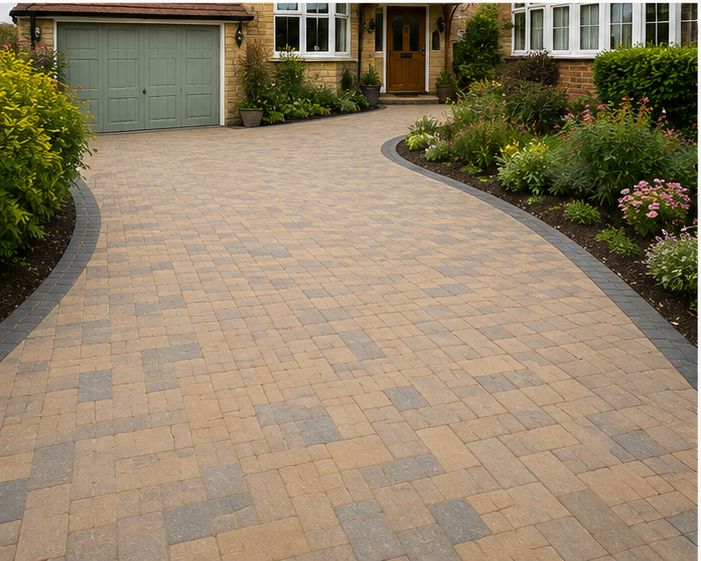
Natural stone is a broad family. Indian sandstone, limestone and granite each have their own page, so this one covers the rest: slate, sandstones quarried in Britain, reclaimed flagstones, crazy paving and stone setts. What they share is that each slab was cut from real rock, so the colour, texture and thickness change from piece to piece, and the finished patio looks as though it has always been there.
That character is why natural stone is so often chosen for older houses and gardens with existing stone walls. It also means each type behaves differently when it is laid and when it gets wet, so below we go through the main options, how we handle them as part of our patio slabbing and paving work, and what each needs to stay looking right.
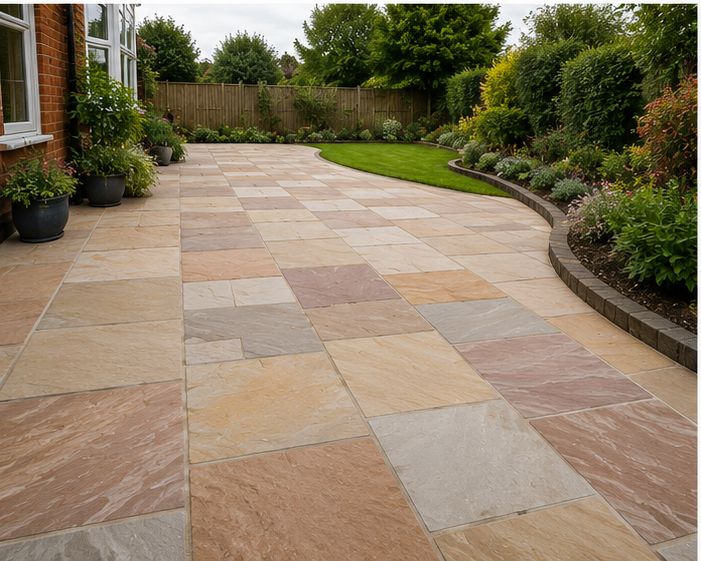
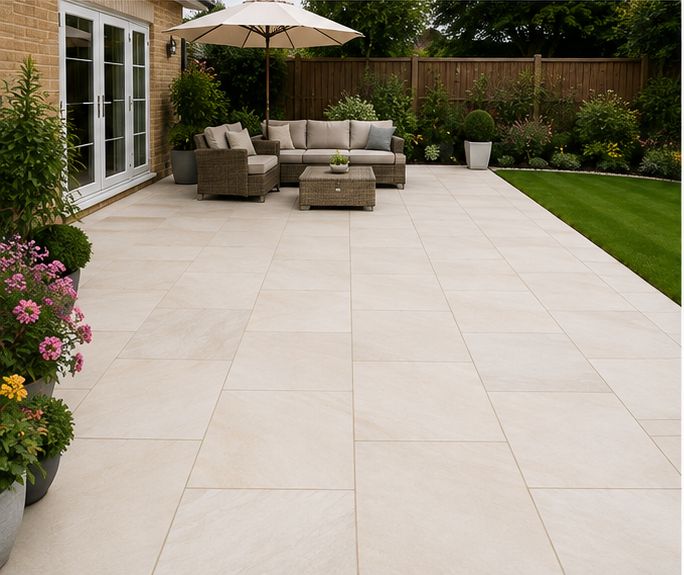
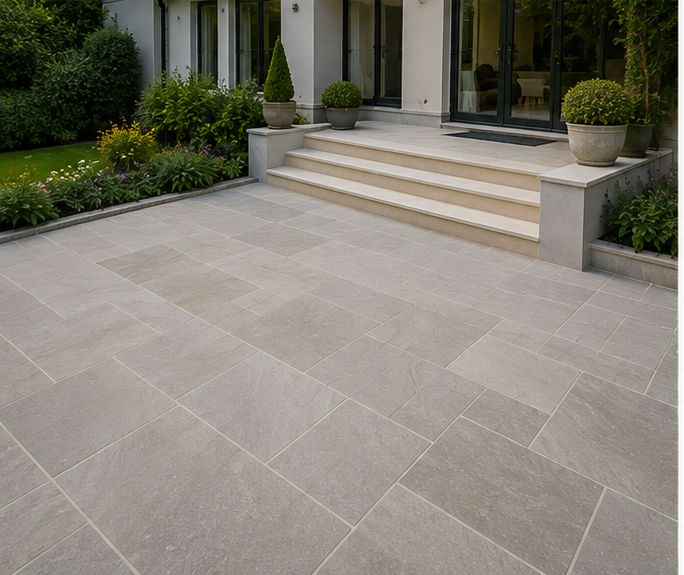
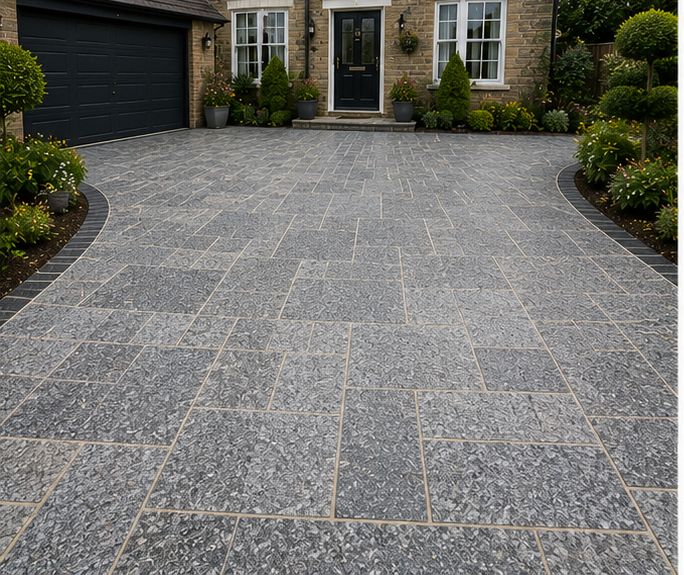
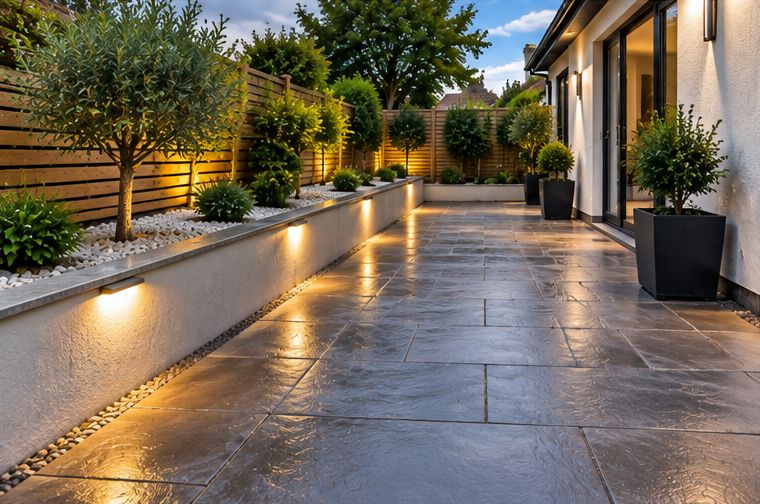
Slate, sandstone and reclaimed stone in gardens, showing the range of colours and textures.
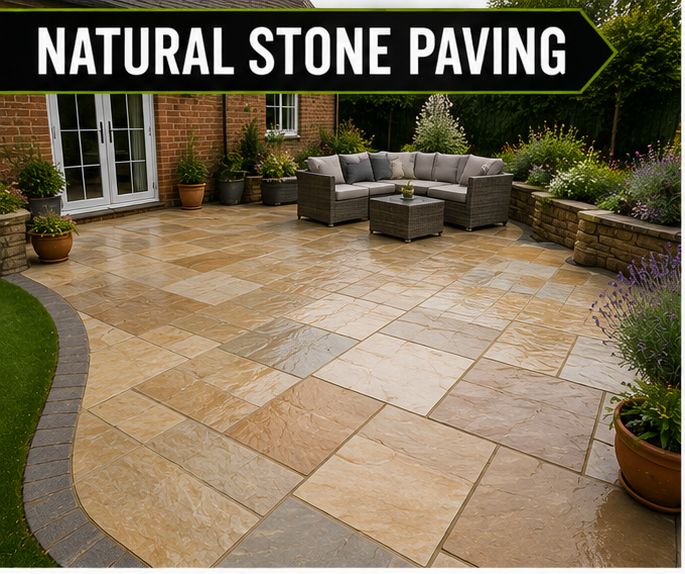
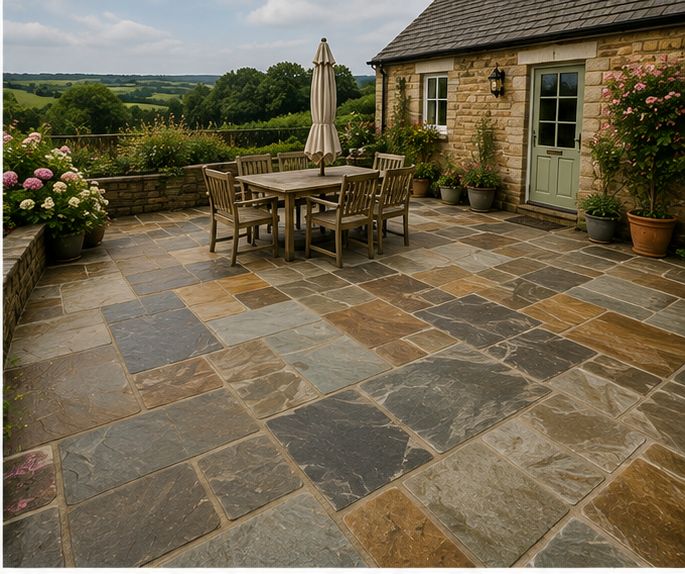
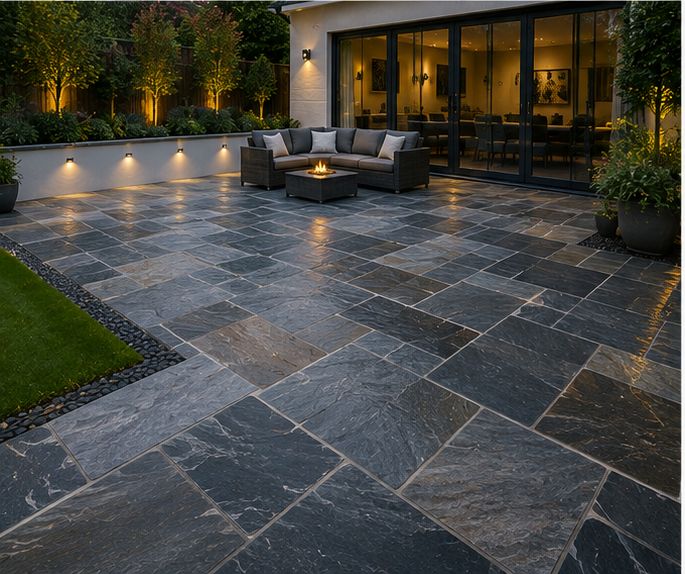
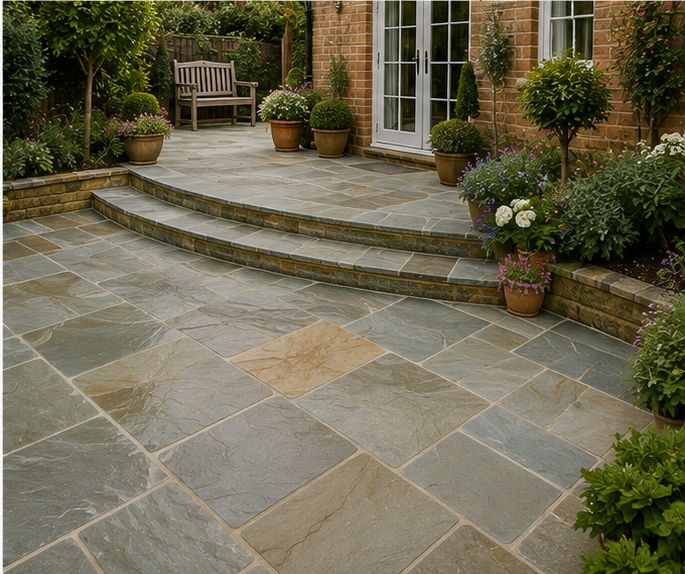
Each of these looks and wears quite differently, so it helps to see samples side by side:
If you would like a paler, smoother stone, our limestone paving page covers that, and Indian sandstone is the familiar riven option with a warmer range of colours.
The finish changes both the look and the grip. Riven stone has been split along its natural layers and keeps an uneven face, which gives good grip and a traditional feel. Sawn or honed stone is cut flat for a smart, even surface. Flamed stone has been treated with a very hot flame to roughen the face, which adds texture to otherwise smooth stones. Reclaimed stone has a worn, softened surface from years of use.
Grip is worth thinking about with slate in particular. Its riven face can be quite smooth, and it can feel slick in the wet when shaded, so a textured slate or a different stone is often the better call for steps and damp paths. Riven British sandstone and reclaimed flags are usually more forgiving underfoot.
The basics are the same as for any patio: a properly compacted sub-base, a finished level well below the damp-proof course, and a gentle fall so rain runs away from the house, as explained in our guide to how a patio should be laid. What changes with natural stone is the time spent sorting and fitting.
Natural stone is meant to weather, and a little moss in the joints of an old flagstone path is part of its charm. Regular sweeping and clearing wet leaves does most of the work. Beyond that, care varies by stone. Slate is dense and mainly needs an occasional wash, although some slate can show pale marks as it dries. Sandstone is more porous and may green up in shade. Reclaimed flags should be cleaned gently, because a hard jet wash can strip off the patina you chose them for.
Always check that a cleaner is suitable for the particular stone before using it, and try it on a hidden corner first. Sealing is optional and can change the colour, so it is a case-by-case decision. There is more on routine care in our article on looking after a new patio.
Natural stone looks most at home beside period houses and old stone boundary walls, like those around Chepstow, the town-centre properties of Monmouth, and cottages and farmhouses near Talgarth. Slate sits well with slate roofs and modern planting, and setts make a good edge to a gravel drive or lawn.
It pairs naturally with stone and brick walls, steps and raised beds, and can be used to repair or extend an older patio so the new work blends in. If you are unsure which stone suits your house, ask us round and we will bring samples and give you free advice.
Not sure which material suits your garden? Compare the options, or see our patio slabbing and paving page for the full picture.
Real reviews from homeowners across South Wales — rated 4.8 out of 5 on Google from 69 reviews and 10/10 on Checkatrade.
“Had my patio done by the company and could not be happier. Top quality work done and quickly too.”
“I was pleased to find Tony and his lads were absolutely great! Tony responded quickly & was very polite.”
“We were delighted with the work and materials, which were of very high quality. Tony and team helped us.”
Guides that help when you are choosing and planning paving.
We lay paving right across South Wales. Choose your town to see patio paving there.
Indian sandstone is itself a natural stone. The difference is in the look and the behaviour: slate is darker and denser, British sandstones are usually more muted and harder, and reclaimed stone brings age. Which is better depends on your house and how much cleaning you want to do.
Often we can get close by choosing a stone of similar colour and texture, or by using reclaimed stone. An exact match is not always possible because natural stone varies, but it will weather in over time.
Smooth slate can be slippery when wet, especially in shade. A textured or flamed slate, or a different stone, is a safer choice for steps and paths that stay damp.
Because each piece varies in size and thickness. Sorting the stone, adjusting the bed for every slab and fitting irregular shapes such as crazy paving all take time, and that care is what makes the finished patio look settled.
The type of stone, the size of the area, the ground and levels, access for materials, and how much old paving or soil needs removing. Tony will look at all of this on a visit and give you a free quote.
Tell us about your house, your garden and any stone already there. We will visit, show you samples and give you a free quote.