
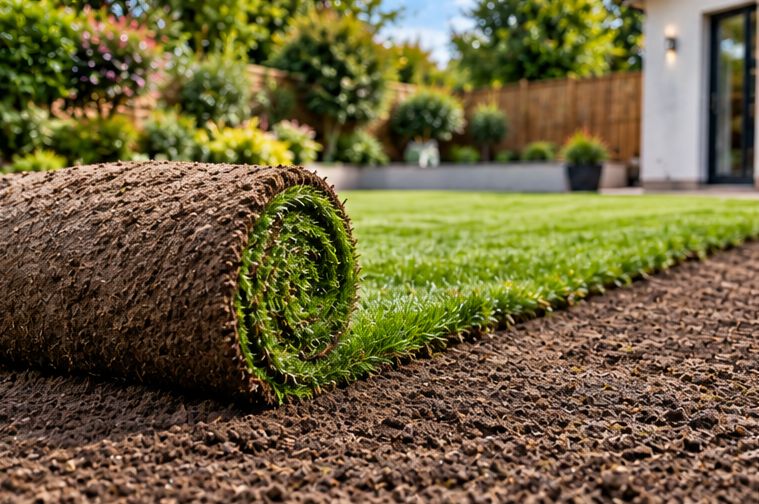
Gardens close to Aberavon Beach often sit on light, sandy soil. Dig a spade in and it slides through easily, the ground rarely turns to mud and puddles vanish within minutes of a downpour. For a lawn, that is half good news. The drainage is excellent, but water and nutrients run straight through, and turf laid directly onto bare sand can brown and shrink in its first dry spell.
This guide covers what we do differently when laying turf on the sandier side of Port Talbot, and how to look after a new lawn there. The general steps are in how to prepare the ground before laying turf, and our turf laying page explains the service.
How to tell if your soil is sandy
Not every garden in Port Talbot is sandy, and it is worth checking before planning a lawn. Nearer the seafront around Aberavon it is common; further inland, towards Margam and the hillsides, soils tend to be heavier and more mixed. A simple test helps, and it takes only a few minutes with a spade.
- Take a handful of damp soil and squeeze it. Sandy soil feels gritty and falls apart when you open your hand.
- Watch the ground after rain. If puddles disappear almost at once, the soil is free-draining.
- Look at existing grass in summer. A lawn that goes straw-coloured quickly in a dry week is often on light ground.
- Dig a small hole. Pale, loose sand close to the surface, with little dark topsoil above it, tells you the ground needs building up.
Building a better root zone
The key to a lasting lawn on sand is giving the roots something to hold on to. We clear the old surface, remove stones and debris, then work in good-quality topsoil and well-rotted organic matter. This acts like a sponge, holding moisture and nutrients where the grass roots can reach them.
How much we add depends on what we find. Where the existing topsoil is thin or missing, a deeper layer of imported topsoil is worth the effort, because it is very hard to add later once the lawn is down. We then level, firm and rake the surface so the turf sits flat and makes good contact with the soil below.
Sand blown in from the beach over the years can also build up on the surface of seafront gardens, burying the old lawn in a gritty layer. Where that has happened, we skim it off before adding topsoil, rather than mixing it in, so the new root zone is not diluted from the start.
Choosing turf for a coastal lawn
For most family gardens in Port Talbot, a hard-wearing turf containing ryegrass is a sensible choice. It establishes quickly, copes with children and pets and recovers from wear. Finer ornamental turf looks beautiful but needs more care and does not take kindly to drought or heavy use.
If you are weighing up turf against seed on sandy ground, turf generally has the edge, because seed on loose sand can dry out or blow about before it germinates. Our guide to turf or seed sets out the pros and cons.
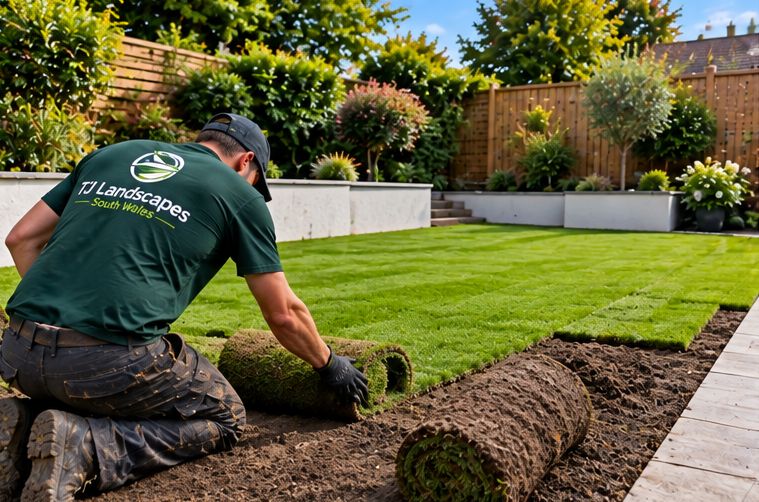
Timing around the coastal weather
Autumn and spring are usually the easiest times to lay turf, with milder temperatures and more rain to help it root. On sandy ground near the sea, early autumn is often ideal: the soil is still warm, and the wetter weather does much of the watering for you.
Turf can be laid in summer too, but on free-draining sand it needs watering every day in warm spells until it roots. Strong, drying winds off the bay can take moisture from new turf faster than you might expect. See when is the best time to lay turf in South Wales for more on timing.
Watering and the first six weeks
New turf on light soil needs more water, more often, than it would on clay. A thorough soak straight after laying, then regular watering so the soil underneath stays moist, is the aim. Lift a corner now and then: if the soil below is dry, it needs more.
Once the roots have knitted into the soil, usually after a few weeks, you can water less often but more deeply, which encourages the roots to go down rather than staying near the surface. Keep off the new lawn as much as you can in this period, and hold off the first cut until the grass is growing strongly and the turf will not lift when you tug it. Our guide to caring for new turf in the first six weeks has a fuller routine.
Feeding and mowing on light ground
Because nutrients wash through sand quickly, lawns near Aberavon tend to benefit from little-and-often feeding through the growing season, rather than one big dose. A slow-release lawn feed suits this ground well. Leaving grass clippings on the lawn now and then, when it is dry, also returns some goodness to the soil.
Keep the mower blades a little higher than you might inland. Longer grass shades the soil, holds moisture and copes better with wind and dry spells. If moss or thin patches appear, our guide on why lawns go patchy, mossy or bare explains the likely causes.
Fitting the lawn into a coastal garden
A lawn is often one part of a wider plan. On exposed Port Talbot plots, shelter from a slatted fence, a low wall or a hedge helps grass as much as it helps people. Our guides to coastal garden ideas and fencing that handles sea wind cover this, and artificial grass is worth considering for tiny yards or heavily used areas.
Our turf laying in Port Talbot page shows what we do locally. When you are ready, get in touch for a free quote and we will look at the soil, the size of the lawn and how you plan to use it.
Talk to T J Landscapes about your garden
Free quotes and honest advice across South Wales.
Questions People Ask
Can I lay turf straight onto sand?
It is not a good idea. Turf on bare sand struggles to root and dries out quickly. Adding topsoil and organic matter first gives it a far better start and makes it easier to look after.
How often should I water new turf near the beach?
In warm or windy weather, usually daily for the first couple of weeks, keeping the soil below moist. Once it has rooted, water less often but more deeply.
Does sandy soil mean my lawn will never waterlog?
Sandy ground drains well, so waterlogging is less common than on clay. Compacted areas or a layer of heavier soil underneath can still hold water, so we check before laying.
What affects the cost of a new lawn in Port Talbot?
The lawn's size, how much old grass and debris needs removing, how much topsoil is needed, access for materials and the turf you choose. A free quote covers your garden.
Do you lay turf elsewhere in Port Talbot?
Yes, across the whole town, from the seafront to the streets further inland. See our Port Talbot landscaping page for more.