
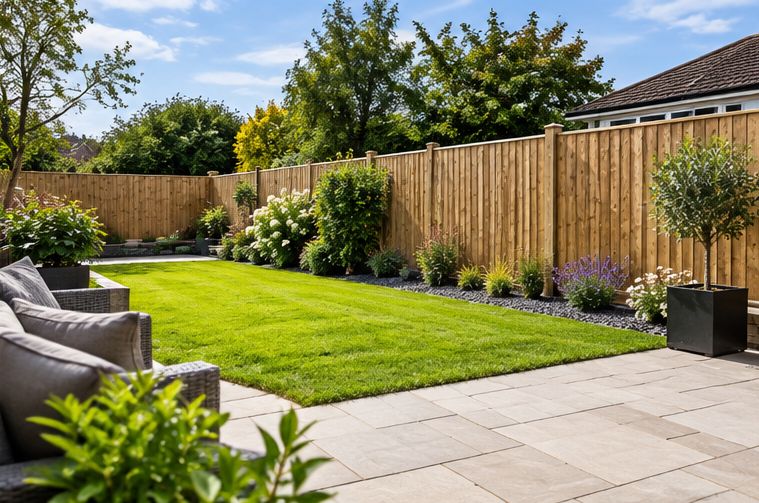
If you live on one of the newer estates around Caerphilly, there is a good chance your back fence looks much like every other one in the road. The same panels, the same posts and, after a number of years, the same lean. On a blustery day you can see whole runs rocking together, and after storms it is common to see a panel or two lying on a lawn.
This guide explains why estate fences tend to fail, how we replace them so the new one lasts, and the practical points to settle with neighbours and paperwork before the old one comes down. For more about our work around the town, see our landscaping in Caerphilly page.
Why the original fence gave up
It is rarely one single thing. On most estate fences we take down in and around Caerphilly, the same few weaknesses show up together:
- Posts set too shallow. Often less than a third of the post is in the ground, so there is not enough grip to resist wind.
- Thin posts. Slim softwood posts rot at ground level first, exactly where the load is greatest.
- Lightweight panels. Thin overlap panels catch the wind like a sail and split as they dry and swell.
- No gravel boards. Panels sitting on the soil soak up water and rot from the bottom edge.
- Heavy, wet ground. Clay close to the surface holds water around the post bases through the winter and moves as it dries in summer.
Wind is a factor too. Caerphilly sits in a bowl of hills, and exposed gardens on the edges of the estates, especially those backing onto open ground, take gusts that funnel across the slopes.
Repair a panel or replace the run?
If one panel has blown out and the posts either side are solid, a repair is sensible. The trouble on estates is that the whole fence went in at the same time with the same materials, so when one post rots through, the rest are rarely far behind. Replacing a single post can also mean disturbing the panels next to it.
A quick test is to push each post firmly at the top. If several move at the base, or a screwdriver sinks easily into the wood at ground level, the run is due for replacement. Our general guide to fence repair or replacement goes through the signs in more detail.
Building it back stronger
When we replace a fence on a Caerphilly estate, we aim for something that will stand up to the next few decades rather than the next few winters. That normally means deeper holes, posts set in concrete, and gravel boards so the panels sit clear of the soil. Concrete posts with slotted panels are a popular choice on exposed plots because the post itself cannot rot; heavy-duty timber posts suit people who prefer an all-wood look. Our article on concrete posts or timber posts compares the two.
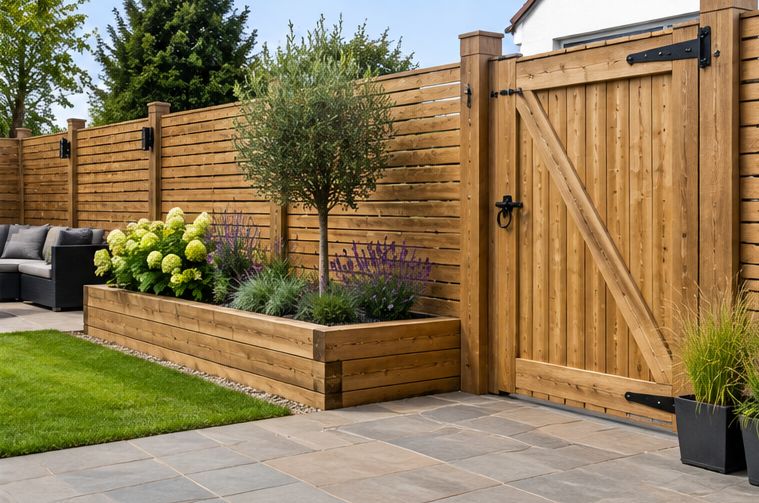
For the panels, closeboard fencing is stronger than standard overlap and copes better with wind. Slatted designs let some air through and look more modern, which suits many newer houses. We fit all of these through our fencing and gates service, and our fencing in Caerphilly page has more on local jobs.
Talk to the neighbours first
On an estate, most back fences are shared, and the fence you want to replace is also the one your neighbour looks at. Before anything is ordered, find out who is responsible for which boundary. Your deeds or the plan from your purchase may show it, often with a small T mark on one side. If the deeds do not settle it, it is worth agreeing it in writing with the neighbour.
Many neighbours are happy to share the cost of a new run, and doing several gardens along a road at once can be tidier and simpler to organise. Whatever you agree, let people know when the work will happen, because for a short time there will be no fence between the gardens, which matters if either of you has a dog.
Covenants, open fronts and height
Some Caerphilly developments were designed with open-plan front gardens, and the deeds may restrict what you can put up at the front, or ask you to keep a particular style. It is worth reading your title documents before replacing any front or side boundary.
Planning rules also limit fence height, particularly next to a road or footpath. A normal back garden fence is usually fine, but if you want to go higher, or you live on a corner plot, check with Caerphilly County Borough Council first. We can tell you what we usually see on estates, but the council has the final word.
Getting the job booked
Most estate fence replacements go smoothly, but a few things help. Clear a strip along the fence line so we can work, move pots and furniture, and let us know about any cables, pipes or drains that run near the boundary. If shrubs or climbers are tangled in the old panels, we can cut them back or lift them first. For a tidier finish at the end of a run, many people add a new side gate at the same time; see choosing and fitting a garden gate.
If the fence is part of a bigger tidy-up, our guide to garden clearance before a Caerphilly makeover may help you plan the order of work. Get in touch and Tony will come out, check the run and give you a free quote.
Talk to T J Landscapes about your garden
Free quotes and honest advice across South Wales.
Questions People Ask
How long should a replacement fence last?
With posts set properly in concrete and panels kept off the ground, a well-built fence should last many years longer than the original. Treating timber every few years helps; see how to make a garden fence last longer.
Who pays for a shared fence?
It depends on who owns the boundary, which your deeds may show. In practice, many neighbours agree to split the cost. We can quote for the whole run and you can decide between you.
What affects the cost of a new fence?
The length of the run, the height, the type of posts and panels, how easy the access is, what the ground is like and whether the old fence and concrete need to be taken away. The quote is free.
Do you take the old fence away?
Yes. We remove the old panels, posts and, where we can, the old concrete footings, and take the waste away as part of the job.
Can you replace a fence in winter?
Yes, fencing can go in most of the year. Very wet or frozen ground can slow the work, and we will plan around the weather with you. Autumn is a sensible time, before the worst of the winter gales, and there is less in the borders to disturb.