
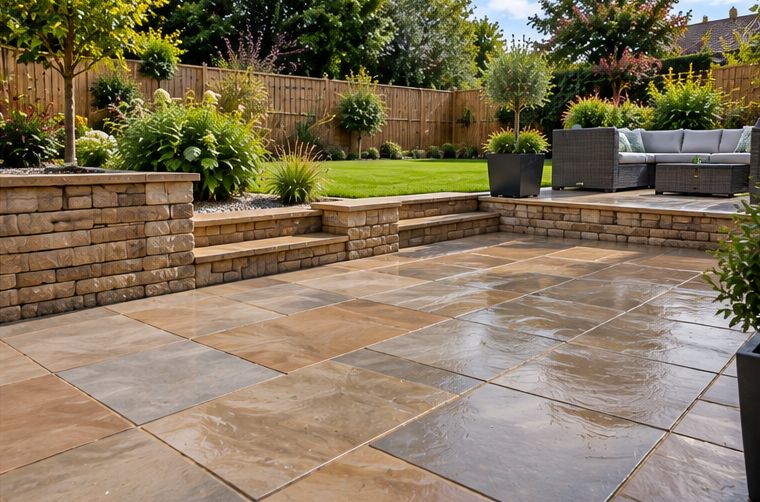
Walk along the rear lanes in Abertillery and you will see walls of every age holding the valley side in place: rubble stone, old brick, concrete block, and patched mixtures of all three. Many were built a long time ago with no footing to speak of and nothing to let water out from behind. They have done well to last, but they do not last forever.
This guide explains how to tell when a garden wall is failing, what to do straight away, and what goes into a replacement that will hold. It links to our landscaping in Abertillery page and our brickwork and garden walls service.
Signs a wall is on the move
Walls rarely fall without warning. The signs usually build up over months or years, and they are easier to spot if you look along the face of the wall rather than straight at it.
- A belly or bulge partway up, often worst after a wet winter
- The top of the wall leaning out beyond its base
- Cracks that widen, or stones and bricks pushed out of line
- Mortar washing out of the joints, leaving loose stones
- Soil or water seeping through the face after rain
- Paving, steps or a fence on the high side dropping or tilting
Why walls on the valley side give way
The main culprit is water. Rain soaks into the bank behind a retaining wall, and if it cannot drain away it builds up pressure against the back of the masonry. Wet clay also expands, and in a cold snap water in the joints can freeze and push them apart. In a valley with as much rain as the Ebbw Fach, that happens year after year.
Other causes pile on top: roots from shrubs and trees growing into the joints, extra soil or a patio added on the high side, a shed or oil tank set close to the top, or a downpipe discharging into the bank. Older walls were often built from whatever was to hand, with thin footings, and were never meant to carry the loads they now do.
What to do straight away
If a wall is visibly leaning or bulging, keep children and pets away from the area in front of it, and avoid stacking anything against it or on top. Do not dig at its base to take a look, because that can remove the very thing holding it up.
If it sits on a boundary, or could fall onto a lane, a path or a neighbour’s garden, let the neighbour know. If a failure looks close or the wall supports a building, a path or a road, get advice quickly; a structural engineer or the council may need to be involved. We can come and give you a free, honest view of what we see.
Repair, rebuild or replace?
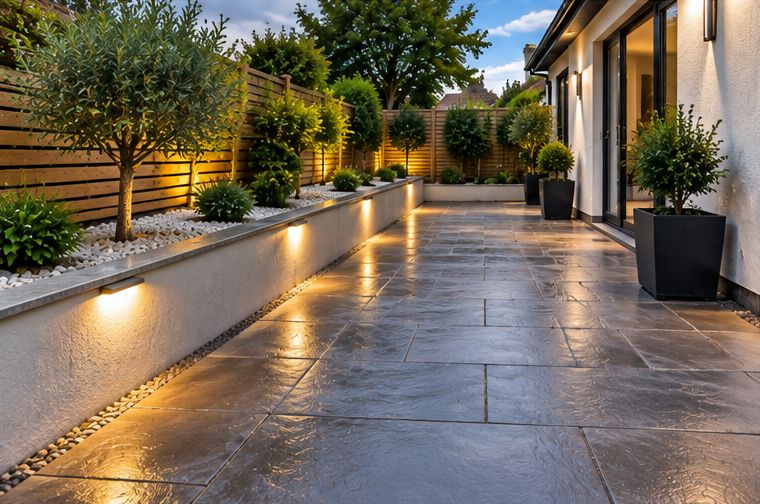
A wall with a few loose stones or tired pointing, but standing straight, can sometimes be repaired and repointed. Once a wall has bulged or leaned, patching the face does not deal with the cause, and the pressure behind it will keep pushing.
In that case the section usually needs taking down and rebuilding, and sometimes the whole wall needs replacing. Where the retained height is significant, or the wall is close to a house, we will say plainly if we think it needs engineering advice before anyone builds anything.
What a new retaining wall needs
A replacement wall is only as good as the parts you cannot see. It starts with a concrete footing sized for the height and ground, dug down to firm material. Our guide to garden wall foundations explains why that matters.
Behind the wall goes a layer of free-draining stone, often wrapped in a membrane, with weep holes or a pipe to let water out at the bottom. The wall itself is built from suitable blocks, brick or stone, and taller walls may need reinforcement. On top, a coping throws rain clear of the face.
- A footing on firm ground, not on old rubble or fill
- Drainage stone and weep holes so water cannot build up
- Materials suited to retaining, not just decorative brick
- A coping to keep water out of the top of the wall
Walls shared with a neighbour
In a terraced row, many garden walls run along a boundary or hold up a neighbour’s ground as well as yours. Before rebuilding, it is worth talking to them, agreeing how the work will be done and who is paying for what. Party wall rules can apply to some boundary walls and to digging near a neighbour’s structure, so take advice if you are unsure. We are landscapers, not solicitors, but we are happy to explain the practical side to both households.
Choosing the finish
Many Abertillery owners want a new wall to sit comfortably next to the old stone around it. A concrete block core faced with stone or a matching brick can give that look with a much stronger structure. Rendered block is another tidy option. Our guide to choosing bricks and coping for a garden wall covers the choices.
Replacing a wall is also a good moment to rethink the levels behind it. A rebuilt wall can form the edge of a new terrace, as described in stepped patios for steep Abertillery gardens.
Working from the lane
Taking down an old wall produces a lot of stone and soil, and a new one needs blocks, concrete and drainage aggregate. On a terraced plot all of that travels through the rear lane gate. We plan the job so the old material goes out as we work and the lane stays passable. Getting materials into an Abertillery back garden explains how. When you want someone to look at a wall, get in touch for a free quote.
Talk to T J Landscapes about your garden
Free quotes and honest advice across South Wales.
Questions People Ask
Who is responsible for a retaining wall between two gardens?
It depends on who owns the wall, which is often shown in the house deeds, and sometimes on whose ground it holds up. If it is not clear, check your deeds or take legal advice before work starts.
Can a bulging wall be tied back instead of rebuilt?
Some walls can be stabilised with ties or buttresses, but that is a question for a structural engineer rather than a landscaper. For most garden walls in poor condition, rebuilding with proper drainage is the longer-lasting answer.
How long does it take to replace a garden wall?
It depends on the length and height of the wall, how much ground is behind it, whether the old wall has to come down in stages, and the access. We can give you a realistic timescale once we have seen it.
Is a sleeper wall strong enough to retain a bank?
For low changes in level, timber sleepers work well and are quick to build. For taller banks, or where the wall supports paths or structures above it, masonry is the safer choice.
What affects the cost of replacing a wall in Abertillery?
The height and length, the amount of ground to dig out, the footing and drainage needed, the facing material, removal of the old wall and access from the lane. We give a free quote after a visit.