
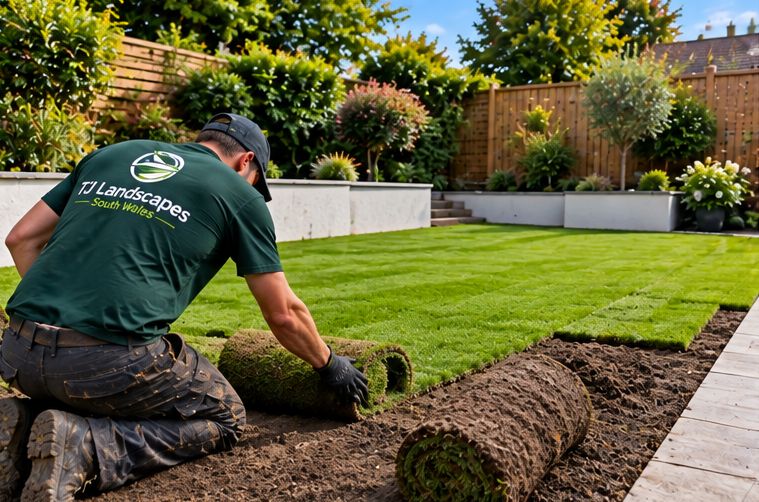
Ask ten gardeners in Abergavenny whether to turf or sow and you will get both answers. They are all right for their own garden. A flat, sheltered plot near the town centre and a sloping garden high on the side of the valley behave very differently, and the choice between rolls of turf and a bag of grass seed should follow the ground and the weather you actually have.
Our general guide, Turf or Seed: Which Is Right for a New Lawn?, sets out the basic pros and cons. This piece is the local version: what we look at in an Abergavenny garden before recommending one or the other, and how to give either method the best chance.
Three kinds of Abergavenny garden
Most lawns we are asked about around Abergavenny fall into one of three groups, and each leans a different way.
- Low, level gardens near the Usk. Often deep, fertile soil but slow to drain after heavy rain, and prone to cold air settling on still nights. Seed can do well here if the timing is right; turf is quicker if the ground is prepared and drained first.
- Sloping hillside plots. Rain runs straight across the surface, carrying seed with it. Turf, pegged where the fall is steep, is usually the safer choice.
- Higher, exposed gardens towards the hills. Cooler soil, more wind and a shorter season. Seed has a narrower window to establish, which tips the balance towards turf.
Plenty of gardens mix all three, with a flat strip by the house and a bank beyond. In that case the answer can be turf on the slope and seed on the level, which is a perfectly sensible way to split the work.
Frost pockets and the growing season
The Usk valley is sheltered in many ways, but cold air drains downhill on clear nights and collects in the lowest parts of gardens. Frost can hang around there well after the rest of the lawn has thawed, and a late spring frost can knock back young seedlings that have only just come up.
Seed wants soil that is warm and staying warm. In Abergavenny that usually means sowing from around mid spring, once the nights have eased, or in late summer into early autumn while the ground still holds the season's heat. Leave autumn sowing too late and the grass goes into winter thin and weak.
Turf is much less fussy, because the grass is already grown. As long as the ground is not frozen hard or sitting wet, it can go down through much of the year, and it roots fastest in spring and autumn. Our guide to the best time to lay turf in South Wales covers the months in more detail.
Rain, slopes and washed-out seed
Showers come in fast off the Blorenge and the Sugar Loaf, and on a sloping lawn a single heavy downpour can undo a fortnight of patience. Loose seed washes into the bottom corner, leaving bare stripes up the bank and a thick clump where the water pooled.
Turf holds together as a mat from the moment it is laid, and on steeper banks we peg each roll so it cannot creep while the roots take hold. For really steep ground, a lawn may not be the best answer at all. A couple of level terraces with a retaining wall or sleepers, turfed on the flat, is easier to mow and far more useful. Our guide to landscaping an Abergavenny garden with mountain views shows how levels and views can work together.
Getting the soil right first
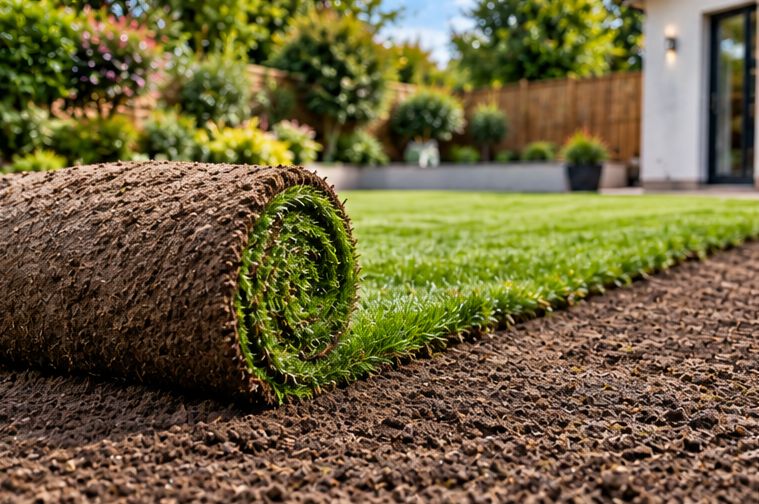
Whichever you choose, the lawn is only as good as the ground beneath it. Soils around Abergavenny vary a great deal over short distances: heavier, damp ground on the lower land, and thinner, stonier soil as you climb. Old cottage gardens often hide rubble, cinders or buried paths, and a garden that has been used for vegetables may be rich but uneven.
Before any grass goes down, we clear weeds and old turf, dig out stones and debris, deal with any wet patches and bring in quality topsoil where the existing soil is thin. The ground is then levelled, firmed and raked to a fine finish. It is the same work for turf or seed, which is why the cost gap between the two is often smaller than people expect. How to Prepare the Ground Before Laying Turf walks through each stage.
Who will use the lawn, and how soon?
A seeded lawn needs keeping off for a good few months. That is fine for an ornamental front lawn, but hard work with children or a dog, and it rules the garden out for summer if you sow in spring.
Turf can take light use once it has knitted into the soil, usually a few weeks after laying in the growing season. If you are planning a new patio or decking for outdoor evenings, laying turf at the same time means the whole garden is usable together. See Decking for Entertaining in an Abergavenny Garden if that is part of your plans.
What we usually suggest in Abergavenny
For most Abergavenny gardens, and certainly for sloping or exposed ones, we recommend turf. It gets round the short season, the frost and the rain, and the groundwork is the same either way. Seed makes good sense for a large, level, sheltered area where you are happy to wait, and for thickening up an existing lawn in early autumn.
Our turf laying service covers the lot, from clearing and levelling to topsoil and the final roll. If the lawn is part of a bigger change, it can sit within a full landscaping plan. To talk through your own garden, see our page on landscaping in Abergavenny or ask for a free quote.
Talk to T J Landscapes about your garden
Free quotes and honest advice across South Wales.
Questions People Ask
Can I sow grass seed in winter in Abergavenny?
It is not worth it. The soil is too cold for seed to germinate, and anything that does come up will struggle through frost and wet. Wait until mid spring, or lay turf, which can go down in milder spells as long as the ground is not frozen or waterlogged.
My garden is shaded by trees. Which is better?
Neither grass likes deep shade, but seed lets you choose a mix bred for it. If the shade comes from overhanging branches, lifting or thinning the crown can let in a lot more light. Our tree surgery and hedge care page explains what that involves.
How long before I can walk on new turf?
Keep off it for the first two to three weeks apart from careful watering, then allow light use once a gentle tug shows the roots have taken hold. Heavy play is best left until it has had its first few cuts.
Why does part of my lawn stay wet all winter?
Low spots on the valley floor collect water, and heavy soil or compacted ground makes it worse. New grass will not fix that, so drainage needs sorting first. Our guide on stopping a garden waterlogging sets out the options.
Do you lay artificial grass as well?
Yes, where it suits. It can work on a small, heavily used area, but on most Abergavenny plots a well-prepared real lawn drains better and looks more at home against the hills.