
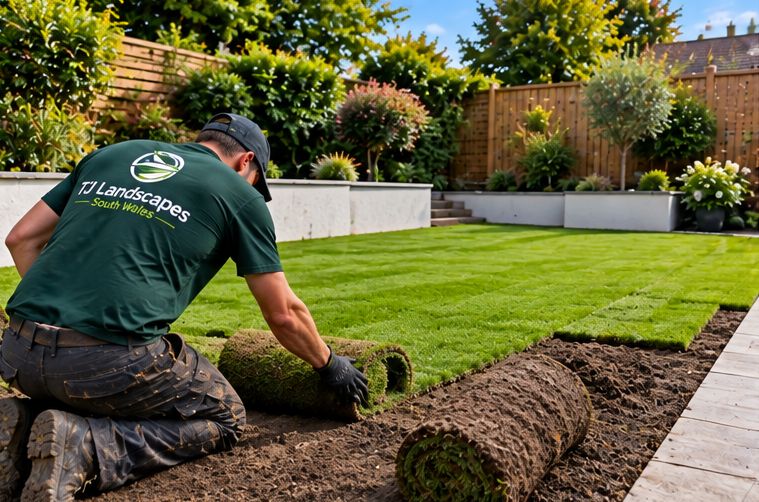
The turf on a new-build garden is usually the last thing to go down before the keys are handed over. It looks green and neat on moving day. Then, a year or two later, many owners on the estates around Caerphilly find the same thing: puddles that never drain in winter, brown patches in the first dry spell, moss creeping in and grass that never quite knits together.
In most cases the turf was not the problem. The ground underneath was. This guide explains what we do, step by step, when we relay a new-build lawn in Caerphilly, and what you can do to help it establish. You can read about the rest of our work in the town on the landscaping in Caerphilly page.
First, find out why the old lawn failed
Before anything is lifted, we dig a few test holes across the lawn. On new developments in and around Caerphilly, it is common to find only a shallow layer of topsoil over subsoil that has been packed hard by months of site traffic, often with clay close to the surface and bits of builders' rubble mixed in. Our companion guide, What Lies Under a New-Build Garden in Caerphilly, goes through what turns up and why.
Knowing what is down there tells us how deep to work, how much topsoil to bring in and whether the lawn needs drainage as well as new turf.
Step by step: how we relay a new-build lawn
Every plot is different, but on a typical Caerphilly new-build lawn the job runs in this order:
- Strip the old turf. We cut and lift the existing grass and take it away, rather than burying it, which would leave soft spots.
- Break up the compacted layer. The ground is dug or rotavated deep enough to loosen the packed subsoil so water and roots can get through.
- Pick out the debris. Brick ends, concrete lumps, plastic and offcuts come out as we go.
- Add drainage if it is needed. Where water still sits, a simple land drain or soakaway can carry it away.
- Bring in topsoil. Good screened topsoil is spread to a proper depth and mixed into the loosened ground.
- Level and firm. The surface is raked, trodden and raked again so it is firm, even and slightly falling away from the house.
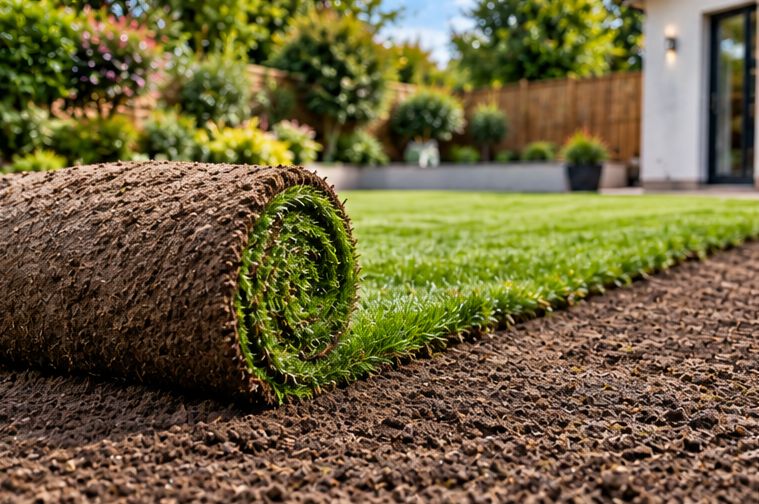
- Lay the turf. Fresh rolls go down on the day they arrive, joints staggered like brickwork and pushed tight together.
The ground preparation is where most of the time goes, and it is what makes the difference. For the general method, see how to prepare the ground before laying turf.
Picking the right weeks in a wet town
Caerphilly gets plenty of rain, and heavy new-build ground turns to mud quickly. Working it when it is saturated smears the clay and undoes the loosening, so we would rather wait a week for the ground to dry out than force the job.
Autumn and spring are usually the easiest times to lay turf here, with warm soil and regular rain to help the roots. Summer laying works too, but needs far more watering. Deep winter is the hardest, because the ground is often too wet or frozen. Our guide to the best time to lay turf in South Wales covers the seasons in more detail.
Watering when you are out all day
New turf must not dry out in its first few weeks, and that can be a challenge in a household where everyone leaves for work or school early. A few tips that help Caerphilly commuters:
- Water in the early morning or evening, when less is lost to the sun and wind.
- Give a long soak every day or two rather than a light sprinkle, so water reaches the soil below the turf.
- Lift a corner now and then: if the soil underneath is damp, the lawn is getting enough.
- A cheap tap timer and a sprinkler can take care of it while you are away.
Our guide to watering and caring for new turf in the first six weeks sets out a simple routine.
The first year
Keep off the lawn as much as you can for the first few weeks, then mow once the roots have taken hold and the grass is a few inches tall, with the mower blades set high. Lower them gradually over the following weeks. Feed it in spring and autumn, and try not to let children's football games wear the same patch every day in the first season.
Because the ground underneath has been fixed, you should find the new lawn drains after rain, stays green for longer in a dry spell and thickens up rather than thinning out. If moss or bare patches appear later, why lawns go patchy, mossy or bare will help you spot the cause.
Combining the lawn with other work
If you also want a patio, a path or a deck, it makes sense to do those first and lay the turf last, so the new lawn is not trampled by barrows. Many people on the newer Caerphilly estates pair a relaid lawn with a sturdier fence at the same time; see fence replacement on Caerphilly estates.
We lay lawns across the region through our turf laying and lawns service, and you can read about lawns in the town on turf laying in Caerphilly. Send us a message, ideally with a photo of the lawn, and Tony will arrange a free visit and quote.
Talk to T J Landscapes about your garden
Free quotes and honest advice across South Wales.
Questions People Ask
Can you lay new turf over my existing new-build lawn?
We would not advise it. If the ground beneath is compacted or waterlogged, fresh turf on top will fail in the same way. Stripping the old grass and fixing the soil first is what makes the new lawn last.
Would seed be a better option?
Seed can work and is gentler on the budget, but it takes longer to establish and is harder to get going in a wet autumn or a dry summer. Turf gives you a usable lawn much sooner. See turf or seed for the pros and cons.
What affects the cost of relaying a lawn?
The size of the lawn, how compacted the ground is, how much topsoil is needed, whether drainage is required, access to the back garden and the amount of old turf and debris to take away. We explain all of this in a free quote.
How soon can we use the new lawn?
Light use is usually fine after a few weeks, once the turf has rooted and you cannot easily lift a corner. Give it a full season before heavy wear, such as regular football or a trampoline, so the roots can go down deep into the new topsoil.
Do you take the old turf away?
Yes. The stripped turf, any rubble we dig out and other waste from the job are removed as part of the work.