
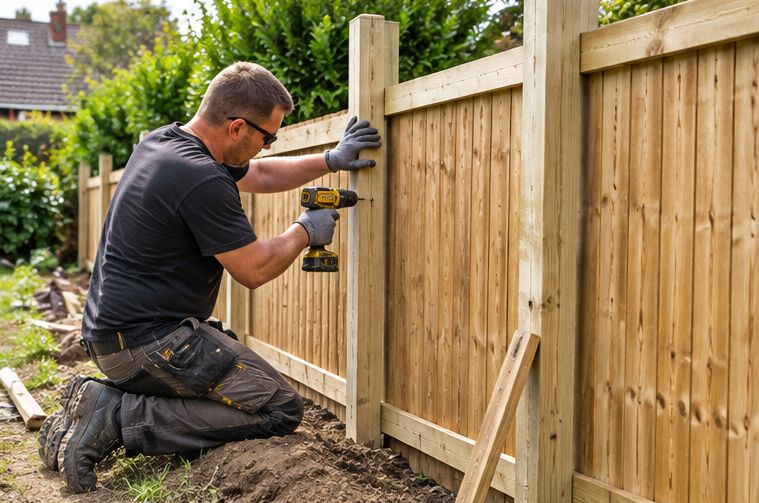
On a typical Cwmbran estate, the back gardens were divided up in long, straight runs, and neighbouring fences are often of a similar age and the same make, exposed to the same weather. That can mean whole rows of timber reaching the end of its life within a few years of each other, and a fence that fails on one side of your garden puts extra strain on the next section along. You can spot it from the path: leaning posts, panels bowed by the wind, gaps along the bottom and patched sections in three different colours.
This guide is about replacing those fences properly, so the new ones outlast the old. It covers the checks to make, the conversations to have with neighbours, and the choices that make the biggest difference to how long a fence stands up. For our other work in the area, see landscaping in Cwmbran.
Signs the fence is past saving
Not every tired fence needs replacing outright. A single broken panel on sound posts can simply be swapped. The time to replace the whole run is when the posts themselves have gone, because new panels on rotten posts will be back on the ground after the next gale.
- Posts that move when you push them, or have snapped at ground level
- Panels held up by the shed, a neighbour's trellis or a length of wire
- Rails and boards soft enough to push a key into
- Gravel boards missing or rotted, so the panels sit on wet soil
- More patched sections than original ones
If you are not sure which side of the line your fence falls, our guide to fence repair or replacement explains how we judge it.
Who owns which fence?
On estates, boundaries can be confusing because the original builder put all the fences up, and nobody has looked at the plans since. Your deeds or the title plan from the Land Registry may mark ownership with a T on one side of a boundary line. Where there is no mark, the fence is often treated as shared.
Either way, talk to the neighbours before anything comes down. On a shared boundary, it is sensible to agree the style, the height and who pays for what, and to put it in a quick message so there is a record. Many Cwmbran neighbours end up doing two or three gardens in one visit, which also means only one lot of disruption on the street.
Getting materials into a terraced or linked garden
Plenty of homes on the town's estates are terraced or linked, with no side access to the back garden. Some have a rear path shared with the neighbours; others have nothing but the hallway. Posts, panels, concrete and old timber all have to go through somewhere.
We will look at the route when we visit. A shared rear path is usually the easiest. Where everything has to go through the house, we lay down protection and carry it through carefully, and the old fence goes out the same way. It adds time to the job, which is why access is one of the first things we ask about.
Wind on the valley sides
Cwmbran sits in a valley, and estates higher up the slopes get a fair bit more wind than those on the flat by the river. A solid fence acts like a sail, and the posts take the strain at ground level. That is usually where the old fence gave up.
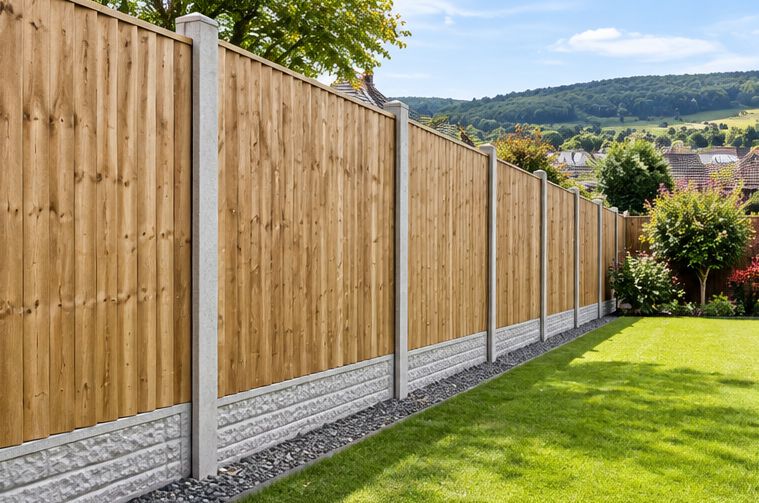
On an exposed plot, stronger posts set deeper in concrete, and a style that lets some wind through, make a real difference. Close board fencing, with vertical boards nailed to rails, is sturdier than lightweight panels. Hit-and-miss or slatted designs let air pass while keeping most of the privacy. Our guides to close board, panel or slatted fencing and which fence stands up best to Welsh wind compare them in more detail.
Posts and gravel boards: where fences live or die
Most estate fences fail from the bottom up. Timber posts sitting in damp soil rot at ground level, and panels touching the earth wick up water. Two changes stop that happening again.
The first is the post. Concrete posts do not rot, and panels slide into their grooves, so a damaged panel can be swapped without disturbing the post. Well-treated timber posts are a good choice where you prefer the look of wood, set in concrete with the top shaped to shed water. The second is the gravel board, a concrete or treated timber board along the bottom that keeps the panel clear of the ground. We explain the trade-offs in concrete posts or timber posts for a garden fence.
Height, privacy and the rules
Most people replacing a back fence want a bit more privacy, particularly where a newer extension or a raised patio next door overlooks the garden. There are limits on how high a fence can go without planning permission, which are lower next to a road or footpath than between back gardens. Check the current limits with Torfaen council before going taller than the old fence.
A trellis topper is a popular middle ground. It adds height and something for climbers to grow up, without the solid, boxed-in feel of a very tall panel. Some estate deeds also include covenants about boundary treatments, especially at the front, so a quick look at yours is worthwhile.
Replacing the fence with us
We take the old fence down, dig out the old post footings where needed, set new posts in concrete to a string line, fit gravel boards and panels or boards, and clear every bit of waste. A side gate can be fitted at the same time; see choosing and fitting a garden gate. Our fencing and gates page has more on the styles we put up. Tony will walk the boundary with you and, if the neighbours are interested, look at theirs too. Ask for a free quote.
Talk to T J Landscapes about your garden
Free quotes and honest advice across South Wales.
Questions People Ask
Can I replace a shared fence without my neighbour's agreement?
It is always better to agree first. If the fence is theirs, you normally need their permission to replace it. If ownership is unclear, a short written agreement before work starts avoids disputes later.
Is it cheaper to do several Cwmbran gardens at once?
Doing neighbouring gardens in one visit can save time on setting up, deliveries and waste, which usually helps everyone. We quote each household separately so it is clear who is paying for what.
Should the good side of the fence face me or my neighbour?
There is no legal rule that the smooth side must face out, but it is a common courtesy. On a shared fence, many people choose a style that looks good from both sides, such as close board with a capping rail or double-sided slatted fencing.
What affects the cost of a new fence?
The length of the run, the height, the style and posts you choose, how hard the old fence is to remove, the ground conditions and the access. We give a free, written quote after seeing it.
Can you remove the old shed and rubbish at the same time?
Yes. We can clear the garden while we are there. See garden clearance when moving into a Cwmbran house.