
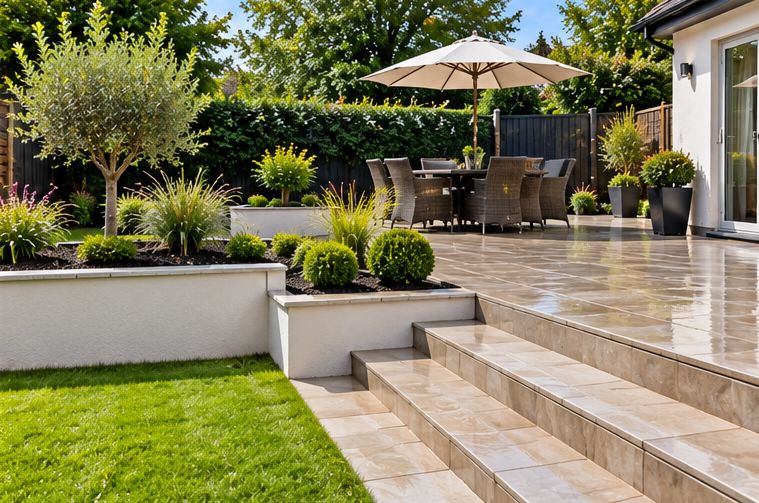
Ask people in Aberdare what goes wrong in their gardens and the list is familiar: a lawn that squelches from October to April, a patio with a permanent puddle by the back door, green, slippery steps, and beds where plants rot rather than grow. Almost all of it comes back to water, and most of it can be designed out.
This guide is about planning an Aberdare garden with the rain in mind from the start. It covers how to see where the water goes, which surfaces and features help, and the simple choices that make a garden usable on a grey day. For design work across South Wales, see our landscaping and garden design page.
Watch the garden in the rain first
The most useful thing you can do before planning anything costs nothing: go out during a heavy downpour, or straight after one, and look. Where does water come in from? Where does it run? Where does it stop?
- From above: on the valley sides, a lot of water arrives from the slope behind the garden, not just from the sky.
- From the house: downpipes, and sometimes an overflowing gutter, can drop a surprising amount onto one corner.
- From next door: a neighbour's patio or drive can shed water across the boundary.
- Where it sits: hollows in the lawn, the lowest end of a patio, the foot of a retaining wall.
A few photos on your phone during a wet week will tell us more than any drawing. We use them, along with what we see on the visit, to decide where water should be sent.
Give every hard surface somewhere to shed water
Patios, paths and driveways stop rain soaking in, so the water has to go somewhere. The rule we follow is simple: every hard surface gets a fall, and every fall ends at something that can take the water, such as a gully, a channel drain, a gravel strip or a soakaway.
The fall always runs away from the house. On a narrow Aberdare terrace, where the patio often meets a wall or step at the back, that sometimes means a linear drain along the low edge. Our guide to patio slabbing for Aberdare terraced houses goes into the detail, and the home guide on paving that copes with Welsh rain compares materials.
For front gardens turned into parking, permeable surfaces such as gravel or permeable block paving can let water soak through rather than running into the road. Rules on draining front driveways can apply, so check with Rhondda Cynon Taf Council before paving over a front garden.
Soakaways, trenches and land drains
When the ground cannot absorb what arrives, it needs help. A gravel-filled trench along the uphill edge of a garden can catch run-off from the slope above before it crosses the lawn. A land drain, a perforated pipe in a stone-filled trench, can pull water out of a soggy area and carry it away. A soakaway lets collected water seep slowly into the ground, though it only works where the subsoil will take it.
Which one suits your garden depends on the ground, the slope and where the water can legally and safely go. Our home guide on stopping a garden waterlogging explains each option in more depth.
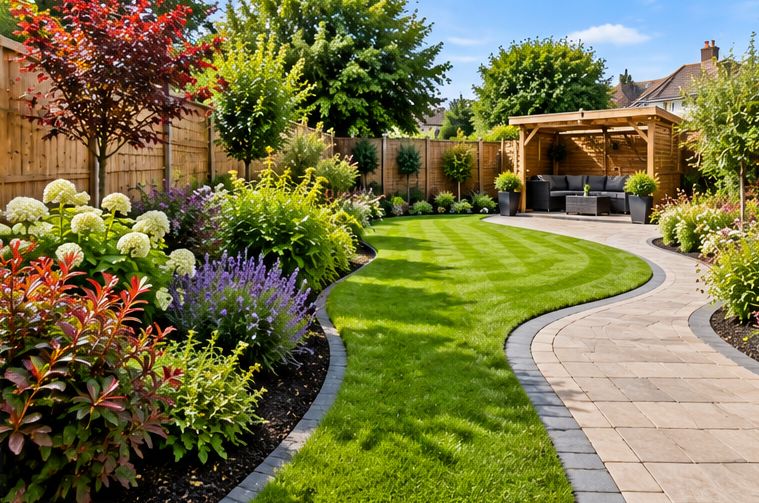
Lift the planting out of the wet
Many plants that die in Aberdare gardens are not killed by cold but by wet roots over winter. Raised beds built from sleepers, brick or block lift the soil above the soggiest ground and let it drain freely. They also make gardening easier on the back and give a sloping garden more structure.
In the damper, lower corners, it makes sense to work with the conditions. Moisture-loving plants such as ferns, hostas, astilbes and many native shrubs are happy where lavender and rosemary would sulk. Our guide to building brick raised beds and planters shows the options for built beds.
Choose surfaces you can use on a wet day
A garden in the Cynon Valley will be wet underfoot for a good part of the year, so grip matters. Textured or riven slabs, brushed concrete finishes and anti-slip porcelain are safer than polished stone. On decking, grooved or composite boards and good airflow underneath help stop the surface going green; our guide on timber or composite decking for Aberdare gardens weighs up the choices.
Steps need even risers and a slight fall on each tread. Paths should lead where people actually walk, because a shortcut across the lawn soon becomes a muddy strip in winter. Stepping stones or a gravel path along that line solve it neatly.
Collect and reuse some of the rain
Not all of the water has to be a problem. A water butt on each downpipe takes pressure off the drains in a storm and gives you water for pots and new plants during a dry spell, which Aberdare does get in most summers. A small rain garden, a shallow planted dip that fills during heavy rain and drains within a day or so, can turn a wet corner into a feature.
Even a simple change like directing a downpipe into a gravel-filled planter rather than onto the patio can make a noticeable difference.
Putting the plan together
Wet-weather planning works best when it is part of the whole design, not an add-on. Drainage often needs to go in before paving, turf or walls, so it pays to plan everything at once, even if the work is done in stages. Our guides on preparing ground for turf in Aberdare and garden walls and steps in Aberdare show how that fits together on a sloping plot.
Our landscaping in Aberdare page covers the wider service in the town. If your garden is holding more water than it should, send us a message and Tony will come and look at where the water is going and give you a free quote.
Talk to T J Landscapes about your garden
Free quotes and honest advice across South Wales.
Questions People Ask
Why does my patio in Aberdare always have a puddle in the same place?
Usually the fall is too shallow, runs the wrong way, or a slab has sunk. Sometimes it can be lifted and relaid in that area; sometimes the whole patio needs a new sub-base. Our guide on why patios sink or lift explains the causes.
Can water from my garden go into the main drains?
It depends on the property and the drainage arrangements. Surface water should not be sent into a foul drain. If you are unsure what your drains are, it is worth checking before any new drainage is added.
Is artificial grass a good answer for a wet lawn?
It can be, if it is laid on a free-draining base. Laid straight onto heavy, wet soil, water will still sit underneath. On many Aberdare plots, a well-prepared real lawn with better drainage is a good alternative.
What plants cope with wet Cynon Valley gardens?
Ferns, hostas, astilbes, many grasses and native shrubs such as dogwood are happy in damp ground. Plants that need sharp drainage, like lavender, do better in raised beds or pots.
What affects the cost of drainage work?
The length of any trenches, the depth needed, access for digging and removing spoil, what the water drains into, and whether paving or lawn has to be lifted and put back. We explain it all in a free quote.