
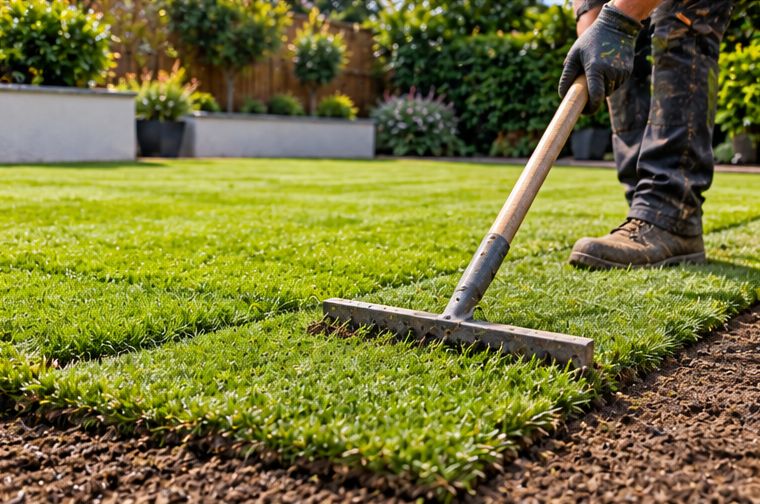
Fresh turf looks finished the moment it goes down, which is exactly why poor preparation is so easy to hide. For a few weeks the lawn is green and even. Then the first long spell of Cynon Valley rain arrives, puddles form in the same places every time, moss creeps in and the grass thins. More often than not, the cause is the ground, not the turf.
This guide explains how we get the ground ready for turf laying in Aberdare, what we tend to find under the surface of different kinds of garden in the town, and why we spend so much time on levels and drainage before any grass is unrolled.
Why Aberdare ground needs extra care
Aberdare sits high in the Cynon Valley, and the town gets a lot of rain across the year. Soil here is often heavy and slow to drain, and gardens on the valley sides also collect water running down from the slope above. Put those together and a lawn has to cope with being wet for long stretches of autumn and winter.
Grass will put up with damp, but it does not like sitting in water. Roots in waterlogged soil are starved of air, stay shallow and give up quickly in a dry spell the following summer. Good preparation gives the roots a loose, free-draining layer to grow into, and a surface that sheds water rather than holding it.
What we usually find under the surface
Before we quote, we dig a few test holes and look at what the old lawn or bare patch is growing in. In Aberdare the answer tends to depend on the age and type of house.
- Newer estates on the valley floor and sides: a thin skin of topsoil laid over compacted subsoil and builders' leftovers. Brick ends, lumps of concrete and hard-packed clay are common, and they explain why so many new-build lawns stay soggy.
- Victorian terraces: narrow plots that have been dug over, built on and cleared many times. It is common to find old ash, cinders, broken slate and the footings of a long-gone outhouse a spade's depth down.
- Larger older houses: deeper, more settled soil, but often shaded by mature trees, with roots near the surface and years of moss and thatch to deal with.
Each of these needs a slightly different plan, which is why we do not quote for turf from a photo alone. If the plot is buried under growth, a clearance of the neglected garden usually comes first.
Stripping, digging and breaking compaction
The old lawn, weeds and any rubble near the surface come off first. Removing the old turf properly matters: rotting grass left underneath settles unevenly and can leave soft spots in the new lawn.
Next we break up the ground. On a compacted estate plot that can mean digging or rotavating well below the depth a mower or spade would normally reach, so the subsoil is opened up and water has somewhere to go. Stones, roots and debris are raked out as we go, and anything that cannot stay is taken away with the rest of the waste.
On a sloping plot we pay close attention to what is holding the ground up. If the lawn sits above a retaining wall, digging near the wall is done carefully, and any wall that is already leaning is dealt with before the lawn, not after. Our guide to garden walls and steps in Aberdare covers that side of things.
Topsoil, levels and a gentle fall
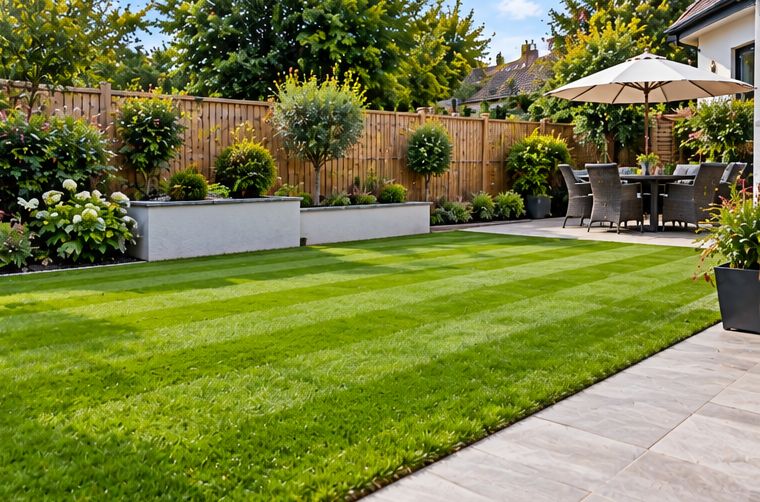
Most Aberdare lawns we lay need at least some imported topsoil. It gives the new roots a good, even layer to grow into and lets us build up low spots without using whatever came out of the ground elsewhere. Where the existing soil is reasonable, we improve it rather than replacing it.
Levelling is where a lot of the time goes. A lawn that looks flat can hide shallow dips that will hold water all winter. We rake, firm and re-rake until the surface is even, then give it a slight fall away from the house and towards a border, a gravel strip or a drain. On valley-side plots the fall is often already there; the job is to make it smooth and consistent rather than lumpy.
The final firming is done by treading or light rolling, followed by a last rake to leave a fine, level tilth. It is slow and unglamorous work, but it is the difference between a lawn that stays even and one that sinks in patches.
When the ground needs drainage
Some gardens need more than good soil. If test holes fill with water and stay full, or the lawn area sits at the bottom of a slope, we talk through drainage before laying anything. The options range from a gravel trench along the uphill edge to catch run-off, to a run of perforated land drain taking water to a soakaway or suitable outlet.
We explain what we think the garden needs and why, and we will not add drainage that is not necessary. The home guide to stopping a garden waterlogging explains the main methods, and our piece on wet-weather garden planning in Aberdare looks at the wider picture of rain across the whole garden.
Laying, and the first few weeks
Turf is laid as soon as possible after delivery, in staggered rows like brickwork, with joints pushed tight and no small pieces on the edges where they would dry out. On a slope we lay across the fall rather than down it, and pegging can help on steeper banks until the roots take hold.
The weather in Aberdare often does some of the watering for you, but not always. New turf needs to stay moist until it has rooted, and a dry, breezy week in late spring can catch people out. We leave clear aftercare notes, and the service guide on caring for new turf in the first six weeks sets out a routine. For timing, see the best time to lay turf.
Planning a new lawn in Aberdare
If you are thinking about a new lawn, it helps to look at it alongside the rest of the garden. Paths, edging and the way you walk from the back door to the washing line all affect how a lawn wears. A mowing strip of paving or bricks along the borders saves a lot of edging, and a stepping-stone path stops a muddy track forming across the grass.
You can see more about our lawn work in the town on our turf laying in Aberdare page, or read about the wider approach on our landscaping in Aberdare page. When you are ready, get in touch for a free quote and Tony will come and look at the ground with you.
Talk to T J Landscapes about your garden
Free quotes and honest advice across South Wales.
Questions People Ask
Can you lay new turf straight over my old lawn?
We would not recommend it. Old grass and weeds rot underneath, the surface settles unevenly and the new roots struggle to reach the soil. Stripping the old lawn first is part of doing it properly.
My new-build lawn in Aberdare is always wet. Will new turf fix it?
Not on its own. If the problem is compacted subsoil or buried builders' rubble, new turf laid on top will go the same way. The ground needs breaking up, improving and levelling first, and sometimes a drain.
How long before I can walk on the new lawn?
Light use is usually fine after two or three weeks, once the turf has rooted and you cannot lift a corner. Heavier use, such as children playing football, is best left a little longer, depending on the weather.
Is turf or seed better for an Aberdare garden?
Turf gives an instant, even cover and copes better with heavy rain washing the surface than new seed does. Seed can work on a well-prepared plot in the right season. Our guide on turf or seed compares them.
What affects the cost of a new lawn?
The size of the area, how much old lawn and rubble needs removing, how much topsoil is needed, access for barrows, the slope, and whether drainage is required. We set all of this out in a free quote.