
Turf Laying in Aberdare
New Lawns on Prepared Ground
A new lawn in Aberdare, whether on a cleared terrace plot or an estate garden, starts with soil opened up enough to cope with the valley's rain before a roll is laid.
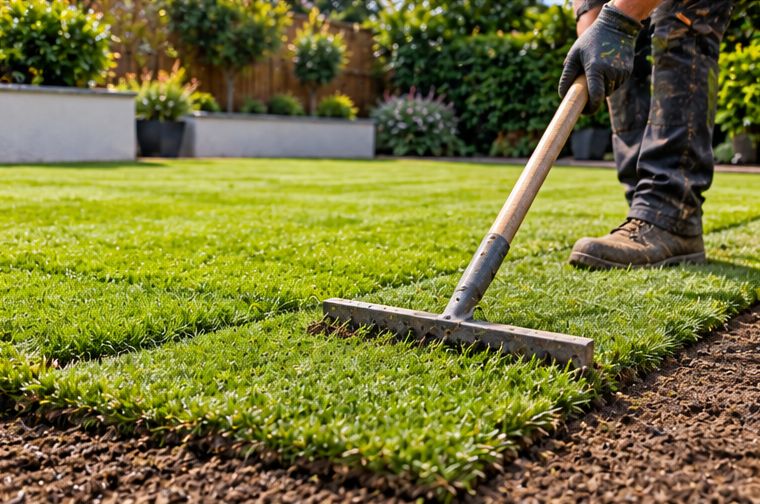
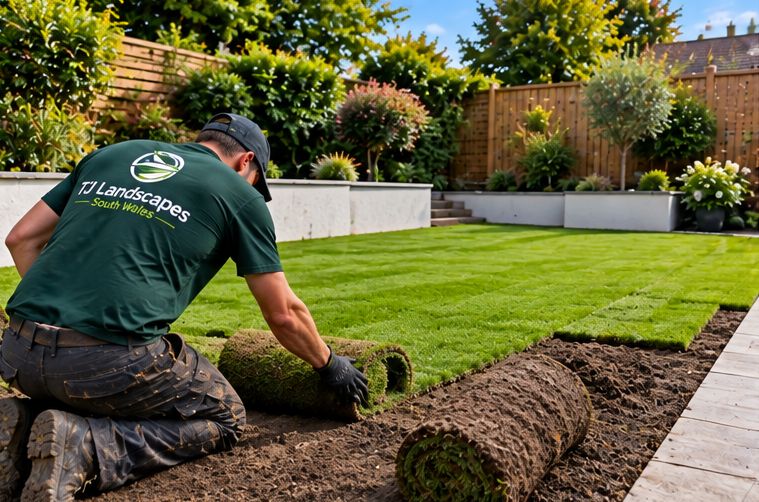

No single lawn sums up Aberdare. Behind the Victorian terraces there are long, thin strips of grass. Around the larger older houses there are established lawns in the shade of big trees and stone walls. Down on the valley floor and up the sides there are newer estates with lawns that are only a few years old. The one thing they share is Cynon Valley rain.
So Tony and the team treat each Aberdare lawn on its own terms. At a free visit we look at the soil, the light, the trees and the way water crosses the garden, then quote for the turf laying and groundwork it really needs. Our Aberdare landscaping page covers the rest of the garden, or you can contact us now.
Six kinds of lawn job, and what each one tends to mean for the mix of gardens in Aberdare.
A new lawn in Aberdare, whether on a cleared terrace plot or an estate garden, starts with soil opened up enough to cope with the valley's rain before a roll is laid.
Returfing is often the answer for the older lawns around the town's bigger houses, where decades of shade and wet have left more moss than grass.
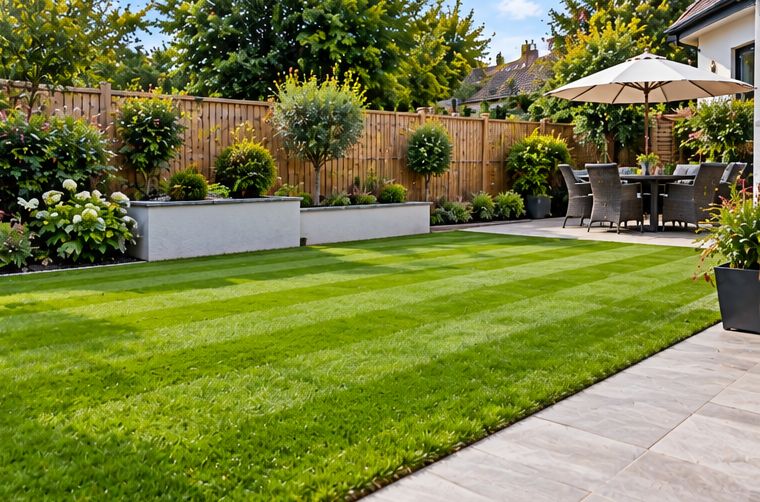
Long terrace lawns in Aberdare frequently undulate over old paths and filled-in features, and we strip and regrade them with screened topsoil into one even surface.
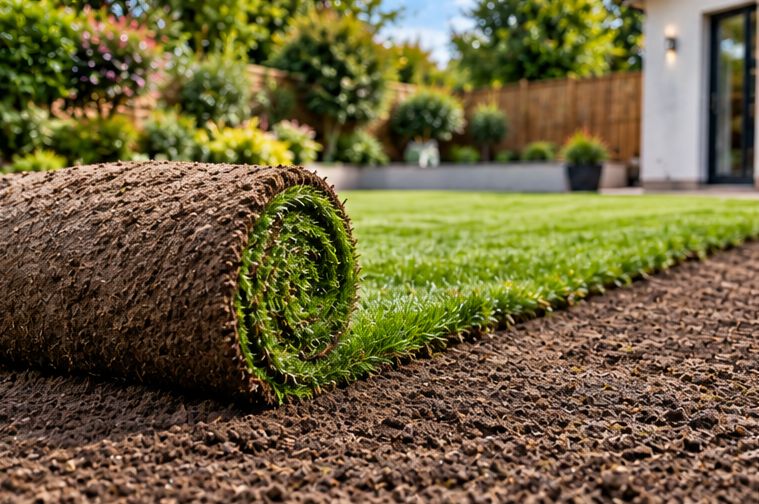
On the valley sides, a sloping lawn can be split into level sections held by sleepers or a low wall, so each part is easy and safe to mow.
Water off the hillside above is a common reason Aberdare lawns fail, so drainage, from gritting heavy soil to fitting land drains, is part of many jobs.
Under dense trees or in a dark corner where grass will never thrive, artificial grass on a free-draining base gives a clean finish instead.
Some of the larger older houses in Aberdare have mature trees that have been growing far longer than the lawn around them. Under a broad canopy the grass gets little light, the soil is dry in summer and full of roots, and leaves smother it every autumn. Relaying turf there without changing anything else rarely lasts.
Sometimes the answer is to let in more light. Lifting the lower branches or thinning the crown can make a real difference, and our tree surgery in Aberdare page explains what is involved. Sometimes it is better to keep the lawn out of the deepest shade and plant or mulch that area instead. We will give you a straight view on which is realistic. Any significant tree work is best checked with the council first, and our guide to tree surgery for Aberdare gardens covers the local side of that.
Behind many Aberdare terraces the garden is a narrow band running a long way from the house, sometimes to a lane at the far end. The lawn in the middle has usually been dug up, built on and filled in over the years, so the ground beneath can be a mix of decent soil, ash and old rubble.
Returfing these strips is mostly about what comes out. We lift the old grass, dig out the rubbish, replace poor soil with good topsoil and set a level that sheds water sideways into a border. Where access is only from the lane or through the house, we plan that at the quote visit, because every barrow of old soil has to leave the same way the new topsoil comes in. Our local guide to turf laying in Aberdare covers the ground preparation in more depth.
A lawn in the Cynon Valley has to cope with rain, shade and old ground. We plan for all three.
If grass will not thrive under your trees, we say so and suggest something that will, rather than laying turf that fails.
Rubble, ash and poor soil beneath Aberdare terrace lawns are removed and replaced, not buried under new rolls.
4.8 on Google from 69 reviews and 10/10 on Checkatrade; read more on our reviews page.
The newer estates on the valley floor sit on flatter ground, which should make lawns easy. The catch is that low, flat land is where water gathers, and many estate lawns were laid over compacted clay. They look fine in June and turn into a bog by November, with moss creeping in from the edges and footprints that fill with water. Relaying on the same ground just starts the cycle again.
Breaking up the compacted layer, adding grit and topsoil and giving the surface a gentle fall is usually enough; in the worst spots we fit a drain. Wet-weather garden planning in Aberdare looks at the problem across the whole garden, and looking after a lawn through the year helps keep it right afterwards.
Real reviews from homeowners across Aberdare — rated 4.8 out of 5 on Google from 69 reviews and 10/10 on Checkatrade.
“Had my patio done by the company and could not be happier. Top quality work done and quickly too.”
“I was pleased to find Tony and his lads were absolutely great! Tony responded quickly & was very polite.”
“We were delighted with the work and materials, which were of very high quality. Tony and team helped us.”
Local and practical guides to help you plan the work.
One team for the whole garden, so a single visit can price everything you have in mind.
We cover Aberdare and the towns around it. Choose another area below.
T J Landscapes South Wales
24 Conway Road, Pontypool
Torfaen, NP4 6HL
We cover homes right across South Wales, from Cardiff and the coast up to the valleys and the Brecon Beacons.
Usually. We find out whether the cause is compaction, heavy clay, low ground or water off the hill, then deal with that before relaying. Stopping a garden waterlogging sets out the options.
In light shade, often yes, especially if the canopy is lifted a little. In deep shade over dry, rooty soil it tends to thin out, and planting or artificial grass is the better choice.
Turf covers the ground at once, so heavy rain is less likely to wash it out or let weeds in. Turf or seed compares the two.
The size of the lawn, how much old turf and rubble has to go, topsoil and grit needed, any drainage or tree work, and how materials get in. We quote free, so get in touch.
Sometimes. A tree may be protected by a preservation order or sit in a conservation area, so check with Rhondda Cynon Taf Council before any significant work. Our permission guide explains the general position.
Tell us what sort of house you have, how big the lawn is and whether trees or winter wet are the problem.