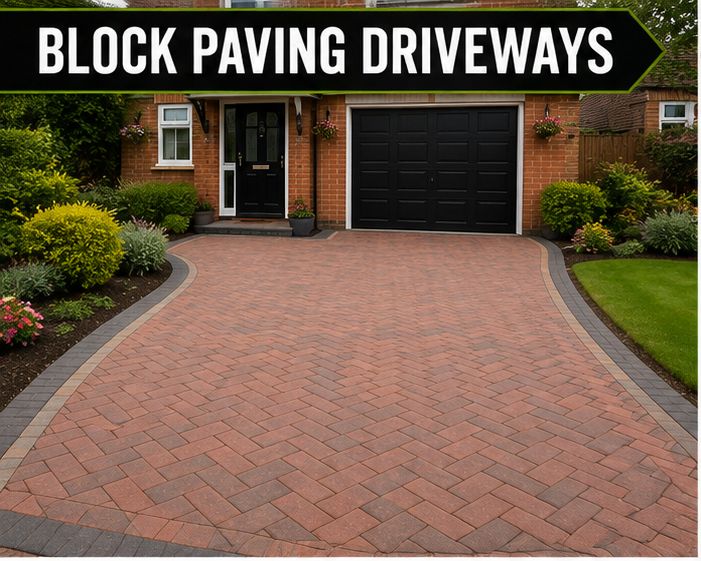
Granite is about as tough as garden paving gets. It is hard, dense and takes very little water in, so it shrugs off frost, heavy use and the damp that turns softer stones green. That makes it a strong candidate for a patio that will see a lot of wear, or for driveways and edging laid in granite setts.
Tony and the team lay granite slabs and setts as part of our patio and paving service throughout South Wales. This page explains what granite is, the finishes and colours on offer, how it is laid, and how little it asks of you afterwards. Quotes and advice are free, so get in touch if you would like us to take a look.
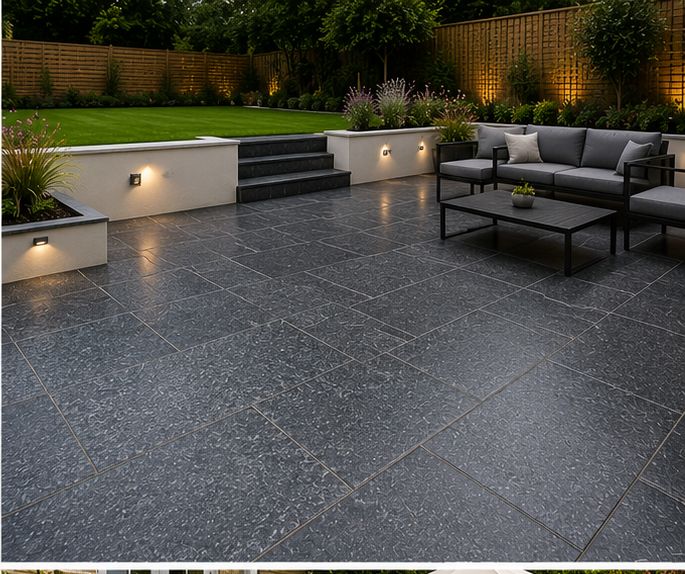
Speckled greys, crisp edges and hard-wearing setts: a selection of granite paving and detailing.
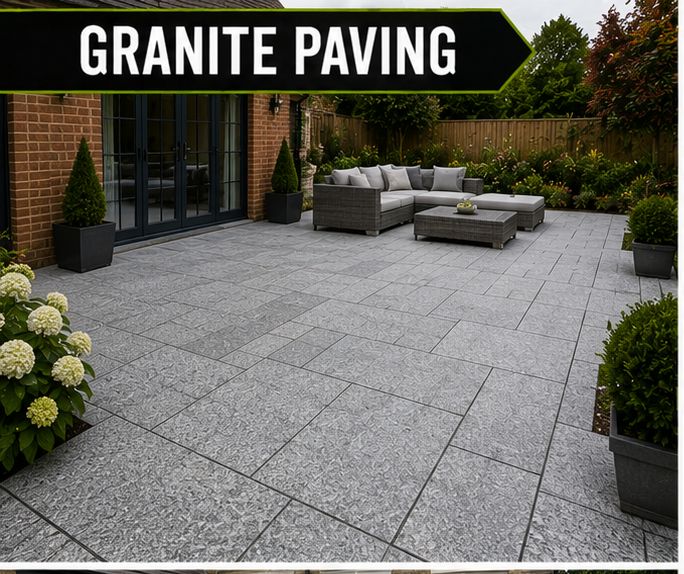
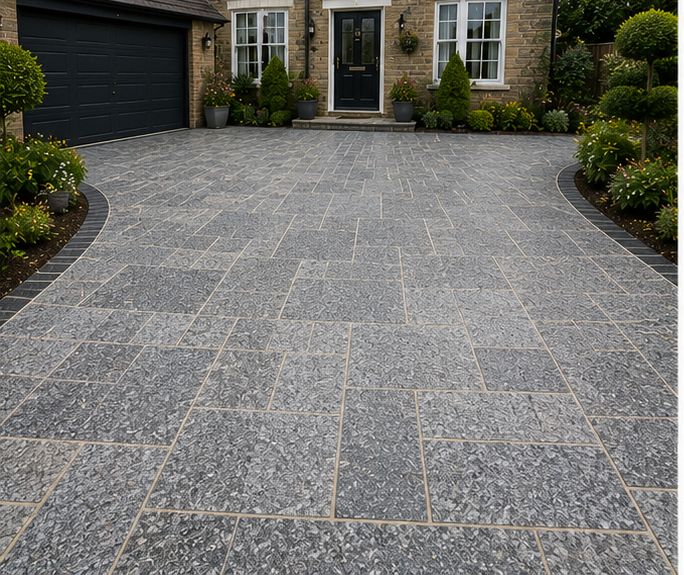
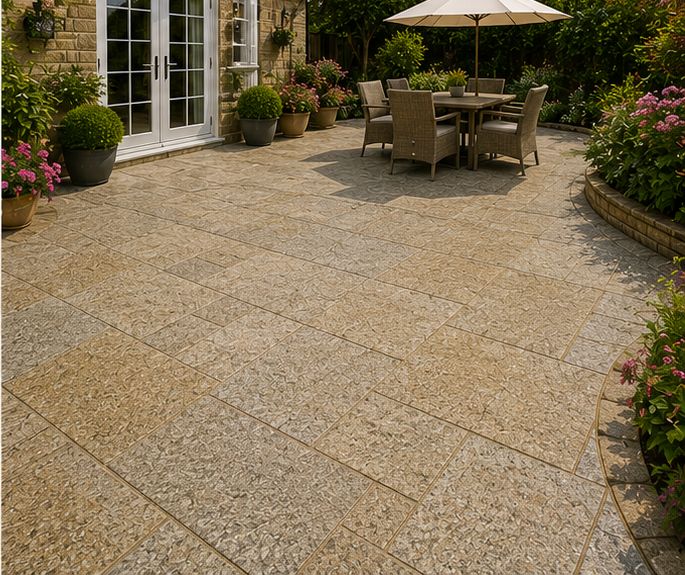
Granite is an igneous rock, formed as molten rock cooled slowly deep underground. That slow cooling grew the interlocking crystals of quartz, feldspar and mica that give granite its speckled, salt-and-pepper look. It is much harder than sandstone or limestone, and it stands up well to acids, so everyday spills and most cleaners will not mark it.
Most granite paving now comes from China, India and Portugal, with some from elsewhere in Europe. It is almost always sawn and calibrated, meaning the slabs are cut to an even thickness with square edges. That gives a neat, precise finish, very different from the hand-split edges of riven sandstone.
Granite has a long history on British streets. Plenty of old towns still have granite kerbs and setts that have carried traffic for well over a century, which says a lot about how it wears.
Polished granite is a kitchen worktop finish and far too slippery for outdoors. Garden paving is given a textured face instead:
Colours run from pale silver grey through mid grey to dark grey and near black, with some warmer pinks and yellows. Mid and silver greys are the most popular choices for patios. Unlike some dark limestones, granite generally holds its colour well, although a flamed finish always looks lighter than the same stone when wet.
Because granite absorbs so little water, mortar does not grip it the way it grips a porous stone. The laying method needs to allow for that, much as it would for porcelain.
Slabs are heavy for their size, so access matters. A garden reached only by steps or a narrow side path, like many valley terraces, means more careful handling, and we factor that into planning. Setts for drives and edging are bedded and pointed individually, which is slower work but gives a very strong, traditional finish. For more on the groundwork side, read how a patio should be laid.
Granite is one of the easiest stones to live with. Its low absorption means algae and staining have less to cling to, and it copes with freezing winters without flaking. A sweep to clear leaves and grit, and an occasional wash with water or a mild cleaner, is usually all it needs.
A pressure washer is fine on most granite, though it is kinder to keep it off the joints. Sealing is rarely necessary, though some owners seal paler granites to make grease marks from a barbecue easier to lift. If you ever find rusty spots appearing, it can be iron minerals in the stone itself or something metal left on the surface; a rust remover made for stone usually shifts it, and it is worth checking with your supplier on any batch.
See our guide to cleaning and looking after a new patio for general tips that apply to all paving.
Granite suits hard-working spaces: a busy family patio, a path from the back door to the shed, a front step, or a drive edged or fully laid in setts. Its crisp lines work well with modern homes, and silver grey granite pairs neatly with rendered walls and dark window frames.
It is also a good choice near the coast, where wind, salt air and driving rain test every surface. Gardens along the seafront in Penarth or on the seaward side of Port Talbot are the kind of places where a dense stone pays off.
Granite setts also make a handsome border for a block paved driveway or a patio in another material. If you want something softer in tone, have a look at limestone paving, which is smoother and more muted.
Not sure which material suits your garden? Compare the options, or see our patio slabbing and paving page for the full picture.
Real reviews from homeowners across South Wales — rated 4.8 out of 5 on Google from 69 reviews and 10/10 on Checkatrade.
“Had my patio done by the company and could not be happier. Top quality work done and quickly too.”
“I was pleased to find Tony and his lads were absolutely great! Tony responded quickly & was very polite.”
“We were delighted with the work and materials, which were of very high quality. Tony and team helped us.”
Guides that help when you are choosing and planning paving.
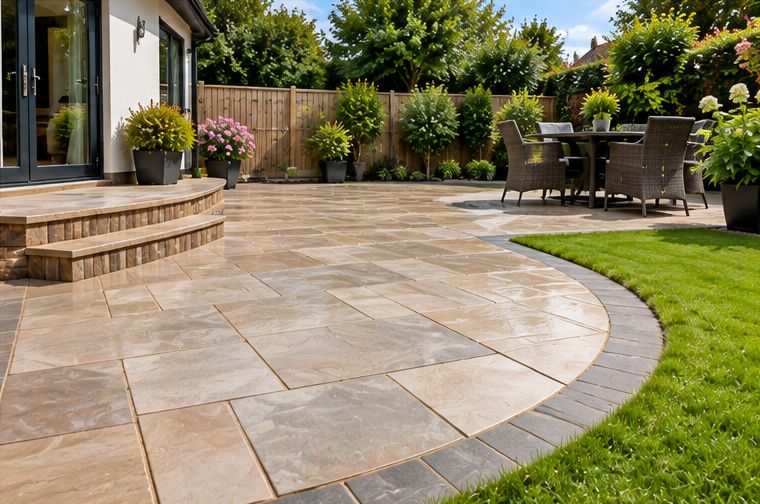
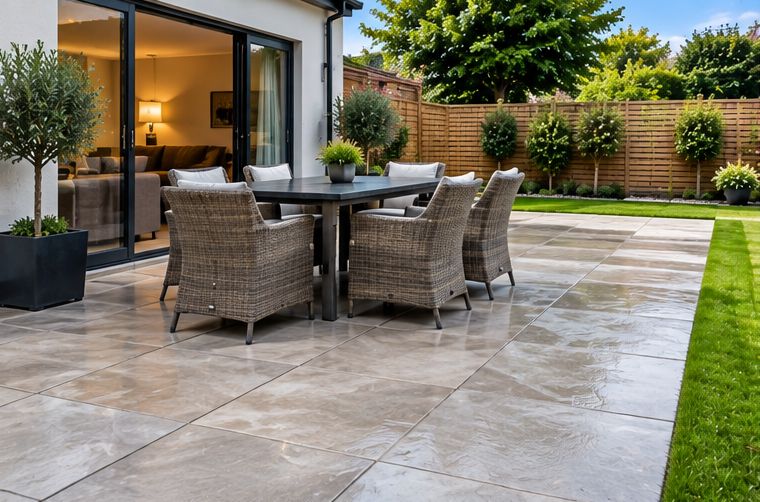
We lay paving right across South Wales. Choose your town to see patio paving there.
A flamed or bush-hammered granite gives good grip in the wet, which is why those finishes are used outdoors. Smooth sawn or polished granite is much slicker, so we keep that for small details rather than main walking areas.
Much less. Granite absorbs very little water, so algae struggles to take hold. In a very shaded, damp spot you may still get a light film now and then, but a wash usually clears it.
It is very hard to cut, heavy to move, and it does not soak up mortar, so it needs a bonding primer and a full bed to stay fixed. None of that is a problem with the right tools and method, but it does make the job slower than laying a softer stone.
Yes. Setts are one of the most hard-wearing driveway surfaces there is when laid on a proper sub-base and mortar bed. They are also popular as a border or a band across a block paved drive.
The size of the area, the finish and thickness of the stone, access to the garden, how much excavation and levelling is needed, and the number of cuts and steps. We price every job individually, and the quote is free.
Let us know what you have in mind and we will visit, measure up and give you a free, no-pressure quote.