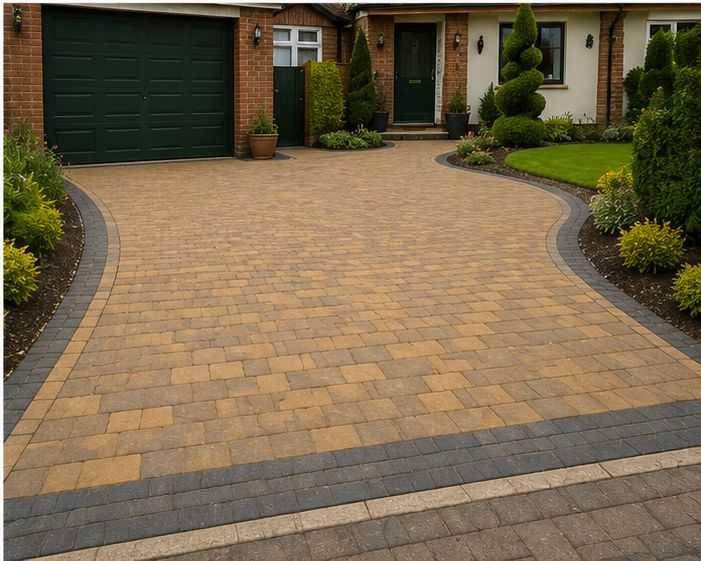
Limestone gives a patio a calm, even look that sits somewhere between the rustic feel of sandstone and the crisp lines of porcelain. The colours are quieter, the surface is usually flatter, and the slabs tend to be more consistent from one to the next, which is why it suits tidy, modern layouts as well as older homes.
Tony and the team lay limestone as part of our patio and paving work across South Wales. Below we explain what the stone is, the finishes you are likely to be offered, how we lay it, and the one or two things about its care that are different from other paving. If you would like to see samples in your own garden, ask us for a free quote.
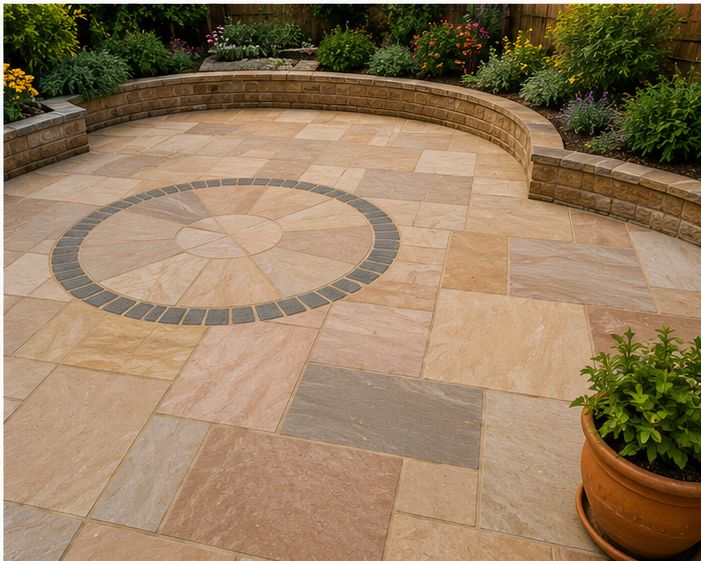
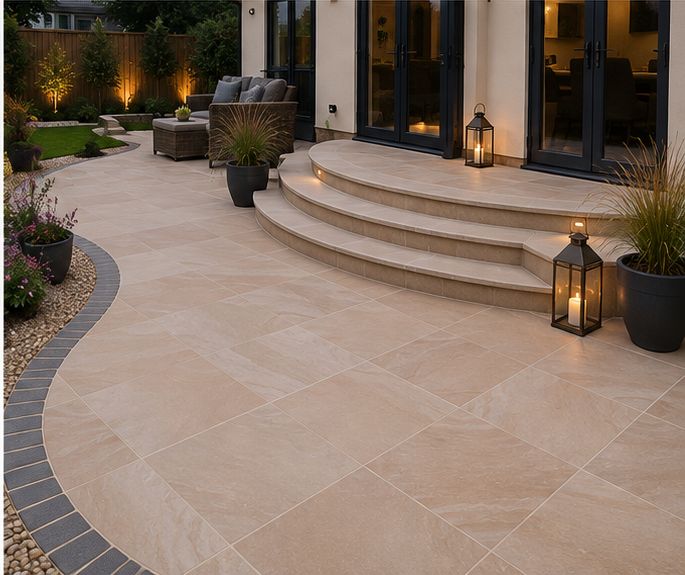
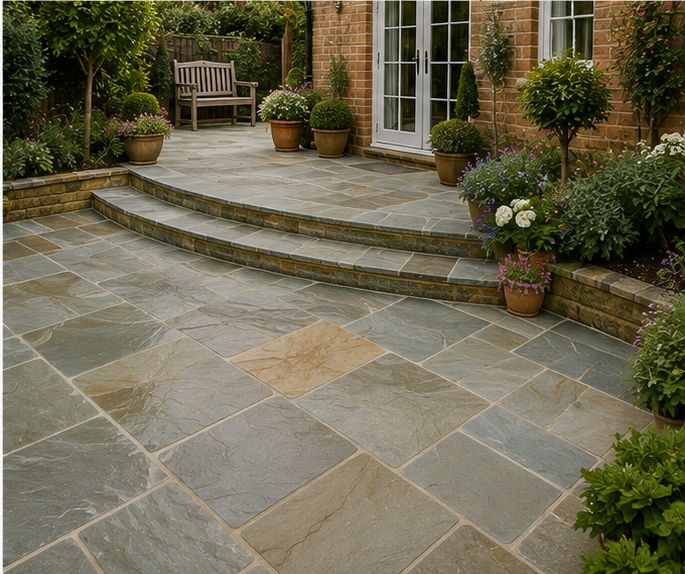
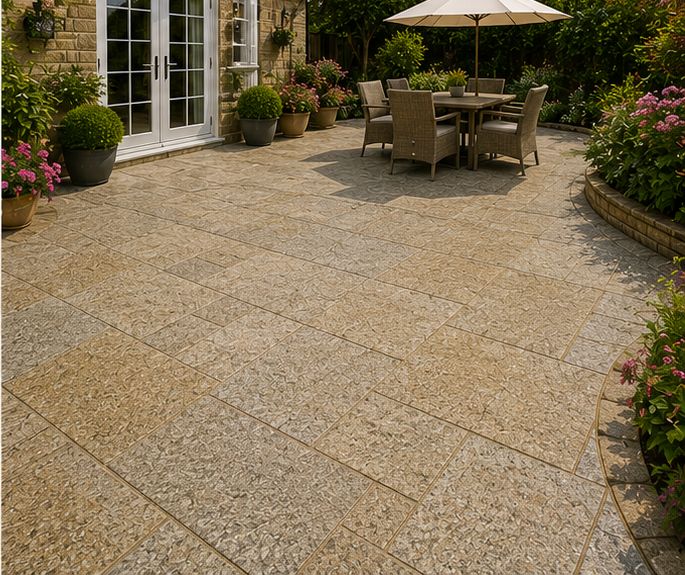
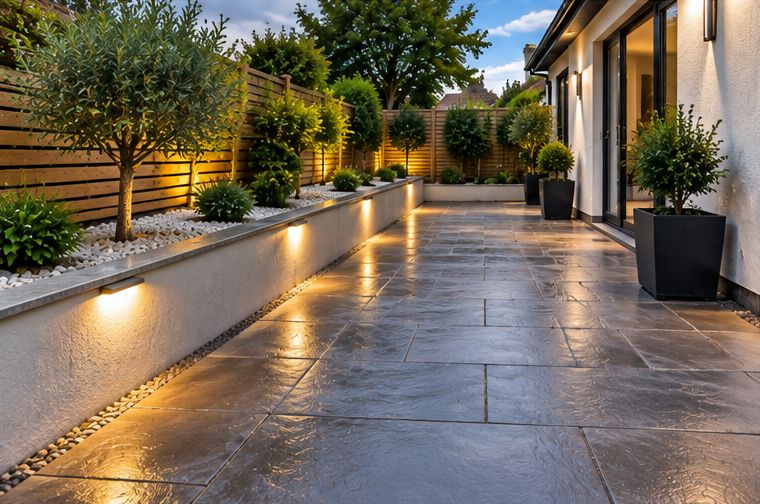
A few examples of the cool greys, blues and smooth finishes that limestone brings to a garden.
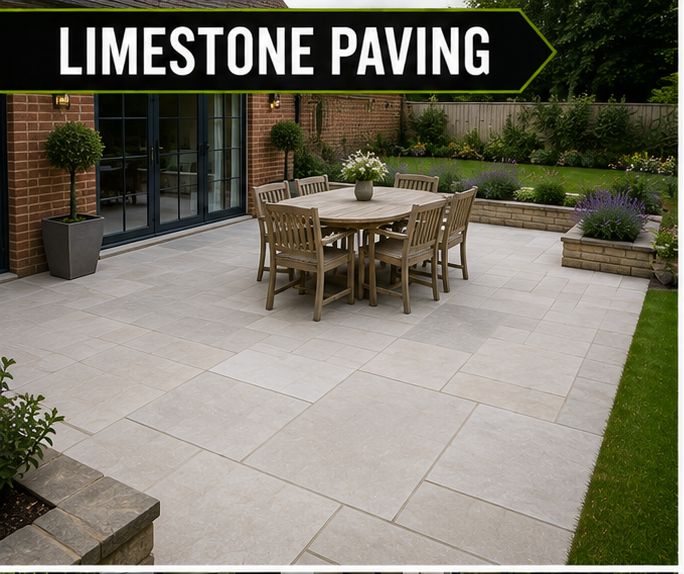
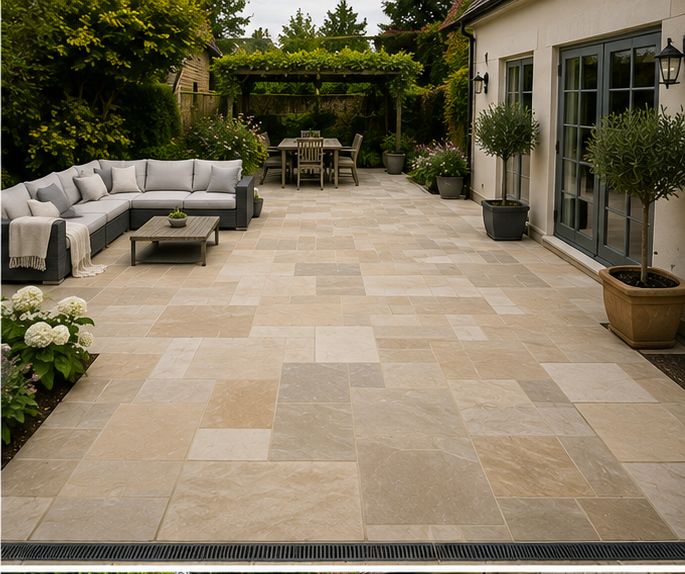
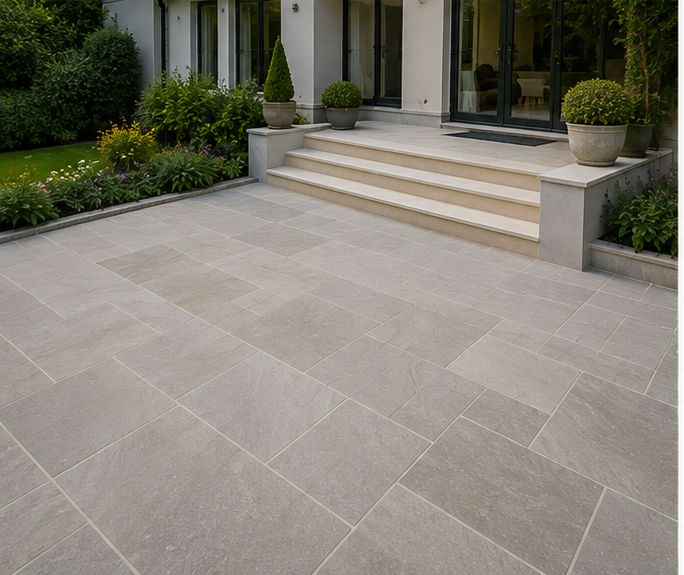
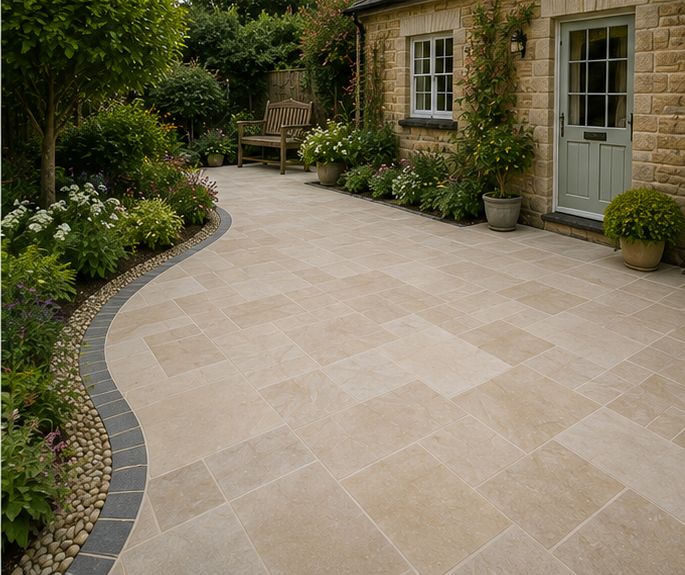
Limestone is a sedimentary rock made mostly of calcium carbonate, laid down over millions of years from shells and mineral deposits on ancient sea beds. It is no stranger to this part of the world: limestone runs around the rim of the South Wales coalfield and underlies much of the Vale of Glamorgan, and you will see it in old field walls and lime kilns.
Most garden paving limestone sold today is imported, with India the biggest source. Compared with Indian sandstone it is generally denser and absorbs less water, so it tends to hold its colour and resist staining a little better. It is still a natural stone, though, and every batch varies in shade and markings, sometimes with small fossil traces or calcite veins running through it.
The best known type is Kota blue, a blue-grey limestone from Rajasthan. Kota brown and Kota black are also widely available, along with darker blue-black limestones from other sources. Expect subtle variation within a pack rather than a flat single colour.
The finish changes the character of a patio more than most people expect:
One honest warning: dark blue and black limestones usually lighten over time with sun and weather, drifting towards a greyer or greener tone. Some people like the weathered look; others prefer to seal the stone to hold the deeper colour for longer. It is worth asking your supplier about any product you are considering.
Limestone is laid in much the same way as other natural stone, and the groundwork underneath matters far more than the slabs on top. Our guide on how a patio should be laid goes into the detail, but in short:
Because honed limestone has straight, even edges, it shows up any wobble in the levels. We take extra care with lines and joint widths on those jobs, as a sawn patio laid slightly out of true is very noticeable.
The main thing that sets limestone apart is its chemistry. Being calcium carbonate, it reacts with acid. That means acid-based patio cleaners, brick acid, and even spilt vinegar, lemon juice or some fizzy drinks can etch the surface and leave dull marks. Always check a cleaner is safe for limestone before using it.
Routine care is simple. Sweep regularly, especially in autumn, and wash with water and a pH-neutral stone cleaner when it needs it. A pressure washer on a lower setting, kept moving and not held close to the joints, is fine for most limestone. In shaded, damp gardens some algae will appear over time, as it does on any stone. Our article on cleaning and looking after a new patio has more on this.
Sealing is optional. A breathable sealer made for limestone can make spills easier to wipe up and slow colour change on the darker stones, but it may alter the look slightly and will need renewing every few years.
A honed blue-grey limestone looks sharp beside a rendered or modern home, around a garden room, or as a clean-lined terrace off bifold doors. In older settings, a riven or tumbled limestone sits comfortably with the stone cottages and Victorian villas you find around Abergavenny and Monmouth.
It works well in steps and paths too, as long as a textured finish is chosen where the stone will stay wet. We often pair limestone patios with low brick walls and steps or raised beds. If you are still weighing up materials, compare it with Indian sandstone, which is warmer and more varied, and granite, which is harder and more speckled.
Not sure which material suits your garden? Compare the options, or see our patio slabbing and paving page for the full picture.
Real reviews from homeowners across South Wales — rated 4.8 out of 5 on Google from 69 reviews and 10/10 on Checkatrade.
“Had my patio done by the company and could not be happier. Top quality work done and quickly too.”
“I was pleased to find Tony and his lads were absolutely great! Tony responded quickly & was very polite.”
“We were delighted with the work and materials, which were of very high quality. Tony and team helped us.”
Guides that help when you are choosing and planning paving.
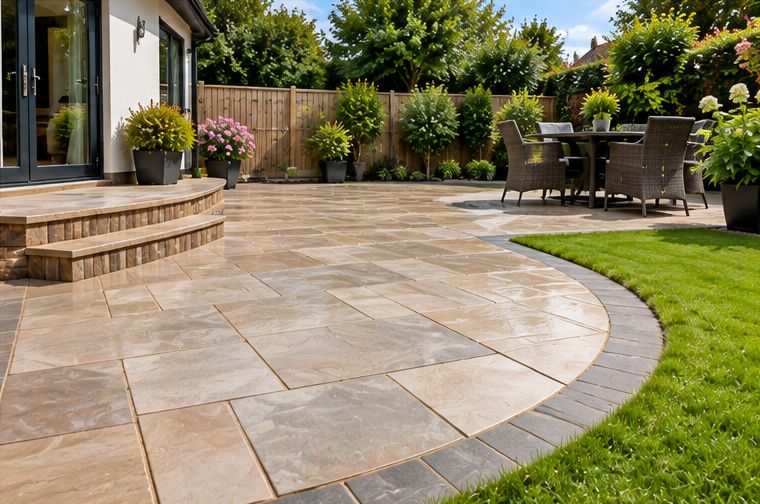
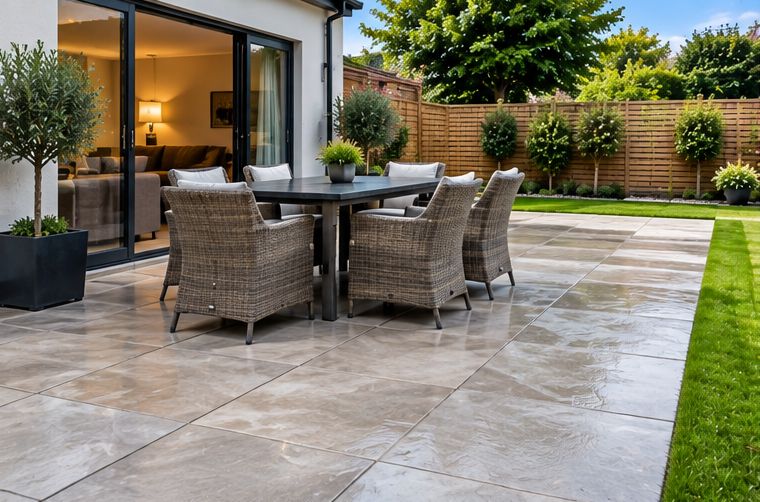
We lay paving right across South Wales. Choose your town to see patio paving there.
Riven and tumbled limestone give reasonable grip. Honed and sawn finishes are smoother, so they can feel slippery when wet or when algae builds up. For shady corners, paths and steps we usually suggest a textured finish.
Usually, yes, to some degree. Dark limestones tend to lighten with sunlight and weathering over the first year or two. Sealing can slow this, but it is best to choose a stone you would still be happy with in a slightly softer shade.
Only if the label says it is safe for limestone. Many general patio cleaners are acidic and can etch or dull the surface. A pH-neutral stone cleaner and water are the safe choice.
Neither is better across the board. Limestone is usually denser, more even in colour and a little easier to keep clean. Sandstone is warmer, more varied and often grippier. It comes down to the look you want and where the patio sits.
It depends on the size, the access, how much digging and levelling is needed and whether there are steps or walls involved. We will give you a realistic idea when we come out to quote, which is free.
Tell us a little about your garden and we will arrange a free visit, bring samples and give you a clear quote.