
Turf Laying in Monmouth
New Lawns on Prepared Ground
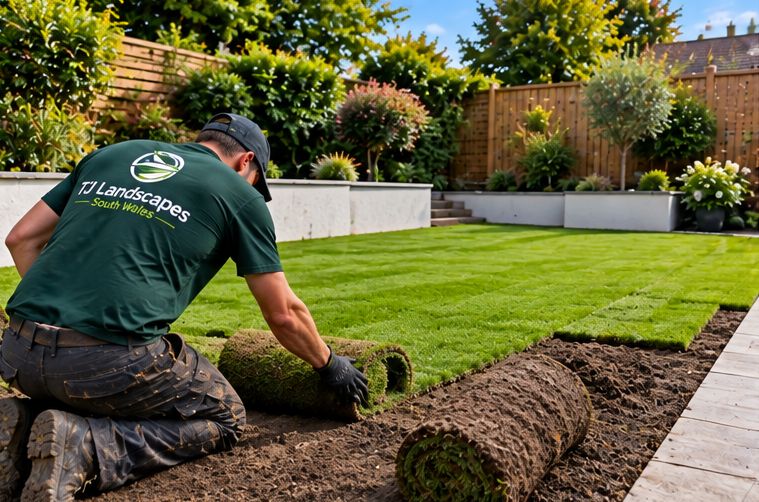
A new lawn on a larger Monmouth plot is planned in sections, with the ground prepared and levelled ahead of each delivery so every roll goes down fresh.
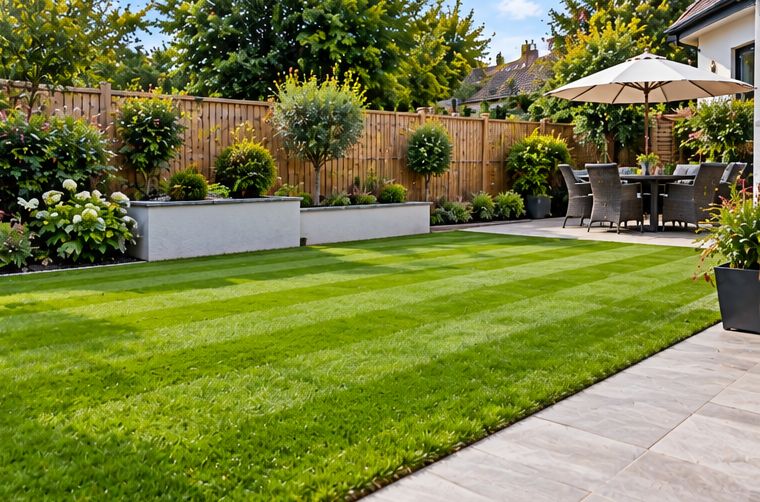

Scale is what sets Monmouth lawns apart. Around the edge of the town and out into the surrounding countryside, gardens can run to a size where the lawn is measured in hundreds of rolls rather than dozens, and the planning looks more like a small groundworks job than an afternoon's turfing. In the old centre, by contrast, a lawn may be a neat walled rectangle behind a period house.
Tony and the team handle turf laying at both ends of that range in Monmouth. We look at the ground, the levels and the way water moves across the plot, then give you a free, clearly itemised quote. For the other garden work we do in and around the town, see our Monmouth landscaping page, or tell us about your lawn and we will arrange a visit.
Six kinds of lawn work, and where each one fits among Monmouth's town houses and country plots.
A new lawn on a larger Monmouth plot is planned in sections, with the ground prepared and levelled ahead of each delivery so every roll goes down fresh.
Returfing suits Monmouth gardens where an old lawn has been rolled flat, colonised by moss or thinned by shade from mature trees, and gives a clean start on improved soil.
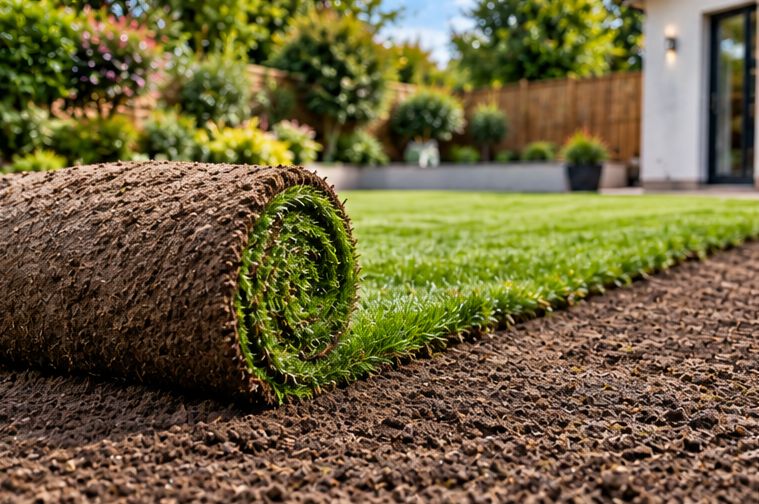
Over a big Monmouth lawn, small bumps and hollows add up, so we grade the whole area with care and bring in screened topsoil where the ground dips or runs thin.
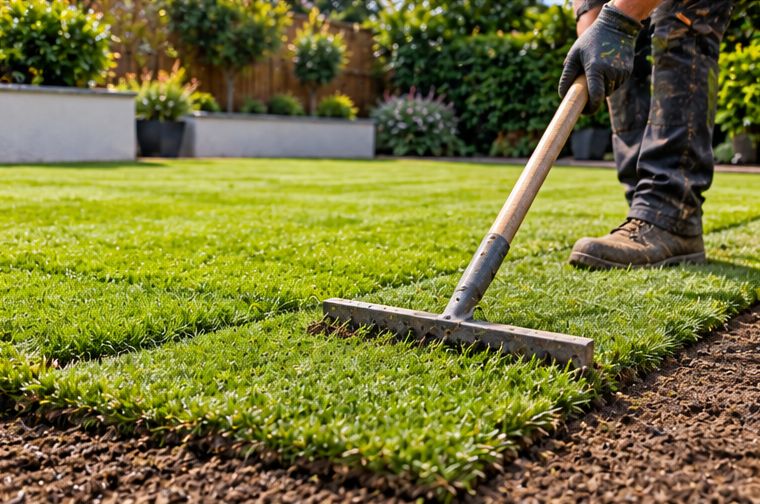
Country gardens around Monmouth often fall gently towards a view or a field, and we can either keep that fall smooth and even or step it into level lawns.
Lower gardens nearer the Wye and the Monnow can sit wet for long spells, so we improve the soil and, where it is justified, lay drains before the turf goes down.
In a small, shaded courtyard behind a Monmouth town house, artificial grass on a well-compacted base can be neater than trying to keep real grass alive.
A large lawn is not just a small one made bigger. Turf has to be laid within a day or so of cutting, so on a big Monmouth garden we split the area into sections and time the deliveries to match. The ground for each section is stripped, cultivated, levelled and firmed before its rolls arrive.
Machinery helps on open plots with good access, and we protect drives and verges with boards where lorries and dumpers need to cross. Spoil and old turf can sometimes be reused elsewhere in the garden to build up a low bed or bank, which saves carting it away. Our Monmouth guide to laying a lawn in a large Monmouth garden covers the planning in more detail. A long lawn edge often meets a field boundary too, and post and rail from our fencing in Monmouth keeps the open feel while marking the line.
Monmouth sits where the Monnow joins the Wye, and gardens on the lower ground can stay damp for weeks after heavy rain. Grass tolerates occasional wet spells, but a lawn that sits in water for long periods thins out, goes mossy and becomes easy to damage underfoot.
We look at what the water is doing before deciding what to do about it. Heavy, compacted soil can be opened up; low spots can be raised with topsoil; surface water can be steered with gentle falls. Where a garden is on a genuine flood plain, no lawn will be immune, but a well-prepared one recovers far better. Our article on gardens near the Wye and Monnow explains more, and it is always worth checking flood information for your address with Natural Resources Wales.
From a paddock-sized lawn to a walled town garden, the preparation decides the result.
Phased deliveries, careful levels and a watering plan mean a large lawn goes down as well as a small one.
On wetter ground near the rivers we deal with compaction, low spots and drainage before a single roll is laid.
Clean edges, protected walls and tidy access for smaller gardens in the old part of town.
Customers rate us highly on Google and Checkatrade, and you can read their words on our reviews page.
In Monmouth's historic centre, gardens are smaller and often enclosed by old stone or brick walls. Here a lawn is as much about looks as use: a crisp, level rectangle with sharp edges that sets off the house and the planting around it. Access may be through a side passage or the house itself, so we plan the day carefully and keep everything tidy.
Many of these gardens pair the lawn with a stone path or small terrace. If you are thinking about paving too, choosing paving that suits a Monmouth town house is a good starting point, and we can combine it with patio paving in Monmouth in one job. Some properties sit in a conservation area, so if the work includes walls or boundaries, check with Monmouthshire County Council first.
Real reviews from homeowners across Monmouth — rated 4.8 out of 5 on Google from 69 reviews and 10/10 on Checkatrade.
“Had my patio done by the company and could not be happier. Top quality work done and quickly too.”
“I was pleased to find Tony and his lads were absolutely great! Tony responded quickly & was very polite.”
“We were delighted with the work and materials, which were of very high quality. Tony and team helped us.”
Local and practical guides to help you plan the work.
One team for the whole garden, so a single visit can price everything you have in mind.
We cover Monmouth and the towns around it. Choose another area below.
T J Landscapes South Wales
24 Conway Road, Pontypool
Torfaen, NP4 6HL
We cover homes right across South Wales, from Cardiff and the coast up to the valleys and the Brecon Beacons.
Yes. We break the lawn into sections, prepare each one fully and time the turf deliveries so every roll is laid fresh. We will talk you through how long it will take at the quote visit.
Often it is, as long as expectations are realistic. Improving the soil and levels helps a lawn drain and recover faster, though no lawn is immune to river flooding. Stopping a garden waterlogging covers the options.
Seed costs less in materials, but takes longer to establish and needs careful timing. On large Monmouth lawns, some people choose seed for distant areas and turf near the house. Turf or seed sets out the trade-offs.
The size of the lawn, the state of the ground, topsoil and drainage needs, the levels, access for deliveries and how much waste has to leave site. We quote free, so get in touch.
Deeply and regularly in dry weather for the first few weeks, section by section if needed. A sprinkler on a timer helps. Our six-week new turf guide explains what to watch for.
Tell us roughly how large the lawn is, whether the ground stays wet and how vehicles can reach the garden. We will arrange a free visit.