
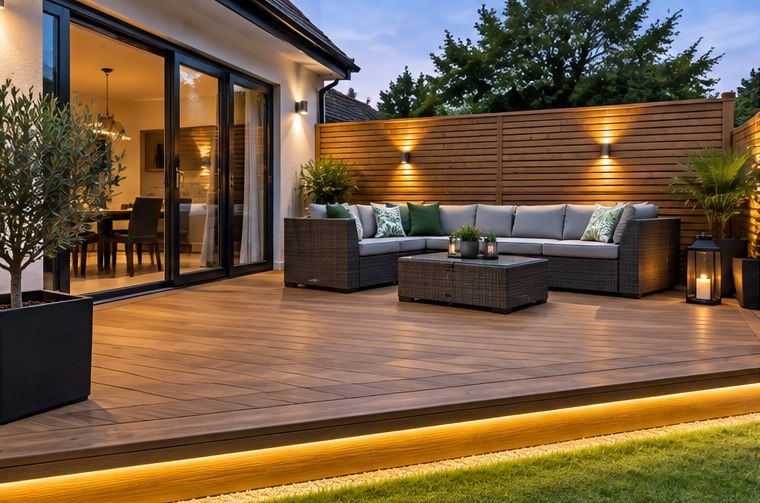
Making a flat area on a hillside usually means one of two things: dig into the slope and hold it with a wall, or build something level on top of it. In Pontypridd, where many back gardens rise or fall sharply and access is through the house or down a lane, the second option is often the lighter job. A raised deck stands on posts, so the ground beneath can stay more or less as it is.
This guide explains when decking is the right way to level a Pontypridd garden, when it is not, and what makes a raised deck comfortable and long-lasting on a valley side. Our garden decking page covers the service across the region, and garden decking in Pontypridd covers our work locally.
Dig or build over: a quick comparison
Neither approach is always better. It comes down to the shape of your garden and what you want from it.
- Decking tends to win when the ground falls away from the house, when the slope is steep enough that a wall would be tall, or when getting soil out would be slow and heavy work.
- Digging and paving tends to win when the ground rises behind the house, when the level area is at ground height anyway, or when you want a surface that will outlast any timber.
- A mix often works best: a paved area by the house with a deck stepping out over the lower garden, or a patio on the flat and a deck on the steep part.
We look at the paved route in Patio Levels and Steps for Pontypridd Terraces, and at walls in Retaining Walls in Pontypridd.
What sits under a raised deck
A deck is only as good as its frame. On a slope, posts at the downhill end can be well over a metre tall, so they need to be set firmly in concrete, braced against sideways movement and spaced to suit the joists. The frame is built level on top, whatever the ground does below.
Ground conditions around Pontypridd vary a lot within a single garden, from firm clay to made-up ground full of old rubble. We dig the post holes deep enough to reach solid ground and keep timber out of standing water. A weed membrane and gravel under the deck stop growth coming up through the boards and help the area dry out.
Height, privacy and planning
Raising a deck to the level of the back door can put you well above the ground, and on a terraced street that may mean looking straight into a neighbour's garden or windows. It is worth standing where the deck will be, at its finished height, before deciding. A screen, a planted trellis or a slightly lower deck with a couple of steps down from the house can all ease the problem.
Height also matters for planning. Raised platforms above a certain height usually need planning permission, and the rules are stricter for listed buildings and some other properties. Please check with Rhondda Cynon Taf Council before building a tall deck; we can help with the drawings and measurements you may need.
Staying safe on a wet valley deck
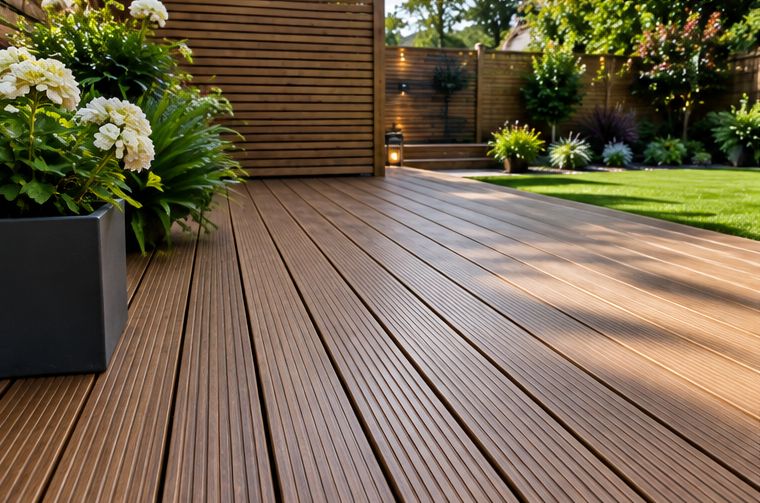
Timber that stays damp grows algae, and a deck in the shade of a Pontypridd hillside can stay damp for weeks at a time. Grooved boards, anti-slip inserts or composite boards with a textured surface all help, as does leaving gaps between boards so water drains through. Keeping the deck clear of leaves in autumn makes a big difference.
Think too about which way the deck faces. A deck on the shaded side of a Pontypridd street will stay wetter and greener than one that catches the afternoon sun, and that may steer you towards composite boards or a smaller deck placed where the light falls longest. A quick look at where the sun sits at different times of year is worth doing before the frame goes in.
On a raised deck, a balustrade is essential along any open edge. Our guide on how to stop decking going slippery covers upkeep, and raised decking: frames, steps and balustrades goes into the structure in more detail.
Timber or composite on a hillside
Treated softwood is the traditional choice and is easy to cut and carry, which helps when every board comes through the house. It needs cleaning and treating every so often to keep it looking good. Composite boards cost more but need less care and do not splinter, which suits families and busy households.
Whichever you choose, the frame beneath is usually treated timber, so good ventilation and drainage underneath matter just as much. Our guide on composite or timber decking compares the two in depth.
Using the space underneath
A deck built out over a steep drop leaves a void beneath it. Left open, it can gather leaves and litter. Closed in with slatted cladding and a door, it becomes a useful store for garden tools, bikes or bins, which is handy in a Pontypridd terrace with no room for a shed. Make sure it stays ventilated, so the frame can dry out.
Where the drop is shallower, the space can be planted instead. Ferns and shade-tolerant ground cover along the front edge soften the frame and hide the posts, while a strip of gravel beneath keeps things tidy. On the sunny side of the valley, a deck edge is also a good place for pots of herbs or trailing plants, which look after themselves better than you might think once they are established.
Getting from the deck to the garden
A raised deck needs steps down to the rest of the garden, and on a steep plot these may be a flight of their own. Wide treads, a handrail and a landing partway down make them easier to use. Low lights on the steps and around the edge let you use the deck on summer evenings; see decking lighting, planters and finishing touches for ideas.
To see how a deck might fit your whole garden, read Landscaping a Hillside Garden in Pontypridd or browse our Pontypridd landscaping page.
Talk to T J Landscapes about your garden
Free quotes and honest advice across South Wales.
Questions People Ask
Is a raised deck cheaper than digging out the slope?
Often it is less work, especially where access is poor and a lot of soil would have to go, but it depends on the height, size and materials. A free quote after a visit will show you both options side by side.
How long will a deck last in a wet valley garden?
With good ventilation, sound timber and regular cleaning, a well-built deck lasts many years. See how long should garden decking last for what affects it.
Do I need planning permission for decking?
Low decks usually do not, but raised platforms above a certain height often do. Check with Rhondda Cynon Taf Council before you commit to a tall deck.
Can you build a deck over an old concrete yard?
Sometimes, if the concrete is sound and water can drain away. Our guide on decking over an old patio or concrete explains what we check.
How do I arrange a visit?
Use the contact form with photos from the back door looking down the garden, and Tony will be in touch.