
Brickwork in Penarth
Garden and Boundary Walls
Tall boundary walls around Penarth villas give shelter as well as privacy, and when we build new ones we choose bricks and coping that match the house and stand up to salt-laden wind.
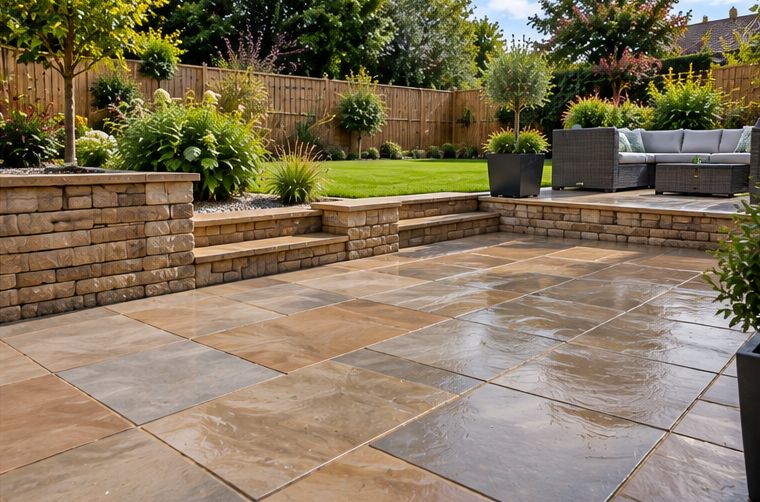
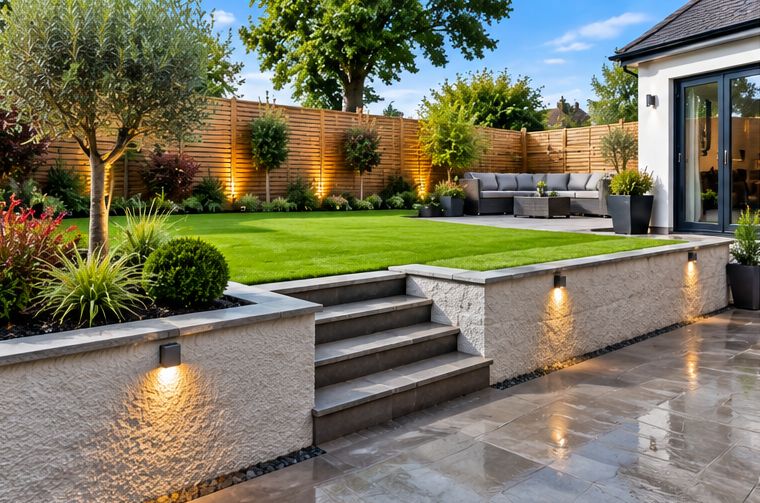

Penarth’s Victorian and Edwardian houses were built with a lot of care, and so were many of their garden walls. Tall brick boundaries, decorative gate piers, moulded coping and stone plinths all turn up behind and in front of the big villas. The trouble is that they have spent well over a century in wind and salt air coming off the Bristol Channel, and it shows in eroded mortar and flaking faces.
T J Landscapes restores and builds garden walls and brickwork in Penarth, keeping the character of the house in mind. Tony and the team look at what the wall is made of, how it was built and what the weather is doing to it, then give you a free quote. Our Penarth landscaping page covers the rest of our work in the town, or book a visit.
Six kinds of brickwork, each looked at for a period house by the sea.
Tall boundary walls around Penarth villas give shelter as well as privacy, and when we build new ones we choose bricks and coping that match the house and stand up to salt-laden wind.
Where a Penarth garden drops towards the sea or steps down from a terrace by the house, a retaining wall holds the levels, built with drainage behind it so rain does not build up pressure.
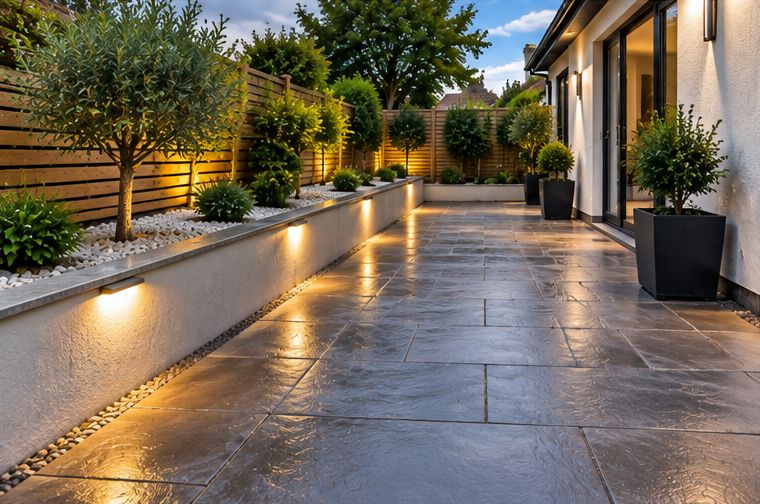
Front steps up to a Penarth villa set the tone of the whole house. We rebuild worn or uneven flights in brick or stone with even risers and treads that suit the doorway.
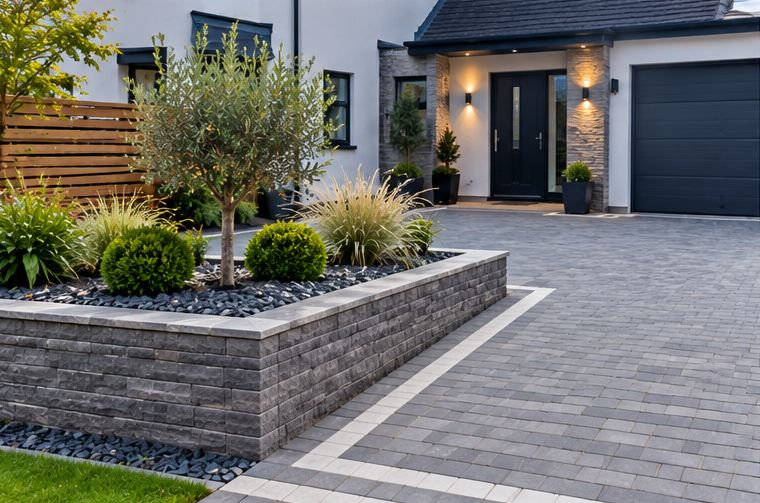
Raised planters in Penarth can act as a windbreak for tender plants, and a low brick wall around a terrace gives somewhere sheltered to sit on a breezy day.
Gate piers with stone or moulded caps are one of the details that define Penarth frontages, and rebuilding a pier that has cracked or started to lean brings a whole entrance back together.
Most of our Penarth brickwork is repair: raking out and repointing eroded joints, replacing salt-damaged bricks and resetting coping that the weather has loosened.
A garden wall has no roof over it and no heated house behind it, so it stays wetter than any wall of your home. On the more exposed Penarth streets, that moisture carries salt. As the wall dries, salts crystallise in the surface of the brick and the joints, and over the years that pushes off the face of softer bricks and washes the mortar back until the joints are hollow. Frost on a wet wall speeds the process up.
Good detailing slows it right down. We use bricks rated for severe exposure, a coping with a generous overhang and a drip so rain is thrown clear of the face, and a damp proof course near the ground so water is not drawn up from below. Our guide to choosing bricks and coping explains the terms.
Many older Penarth walls were built with lime mortar, which is softer and more flexible than modern cement. It lets the wall breathe and move a little, and it is meant to wear away before the bricks do. Repointing that kind of wall in a hard cement mix traps damp in the bricks and can make them crumble faster, so we match the mortar to the wall rather than using one mix for everything.
Where a section has bulged or cracked, we record the bond pattern, take it down carefully, clean and reuse the sound bricks and rebuild on a proper footing. Missing or broken coping and cap stones can often be matched with reclaimed pieces. Our local guide to restoring an Edwardian garden wall in Penarth goes into more detail.
Much of older Penarth sits within conservation areas, and some villas are listed. Altering or taking down a wall facing the street can need consent, so check with the Vale of Glamorgan Council before work starts. We are landscapers, not planners, but we are happy to help you work out what to ask.
Period brickwork by the sea needs patience, the right mortar and respect for the house.
Lime for old lime-built walls, the right cement mix for new work, so repairs help the wall rather than harm it.
Exposure-rated bricks, overhanging coping and proper damp courses, chosen with Penarth weather in mind.
Sound bricks, cap stones and coping are cleaned and reused, and new materials are matched to the old.
4.8 out of 5 on Google from 69 reviews and 10 out of 10 on Checkatrade. See our reviews.
On a breezy Penarth plot, a well-placed wall does more than a fence can. It stops the wind at ground level, holds warmth from the sun into the evening and gives shelter to a seating area or a bed of plants that would otherwise be battered. A low wall with planting on top often works better than a tall solid one, because it slows the wind instead of making it swirl over the top.
If the garden falls away from the house, retaining walls and steps turn that slope into terraces. Taller retaining walls, or ones that hold up a path or a neighbour’s ground, may need an engineer’s design; when a retaining wall needs engineering advice explains where the line usually falls. For the steps themselves, see garden steps in brick and stone.
Walls often work best alongside other shelter. Our pages on fencing in Penarth and patio paving in Penarth show how a sheltered terrace comes together.
Real reviews from homeowners across Penarth — rated 4.8 out of 5 on Google from 69 reviews and 10/10 on Checkatrade.
“Had my patio done by the company and could not be happier. Top quality work done and quickly too.”
“I was pleased to find Tony and his lads were absolutely great! Tony responded quickly & was very polite.”
“We were delighted with the work and materials, which were of very high quality. Tony and team helped us.”
Local and practical guides to help you plan the work.
One team for the whole garden, so a single visit can price everything you have in mind.

We cover Penarth and the towns around it. Choose another area below.
T J Landscapes South Wales
24 Conway Road, Pontypool
Torfaen, NP4 6HL
We cover homes right across South Wales, from Cardiff and the coast up to the valleys and the Brecon Beacons.
Often not. If the wall is still upright and the bricks are mostly sound, raking out and repointing in a suitable mortar may be all it needs. We only suggest rebuilding where a section has moved or the bricks themselves have failed.
We reuse the original bricks wherever possible and look for reclaimed or new bricks of a similar colour, size and texture for the rest. Exact matches are not always possible, so we will show you the options first.
The length and height of wall involved, how much has to be taken down, whether lime mortar is needed, how much brick and coping can be reused, the footing and the access. We give free, itemised quotes.
A lot of older Penarth is, but the boundaries are set by the council, so the Vale of Glamorgan Council is the place to check. Do that before any wall facing the street is altered or taken down.
Tell us about the wall, roughly how long and high it is, and whether it faces the street. Photos of any cracks, bulges or loose coping help.