
Brickwork in Monmouth
Garden and Boundary Walls
Garden walls in central Monmouth are usually about repair and matching, while on larger plots outside the town a new stone or brick wall can frame a lawn, a yard or a kitchen garden.
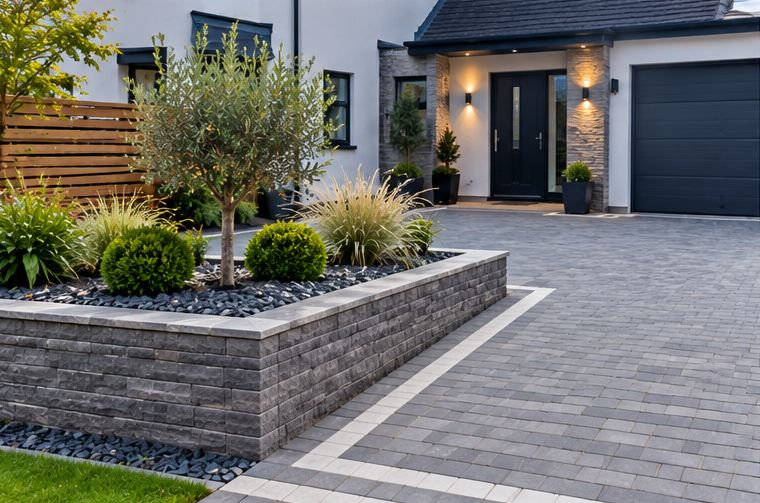
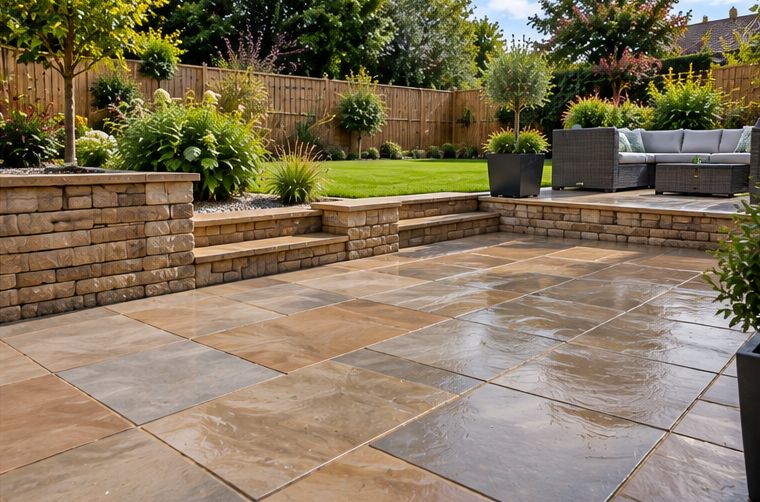

Monmouth gardens split roughly in two. In the centre, period town houses have walled gardens, often long and narrow, with old stone or brick boundaries that have been patched many times. Out on the rural edge, bigger plots have drive entrances, field boundaries and kitchen gardens where a wall or a gate pier makes a real difference. Both sit close to the Monnow and the Wye, and low ground here can stay wet long after the rain stops.
T J Landscapes builds and repairs garden walls and brickwork in and around Monmouth. Tony and the team look at the house, the ground and what the wall needs to do, then give you a free quote. See our Monmouth landscaping page for our wider work in the town, or get in touch.
Six kinds of brickwork, and what each tends to look like in and around Monmouth.
Garden walls in central Monmouth are usually about repair and matching, while on larger plots outside the town a new stone or brick wall can frame a lawn, a yard or a kitchen garden.
Retaining walls in Monmouth are most often needed on the rising ground away from the rivers, where a sloping lawn or a drive needs cutting in and holding back.
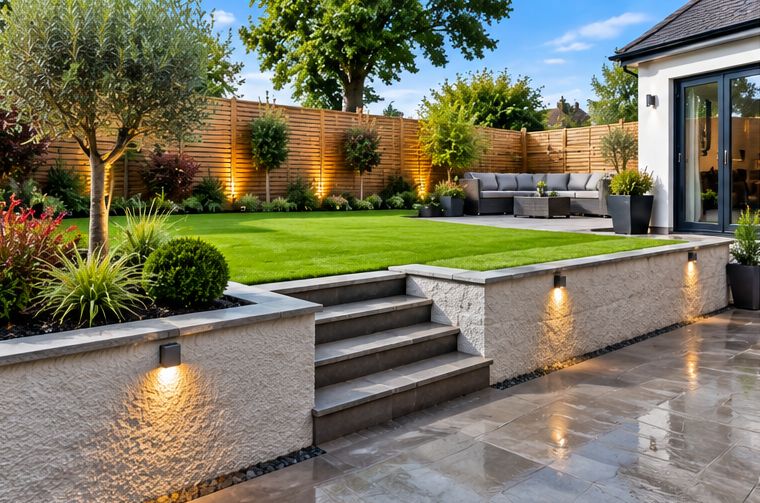
Steps in Monmouth gardens often link a back door to a lower lawn or climb between terraces on rural hillside plots, and we build them in brick or stone to suit the house.
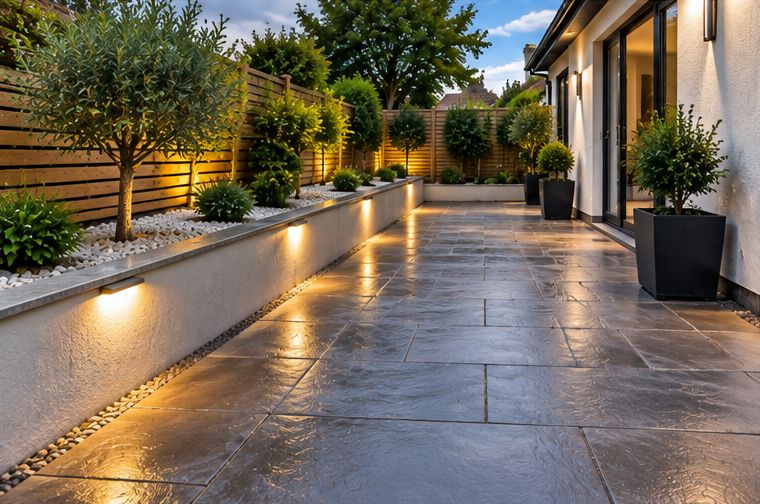
Raised beds are a natural fit in Monmouth, where they lift vegetables and flowers above ground that stays soggy in winter and suit the cottage garden style of many older homes.
Gate piers mark the entrance to many country properties around Monmouth, and we build or rebuild them strong enough to carry a heavy timber or metal gate.
Older Monmouth walls were often built in lime, so repairs are done in a mortar that suits the wall, with sound stone and brick reused wherever possible.
Ground close to the Monnow and the Wye can be soft, silty and slow to drain. A wall built on that without a proper footing will settle unevenly, and a crack will open where one end sinks faster than the other. So we dig down through the soft topsoil until we reach firm ground, and we make the footing wide enough to spread the load.
Water is the other issue. Bricks at the foot of a garden wall that sit in wet soil for weeks at a time take a beating, especially when it freezes. We use frost-resistant bricks or stone for the lower courses and a damp proof course where it is needed. Where a garden is known to flood, it is worth thinking about where water will go before building a solid wall across its path; our guide to gardens near the Wye and Monnow covers wet ground in more detail, and garden wall foundations explains the footing.
Many of the walled gardens behind Monmouth’s older streets have boundaries made up of several ages of work: rubble stone at the bottom, brick added later, a patch of block where something once fell down. Our job on these is usually to stabilise and tidy rather than start again.
That means raking out and repointing in lime where the wall was built in lime, replacing individual stones or bricks that have failed, resetting the coping so rain runs off, and taking down and rebuilding any section that has moved too far. Central Monmouth has a conservation area and many listed buildings, so check with Monmouthshire County Council before altering or removing a wall, particularly one facing the street.
We treat every Monmouth wall as part of the house and the land around it.
We dig to firm ground on soft Monmouth soils, so walls stay straight through wet winters.
Lime mortar, reclaimed materials and careful repairs that keep the character of period walls.
Walls, raised beds, paving and lawns are planned together, so the levels and materials work as one.
We visit, look at the ground and the house, and set out clearly what the work involves.
Raised beds are one of the most useful things we build in Monmouth. They lift planting clear of cold, wet soil, warm up earlier in spring and save a lot of bending. In stone they suit cottage gardens and period houses; in brick they suit newer homes and tidier layouts. We leave drainage at the base and weep gaps in the lower course so water does not sit against the walls.
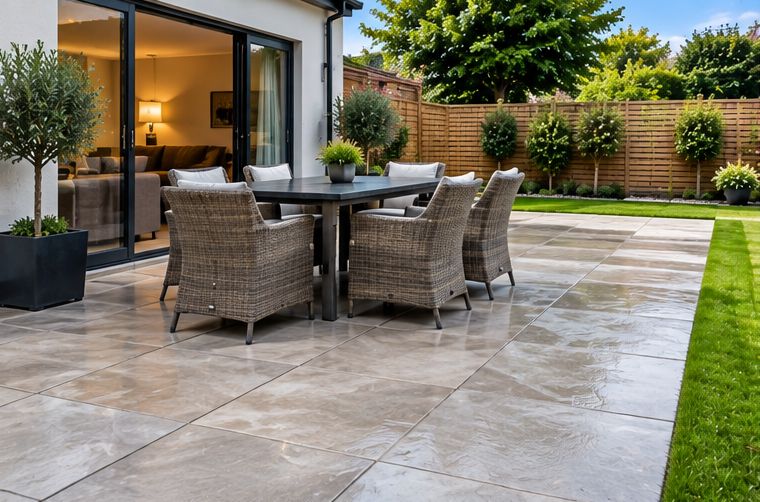
The local guide to stone walls and raised beds for a Monmouth cottage garden has ideas, and building brick raised beds and planters explains the construction. Beds often sit beside a new terrace, so see patio paving in Monmouth as well.
Around Monmouth, plenty of homes have a proper entrance: a gateway off a lane, a drive between two piers, perhaps a low wall running either side. Piers carrying a heavy gate need a solid footing and a reinforced core so the gate does not drag or pull the pier over. We build them in stone, brick or a mix, with caps that suit the house.
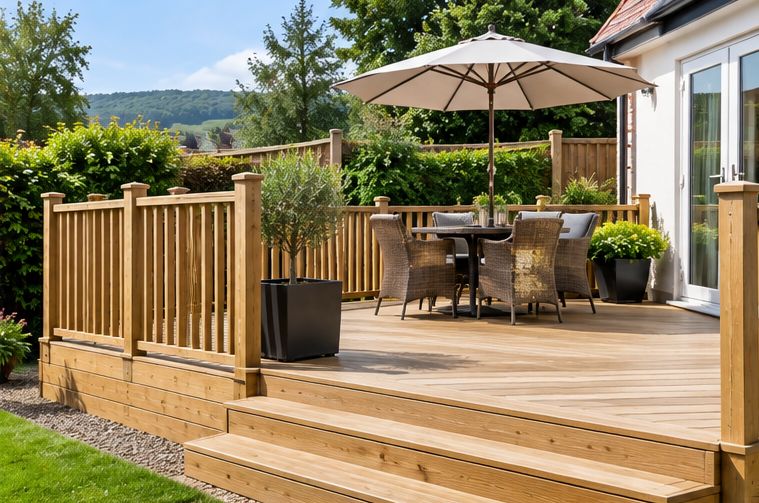
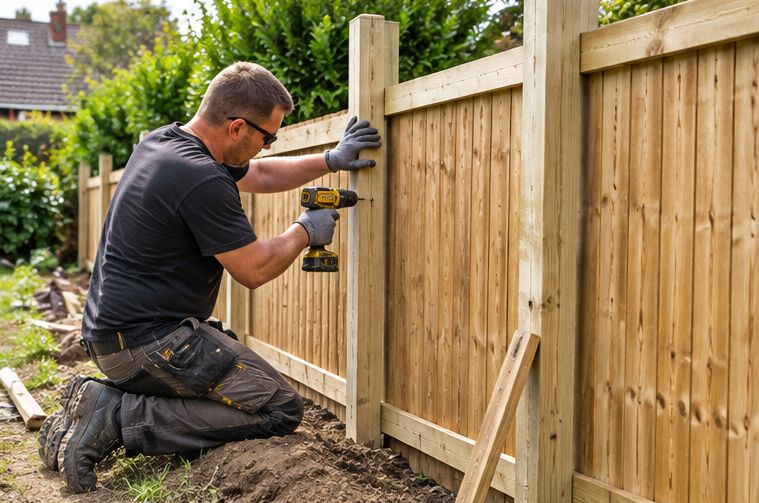
On long boundaries, a full wall is not always the answer. A short stretch of wall at the entrance with hedging or fencing in Monmouth beyond it often looks better and keeps the job sensible. The guide to choosing bricks and coping helps with the materials.
Real reviews from homeowners across Monmouth — rated 4.8 out of 5 on Google from 69 reviews and 10/10 on Checkatrade.
“Had my patio done by the company and could not be happier. Top quality work done and quickly too.”
“I was pleased to find Tony and his lads were absolutely great! Tony responded quickly & was very polite.”
“We were delighted with the work and materials, which were of very high quality. Tony and team helped us.”
Local and practical guides to help you plan the work.
One team for the whole garden, so a single visit can price everything you have in mind.

We cover Monmouth and the towns around it. Choose another area below.
T J Landscapes South Wales
24 Conway Road, Pontypool
Torfaen, NP4 6HL
We cover homes right across South Wales, from Cardiff and the coast up to the valleys and the Brecon Beacons.
Yes. We repoint and rebuild in lime where the wall was built that way, and reuse the original stone wherever it is sound, so the repair blends in.
It can be, with a good footing and frost-resistant materials, but a solid wall can hold water back on one side. We look at where water goes before suggesting a design, and sometimes a more open boundary makes more sense.
Length and height, footing depth on your ground, stone or brick, how much of an old wall is reused, whether gate piers need reinforcing, and access to the garden. Quotes are free.
Possibly. Central Monmouth has a conservation area and many listed buildings, so check with Monmouthshire County Council before altering or removing a wall.
Tell us whether you are in town or on the rural edge, what you would like built or repaired, and roughly how big it is.