
Paving
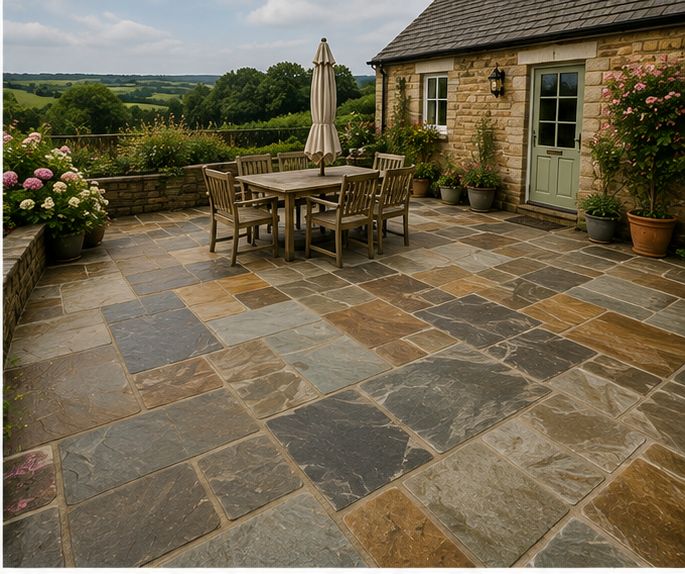
Indian Sandstone Paving
Indian sandstone in soft buffs and greys sits well with Penarth's period houses, though on an exposed seaward plot it is worth sealing and cleaning a little more often.
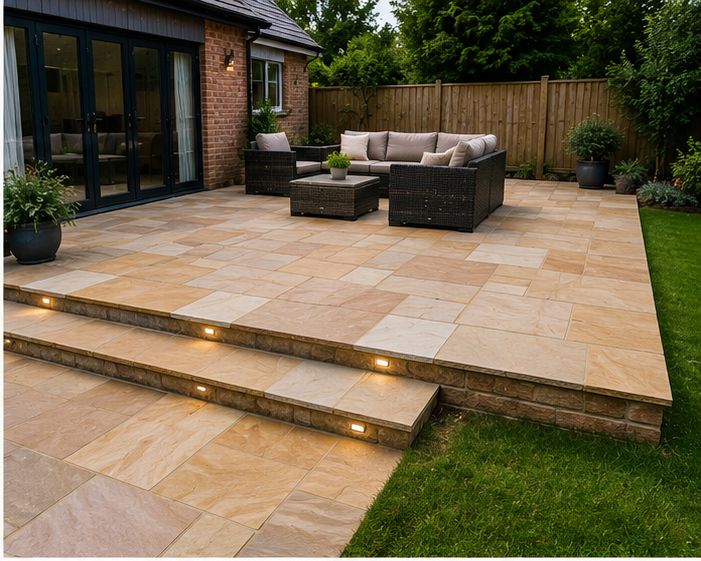
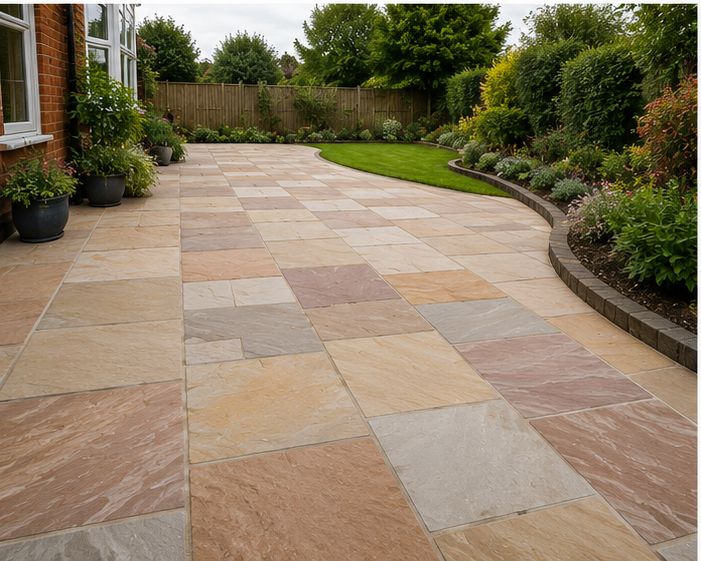

Penarth gardens have two things going for them that most towns envy: generous Victorian and Edwardian houses, and on many streets a view of the Bristol Channel. They also have the wind and salty air that come with it. A patio here has to look right against a grand old frontage and stand up to weather blowing straight in off the water, and those two jobs shape almost every choice we make.
T J Landscapes lays patios, terraces, paths and driveways in Penarth and the streets around it. Tony and the team will walk the garden with you, look at where the shelter and the sun fall, and give you a free quote. For planting, lawns and the rest of the garden, see our Penarth landscaping page, or simply get in touch.
On the coast, the way a material handles wind-driven rain and salt matters as much as its colour. Here is how each of our six options fits Penarth.
Indian sandstone in soft buffs and greys sits well with Penarth's period houses, though on an exposed seaward plot it is worth sealing and cleaning a little more often.
Porcelain shrugs off salt spray and damp better than most stone, which makes it a sensible pick for a terrace facing straight out to sea.
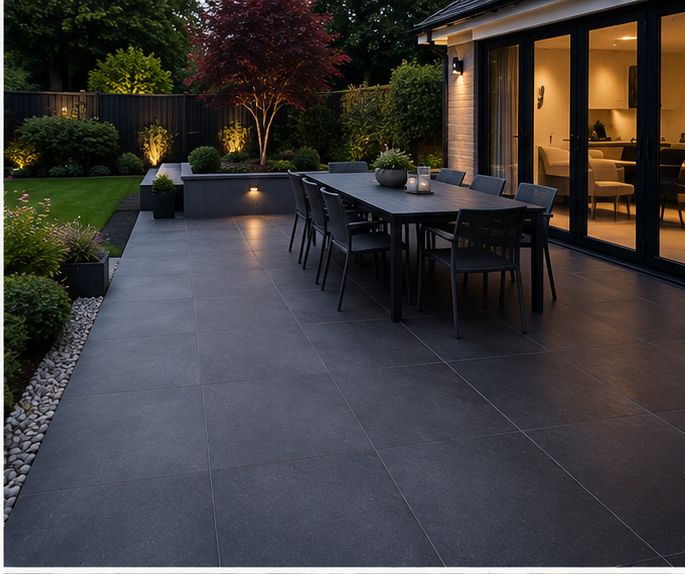
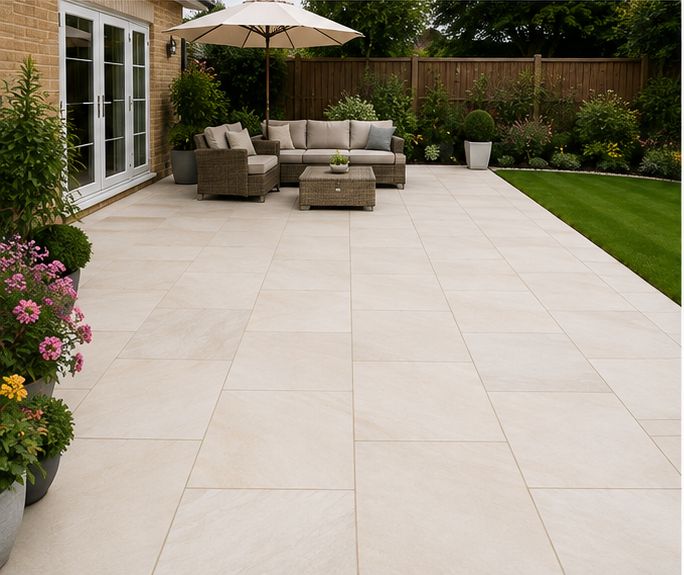
Natural stone flags and slate can echo the steps, sills and garden walls of a Penarth villa, giving a new terrace an established look from day one.
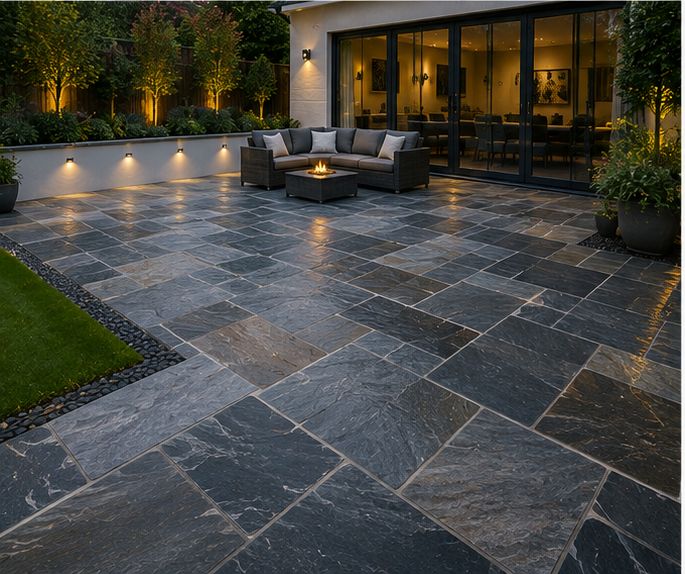
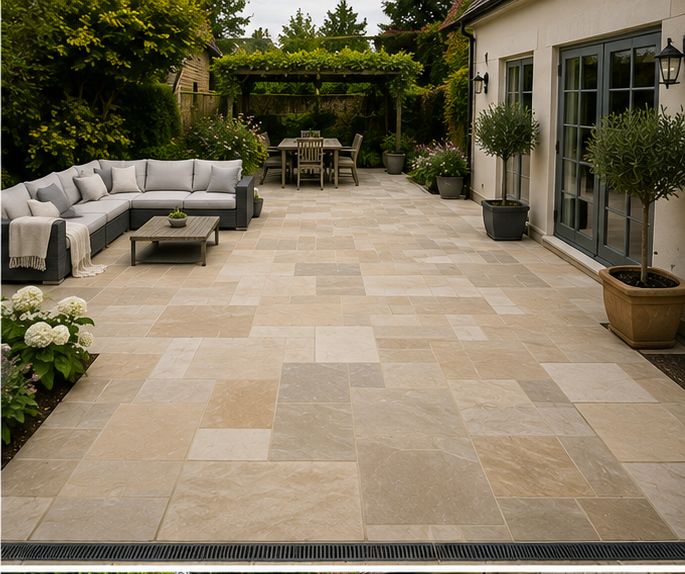
Limestone suits a formal, pale terrace, but as a softer stone it is better placed in the sheltered side of a Penarth garden than on the most salt-blown edge.
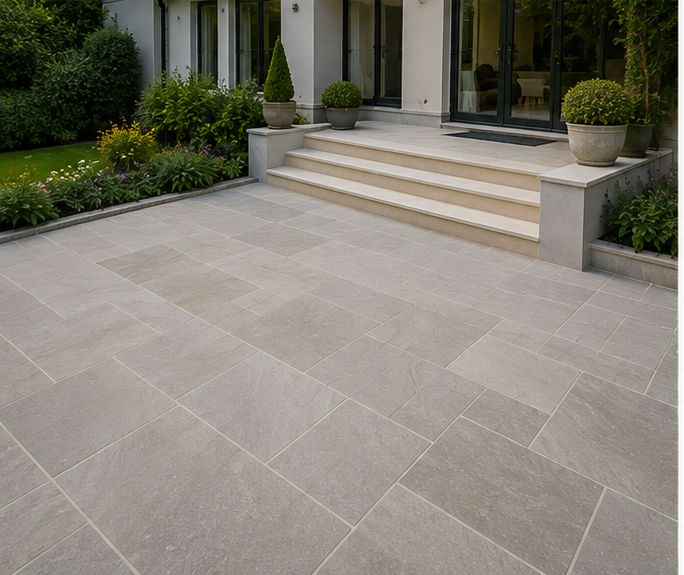
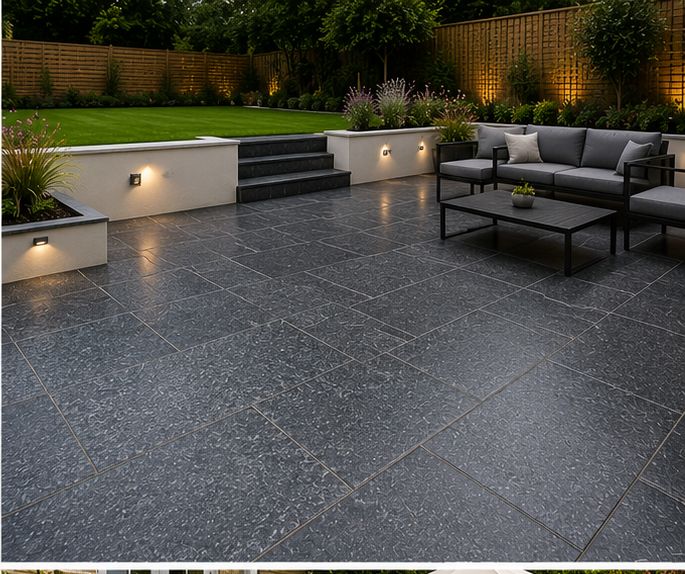
Granite is hard enough for coastal weather and has a speckled, maritime feel that works well on a modern Penarth terrace or a seafront path.
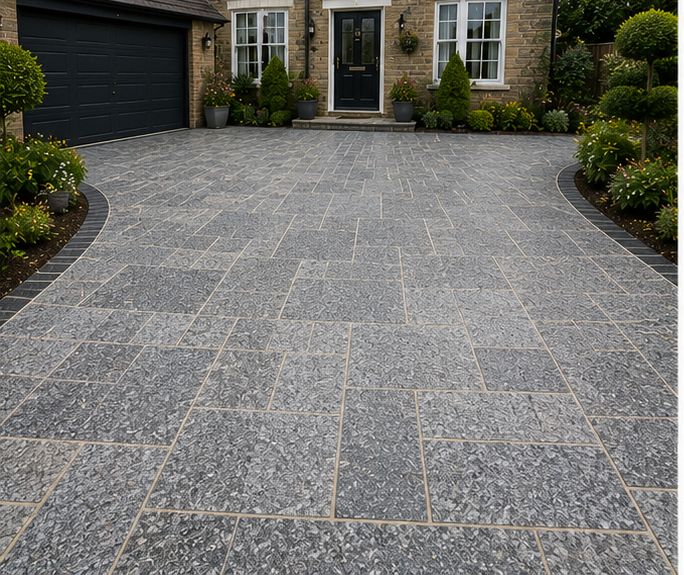
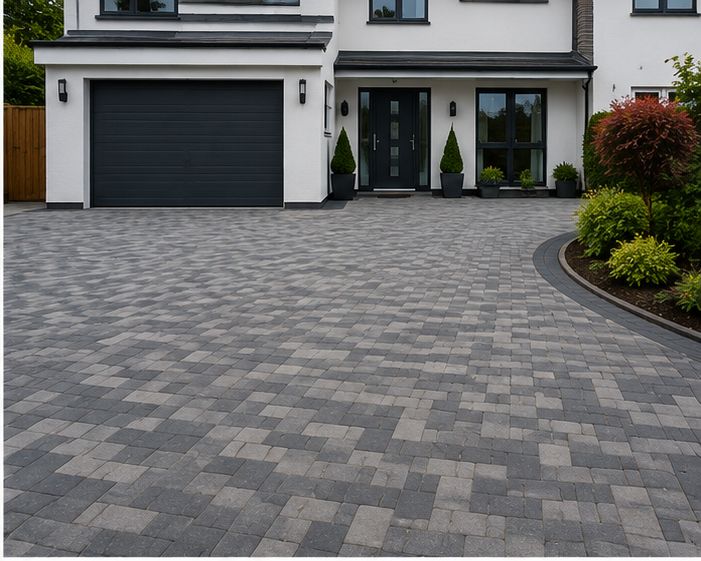
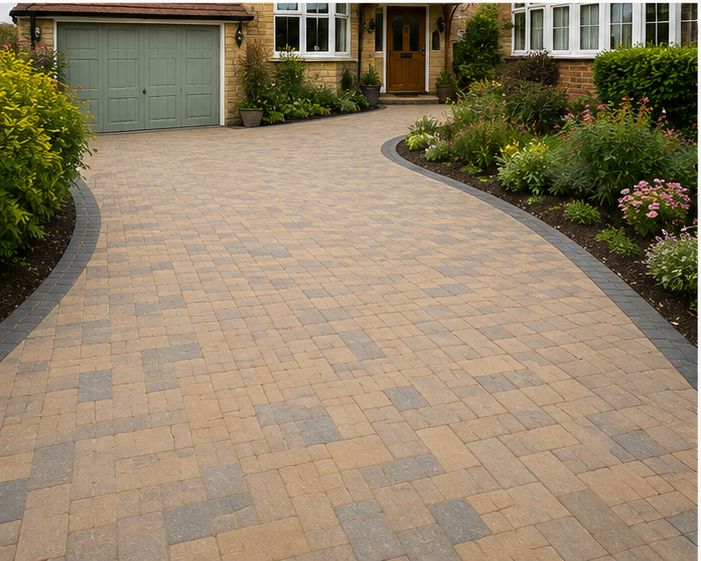
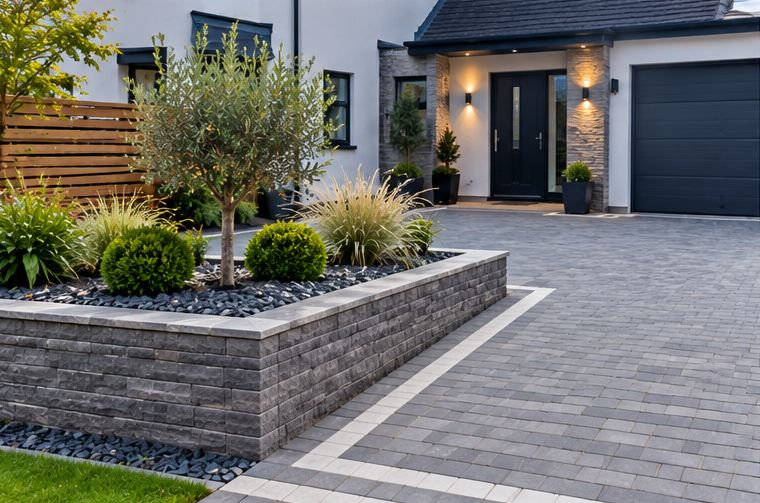
Block paving is the usual answer for the long front drives of larger Penarth houses, with permeable blocks helping rain soak away rather than run into the road.
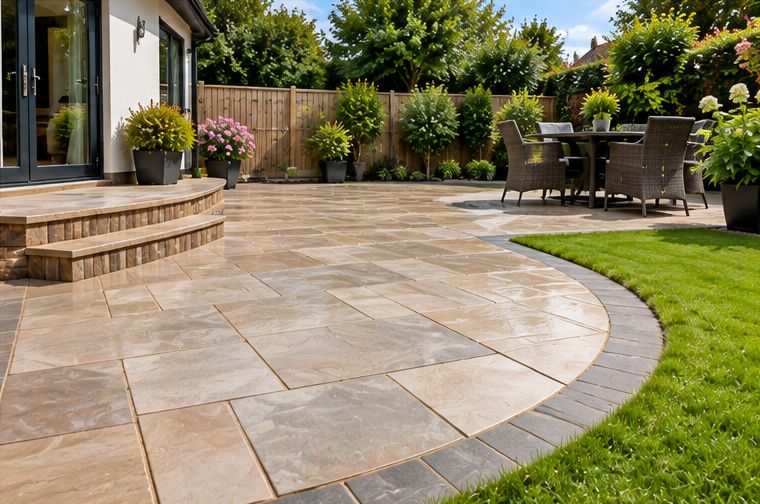
The sunniest spot in a Penarth garden is not always the most comfortable one. A terrace laid right on the seaward edge might have the best view, but on a breezy afternoon it can be too cold to sit out. We often suggest a paved area tucked against the house or a wall, then a path out to a smaller viewing spot, so you have somewhere to use on calm days and somewhere sheltered on windy ones.
Low walls, raised beds and tough coastal shrubs around the edge of the paving can take the sting out of the wind without blocking the outlook. Our guide to coastal garden design ideas for Penarth homes goes into layouts, and salt-tolerant planting for a Penarth garden suggests what will grow beside the stone.
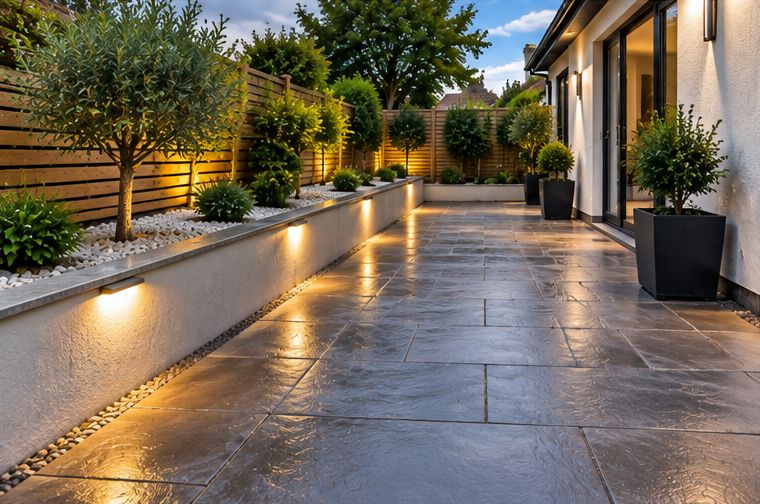
Not every Penarth garden is flat. Some drop away from the house towards the view, and the neatest answer is often two or three paved levels joined by broad, shallow steps rather than one large patio propped up at the far end. Each level can then have its own job: dining by the kitchen, a quieter seat lower down, and a path to the lawn or the shed.
Steps near the coast get wet and windswept, so we keep the risers even, the treads generous and the surface textured enough to grip in the rain. Where a level needs holding up, a low retaining wall in brick or stone does the job and doubles as extra seating when friends come round.
A coastal terrace next to a period house needs thought as well as good workmanship.
We look at wind, sun and view together, so your Penarth patio is somewhere you actually sit, not just somewhere to look out from.
We match paving to period stonework and take care around original paths, steps and walls rather than ripping them out by default.
We will tell you plainly which stones cope with salt air on your plot and which are better kept to the sheltered side.
Walls, steps, planting and raised decking can all be built alongside the paving.
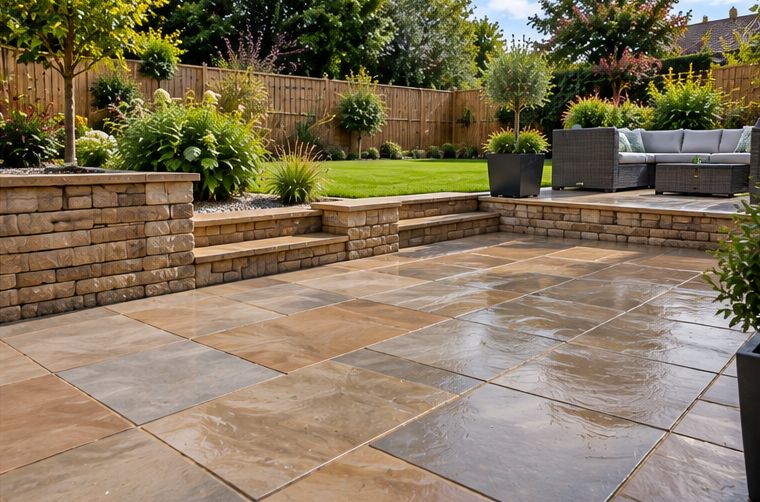
Many Penarth houses have original features worth respecting: tiled front paths, stone steps, bay windows and old boundary walls. We try to pick paving that belongs with them, matching tones to the stonework or using a border course to frame a new terrace. Where a front path is original, it can sometimes be repaired rather than replaced. Our local article, which patio stone suits a Penarth Victorian villa?, compares the options in detail.
Parts of Penarth lie within a conservation area, and some houses may be listed. That can affect front gardens, boundary walls and driveways, so check with the Vale of Glamorgan Council before planning changes at the front. If an old boundary wall needs attention at the same time, our brickwork work in Penarth covers repairs and rebuilding.
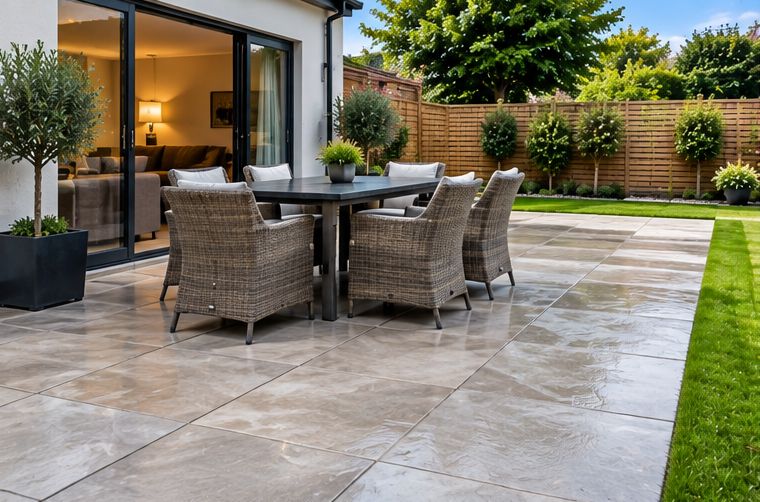
Older Penarth gardens often come with mature trees, and roots are one of the main reasons old patios heave and crack. When we dig out, we look for roots near the surface and plan the paving to avoid damaging large trees, especially where a tree may be protected. If an existing terrace has already lifted, why patios sink, crack or lift explains what is usually going on underneath.
Near the sea, pointing takes a hammering from wind-driven rain. We use a jointing method suited to the stone and the exposure, set good falls so water never sits on the surface, and give you clear care advice at the end. Our guide on cleaning and looking after a new patio has the routine.
Real reviews from homeowners across Penarth — rated 4.8 out of 5 on Google from 69 reviews and 10/10 on Checkatrade.
“Had my patio done by the company and could not be happier. Top quality work done and quickly too.”
“I was pleased to find Tony and his lads were absolutely great! Tony responded quickly & was very polite.”
“We were delighted with the work and materials, which were of very high quality. Tony and team helped us.”
Local and practical guides to help you plan the work.
One team for the whole garden, so a single visit can price everything you have in mind.

We cover Penarth and the towns around it. Choose another area below.
T J Landscapes South Wales
24 Conway Road, Pontypool
Torfaen, NP4 6HL
We cover homes right across South Wales, from Cardiff and the coast up to the valleys and the Brecon Beacons.
Porcelain and granite are the toughest in exposed spots. Sandstone and limestone can work well too, particularly in the more sheltered parts of the garden, with a little extra cleaning. Our guide to choosing patio slabs sets out the trade-offs.
We can often find stone or tiles in a similar tone and size, and sometimes repair the original instead. We will look at it on our visit and tell you what is realistic.
It depends on the house and the street. Conservation areas and listed buildings can bring extra controls, and dropped kerbs need council approval. Please check with the Vale of Glamorgan Council before we start.
By placing the seating where the house or a wall gives shelter, and adding low planted screens or raised beds around it. We look at this on site, as every garden catches the wind differently.
Tell us about the house, the space you want to pave and which way it faces. A few photos, including the view, help us plan.