
Brickwork in Port Talbot
Garden and Boundary Walls
A boundary wall is one of the most useful things a windswept Port Talbot garden can have, and we build it with bricks and mortar suited to salt air and a coping that stands up to driven rain.
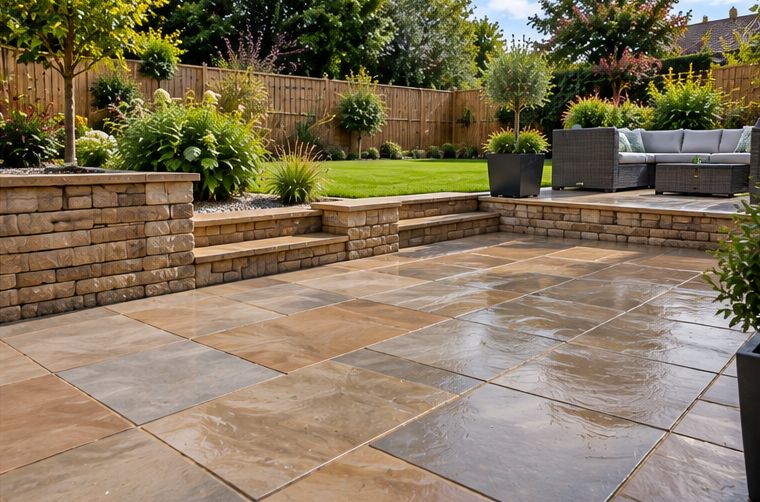


In Port Talbot, a garden wall is often more about shelter than looks. On the seaward side of town the wind comes straight in off Swansea Bay carrying salt, and near Aberavon Beach the ground under a garden can be light and sandy. Further back towards the hills and Margam Country Park, the gardens are steeper and the weather eases a little. Each of those situations asks something different of a wall.
Tony and the team build brickwork and garden walls across Port Talbot: boundary walls and windbreaks, planters, steps, piers and repairs to terraces and post-war semis. The visit and the quote are free, so get in touch. Our Port Talbot landscaping page covers the rest of what we do locally.
Our six kinds of brickwork, and how the wind, salt and ground around Port Talbot shape each one.
A boundary wall is one of the most useful things a windswept Port Talbot garden can have, and we build it with bricks and mortar suited to salt air and a coping that stands up to driven rain.
Retaining walls come into their own on the hillier side of Port Talbot, where terraces and newer homes back onto rising ground and a garden needs levels cut into the slope.
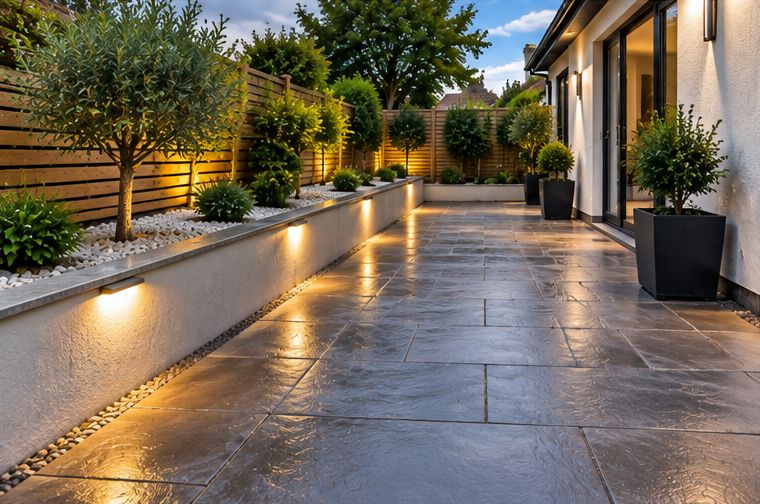
Steps in an exposed Port Talbot garden need a firm footing and a surface that stays grippy when wet and a little sandy underfoot, so we choose treads with care.
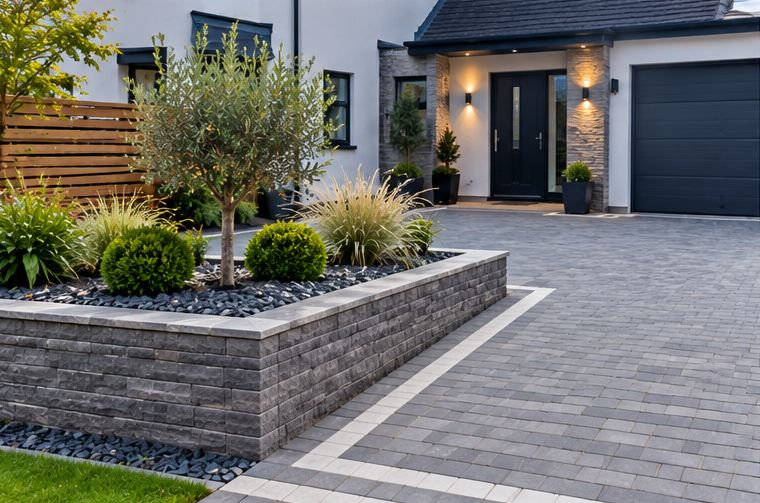
Brick planters give shrubs and flowers shelter from the wind and a better soil than thin sand near the coast, which makes them a good fit for a Port Talbot patio.
Piers at a drive or gateway take a battering from wind-blown gates on the coast, so on Port Talbot jobs we give them deep footings and solid caps.
Salt and weather slowly work at older walls in Port Talbot, washing out joints and flaking brick faces, and we repoint and replace damaged bricks before small problems spread.
A tall solid wall seems like the obvious answer to a windy garden, but wind that hits a solid barrier has to go over it, and it often swirls down again just behind it. The sitting area you hoped to shelter can end up gustier than before. A wall that lets some air through, or a lower wall topped with slatted fencing or planting, slows the wind more gently over a longer distance.
In practice, many Port Talbot gardens get the best shelter from a mix: a solid brick wall to a sensible height, honeycomb or pierced brickwork in the most exposed stretch, and tough coastal planting behind. Our guide to coastal garden ideas for Port Talbot homes covers the planting side, and our fencing in Port Talbot can finish the top of a wall.
Salt carried on the wind settles on walls, soaks in with the rain and crystallises as the brick dries. Over time that can break down weak mortar and push the faces off softer bricks, and it shows up as white staining on new work. Walls on the seaward side of town need materials chosen with that in mind.
We use dense, durable bricks that are rated for severe exposure, a mortar mix that suits them, and a coping with drips on both sides so water runs off rather than soaking down through the wall. Galvanised or stainless ties and fixings are worth using where metal goes into the joints, because ordinary steel rusts quickly in salty air. See choosing bricks and coping for a garden wall for the options.
Walls built for the coast: sheltering the garden, standing up to salt and sitting on sound ground.
We plan walls to slow the wind across the garden, not just block it at the boundary.
Durable brick, suitable mortar and corrosion-resistant fixings for walls that face the bay.
On sandy or made-up ground we dig to firm material and size the footing to suit.
We look at the exposure, the ground and the access, and quote clearly with nothing to pay for the visit.
Sandy soil drains well, which is good news for a wall, but loose sand does not hold a trench and can shift if it is disturbed. On lighter ground near Aberavon we dig until we reach firm, compact material, widen the footing where it helps to spread the load, and keep the trench sides stable while the concrete goes in. Made-up ground on older plots is dug through rather than built on.
Our guide to garden wall foundations explains why this part matters, and sandy soil and new lawns near Aberavon is useful if the wall is part of a wider garden makeover.
Port Talbot's terraces and post-war estates bring their own brickwork jobs: tired front walls, leaning back walls on the steeper streets, and low walls around a new patio in Port Talbot. On the rising ground inland, retaining walls need drainage behind them just as they do in the valleys. Our local guide to garden walls for Port Talbot homes has more ideas.
Real reviews from homeowners across Port Talbot — rated 4.8 out of 5 on Google from 69 reviews and 10/10 on Checkatrade.
“Had my patio done by the company and could not be happier. Top quality work done and quickly too.”
“I was pleased to find Tony and his lads were absolutely great! Tony responded quickly & was very polite.”
“We were delighted with the work and materials, which were of very high quality. Tony and team helped us.”
Local and practical guides to help you plan the work.
One team for the whole garden, so a single visit can price everything you have in mind.

We cover Port Talbot and the towns around it. Choose another area below.
T J Landscapes South Wales
24 Conway Road, Pontypool
Torfaen, NP4 6HL
We cover homes right across South Wales, from Cardiff and the coast up to the valleys and the Brecon Beacons.
That is usually efflorescence: salts drawn out of the brick and mortar as the wall dries, sometimes added to by salt air. It is common on new brickwork and generally fades with time and rain. If it keeps coming back, the wall is probably staying too wet and the coping or drainage should be checked.
High enough to shelter the area you use, but not so high and solid that it causes swirling on the other side. A lower wall with slatted fencing or planting on top often works better than a tall solid one. Check height limits with the council before building beside a road or footpath.
Yes. Sand needs care when digging the footing and sometimes a wider base, but once the wall is on firm, compact ground it drains well, which helps it last.
The length and height, the footing the ground needs, the brick and coping, any pierced or honeycomb sections, access, and how much old wall or soil has to be removed. The quote is free, so get in touch.
Tell us how exposed the garden is, what you want the wall to do and roughly how long it is, and we will arrange a free visit in Port Talbot.