
Brickwork in Abergavenny
Garden and Boundary Walls
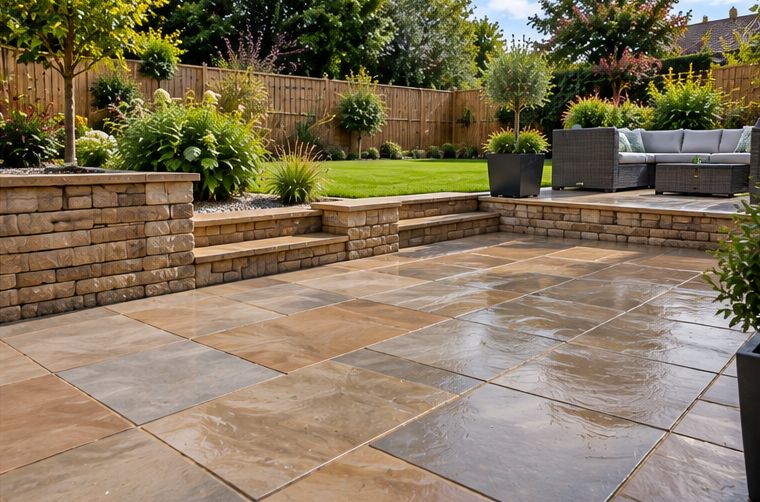
Garden walls in Abergavenny are often best kept low where they face a view, and taller where they give shelter from the prevailing wind, in stone for cottages and brick for many villas.

Look out from most Abergavenny gardens and you will see a mountain: the Sugar Loaf, the Blorenge or the Skirrid. Plenty of plots in the town climb the lower slopes to catch that view, and a lot of them need walls to make the ground level enough to use. Stone cottages, Victorian villas and newer hillside houses all bring their own style of boundary, and the weather coming off the hills tests every one of them.
T J Landscapes builds and repairs garden walls and brickwork in Abergavenny, in stone, brick and block. Tony and the team look at the slope, the view, the house and the exposure, then give you a free quote. Our Abergavenny landscaping page covers the rest of our work in the town, or ask us round.
Six kinds of brickwork, each looked at for a garden in the Usk valley with the hills all around.
Garden walls in Abergavenny are often best kept low where they face a view, and taller where they give shelter from the prevailing wind, in stone for cottages and brick for many villas.
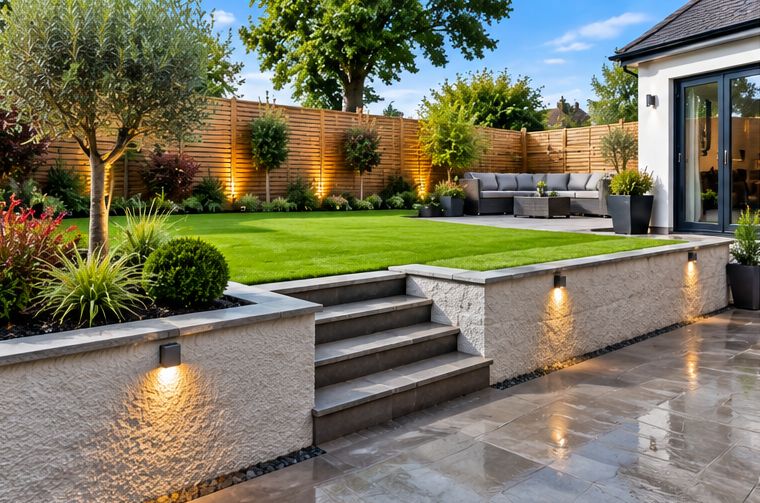
Retaining walls are how most sloping Abergavenny gardens gain level terraces, giving a flat lawn, a seating area or a vegetable plot where the ground used to fall away.
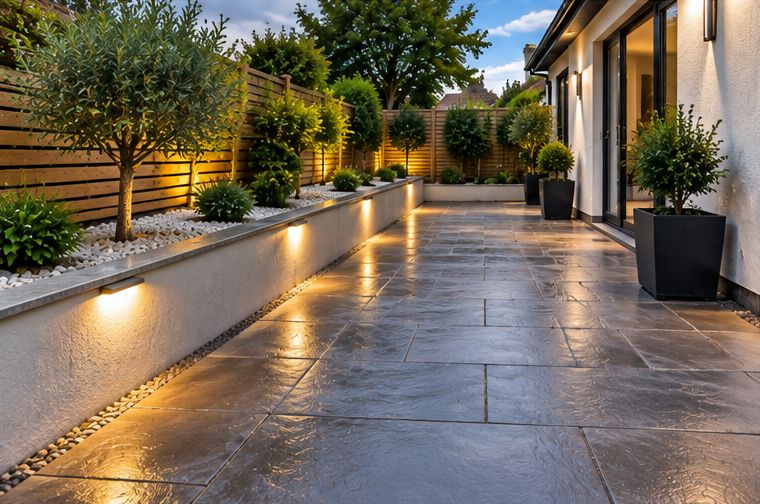
Steps link those terraces, and on an Abergavenny hillside we build them in stone or brick with even risers and a surface that keeps its grip on a wet morning.
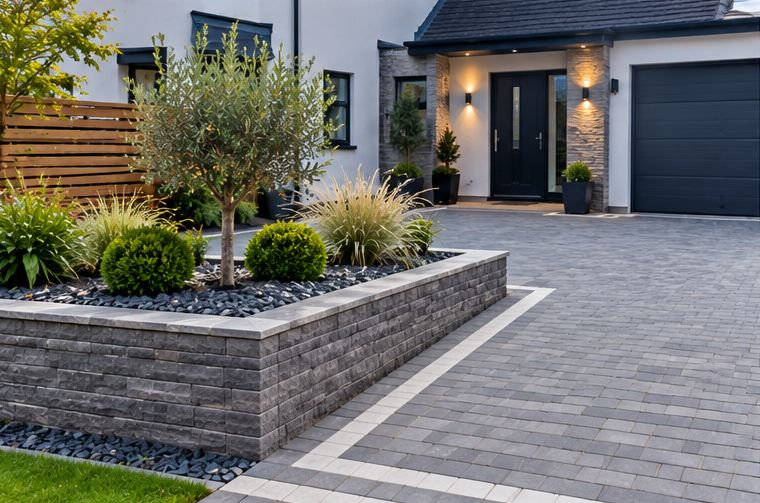
Raised beds suit Abergavenny’s keen growers, lifting vegetables and herbs to a comfortable height and giving them deep, well-drained soil above thinner hillside ground.
Stone gate piers and pillars suit the entrances of Abergavenny cottages and larger houses, and we build them to match walls that may have been there for a century or more.
Repairs in Abergavenny often mean resetting stones on old walls, repointing in lime and rebuilding sections that frost and water have loosened.
Around Abergavenny you see both kinds of stone wall. Dry stone walls use no mortar at all; they rely on careful placing, a wide base that narrows towards the top and through stones that tie the two faces together. They let water pass straight through, which suits field-edge boundaries and informal gardens. Mortared stone walls look more finished, can be built taller and thinner, and suit cottages, villas and walls close to the house.
Many older Abergavenny walls are built from local sandstone, so reclaimed stone of a similar tone often gives the best match. Our local guide to dry stone and mortared walls for Abergavenny gardens compares the two in more depth, and choosing bricks and coping helps if brick suits your house better.
A good hillside garden in Abergavenny usually has two or three level areas rather than one long slope. Retaining walls hold each terrace, and their height sets how the garden feels. Several lower walls tend to look better and are simpler to build than one tall one, and they keep the line of sight to the hills open from the house.
Every retaining wall we build here has drainage behind it: clean stone backfill, weep holes and often a pipe at the base. Rain running down the hillside has to go somewhere, and if it cannot get out it pushes. Taller walls, or walls holding up a drive or next door’s garden, may need a structural engineer; when a retaining wall needs engineering advice explains when. Our guide to landscaping an Abergavenny garden with mountain views shows how terraces fit a wider design.
Hillside terraces, old stone and hill weather are what Abergavenny brickwork is about.
We set wall heights and levels so you gain flat ground without losing the outlook from the house.
Reclaimed and matched stone, laid dry or mortared, so new walls sit comfortably beside old ones.
Drainage, coping and frost-resistant materials chosen for exposed Abergavenny plots.
Abergavenny is a town that cares about food, and plenty of gardens here have a vegetable patch or want one. Raised beds make that far easier on a slope. Built in stone, brick or a mix along the edge of a terrace, they give level growing space, warm up faster in spring and keep soil in place when heavy rain comes off the hills. We finish the top wide enough to kneel or sit on.
See kitchen gardens and raised beds in Abergavenny for layout ideas and building brick raised beds and planters for how they are made. If you want a terrace to eat on beside them, our page on patio paving in Abergavenny covers the surface.
Gardens on higher ground around Abergavenny get more frost and more driving rain than those down by the river. Water that soaks into a wall and then freezes is what breaks up mortar and pushes stones out, so we build with that in mind: a coping or top course that sheds water, frost-resistant bricks near the ground, and a lime or suitable mortar that lets the wall dry out. Footings go deep enough to sit below the reach of frost, as explained in garden wall foundations.
Where shelter matters more than looks, a wall can be combined with hedging or fencing in Abergavenny for the exposed side of the garden. Some older parts of the town are conservation areas, so check with Monmouthshire County Council before changing a wall that faces the street.
Real reviews from homeowners across Abergavenny — rated 4.8 out of 5 on Google from 69 reviews and 10/10 on Checkatrade.
“Had my patio done by the company and could not be happier. Top quality work done and quickly too.”
“I was pleased to find Tony and his lads were absolutely great! Tony responded quickly & was very polite.”
“We were delighted with the work and materials, which were of very high quality. Tony and team helped us.”
Local and practical guides to help you plan the work.
One team for the whole garden, so a single visit can price everything you have in mind.
We cover Abergavenny and the towns around it. Choose another area below.
T J Landscapes South Wales
24 Conway Road, Pontypool
Torfaen, NP4 6HL
We cover homes right across South Wales, from Cardiff and the coast up to the valleys and the Brecon Beacons.
Yes. We take down the loose section, sort the stone, set a firm base and rebuild with through stones tying the faces together. Most of the original stone can usually go back in.
It depends on the slope and what you want from the garden. Two or three levels is common on Abergavenny hillsides. We sketch the options at the free quote visit.
The height and length, stone or brick, dry or mortared, how much digging the slope needs, drainage, footing depth and access for materials. We give free quotes.
Often, yes. We cut a gap, build returns either side to hold the soil and set the flight on its own footing. See garden steps in brick and stone for the principles.
Tell us about the slope, the wall you have in mind and whether it is stone or brick. A photo looking up or down the garden helps.