
Tree Surgery in Port Talbot
Tree pruning
Pruning a Port Talbot tree often means removing limbs killed back by salt and wind, and branches that have grown long and heavy on the sheltered side.
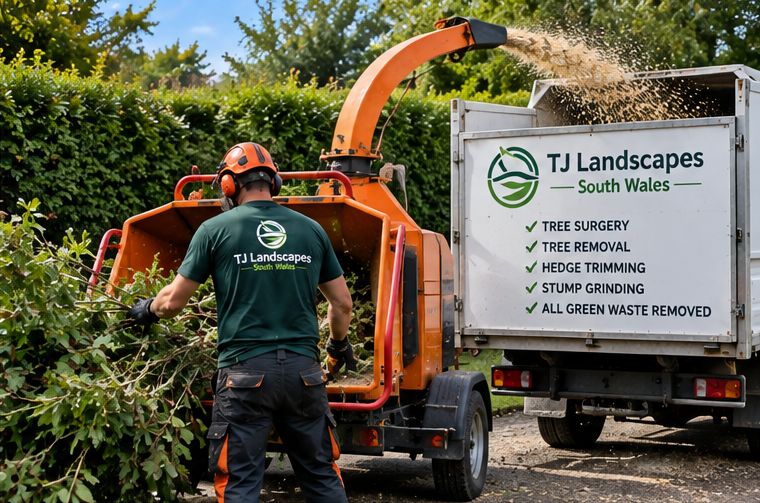
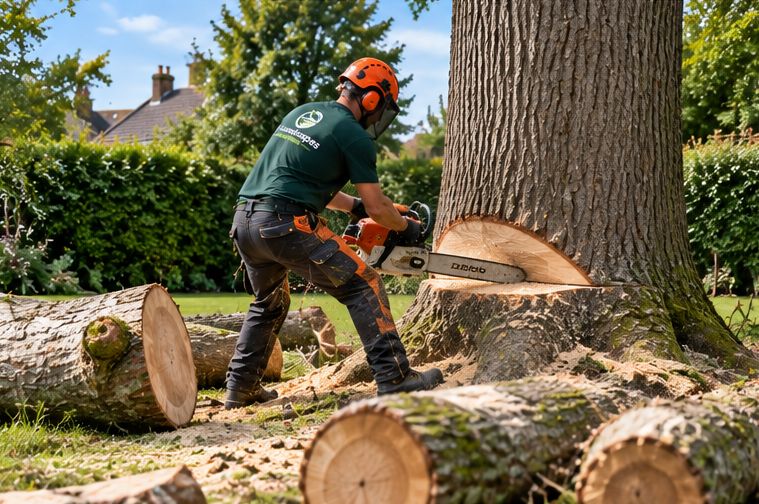

On the seaward side of Port Talbot, every tree in a garden is also a windbreak. The prevailing wind comes in off Swansea Bay carrying salt, and you can see its effect in the way trees lean inland, with thin, scorched growth on the side facing the water and heavier growth on the side away from it. Hedges do the same, holding up well where they are sheltered and browning where the gusts hit.
That changes what good tree work looks like. Cutting too much can strip away the shelter that makes the rest of the garden usable, while leaving a lopsided crown alone lets the wind lever at it every winter. T J Landscapes provides tree surgery and hedge care across Port Talbot with that balance in mind, and our landscaping in Port Talbot page covers the rest of the garden.
Each type of work has a coastal twist in Port Talbot. The common thread is keeping shelter while taking out weight and weakness.
Pruning a Port Talbot tree often means removing limbs killed back by salt and wind, and branches that have grown long and heavy on the sheltered side.
Thinning the crown lets gusts pass through rather than catch it like a sail, and a gentle reduction can rebalance a tree that has grown one-sided in the sea wind.
Felling is for trees that are dead, badly leaning or unstable in the ground, taken down in sections and, where shelter matters, replaced with something suited to the coast.
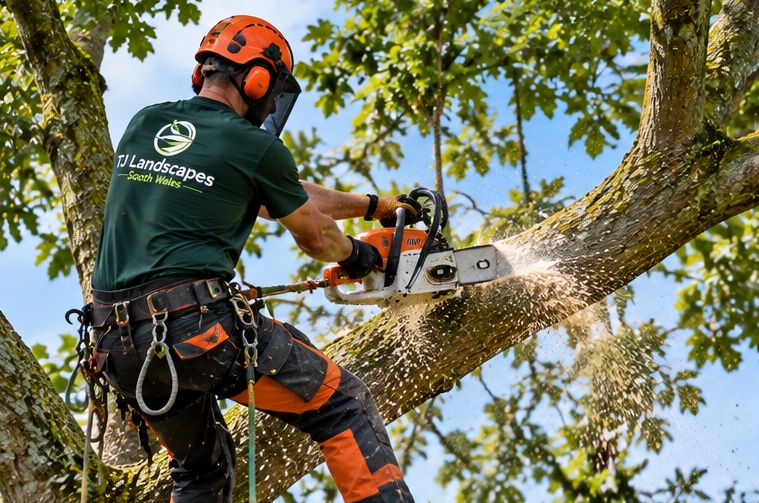
Tall conifers on post-war Port Talbot estates can be brought down in height so they catch less wind, as long as enough green is left for them to recover.
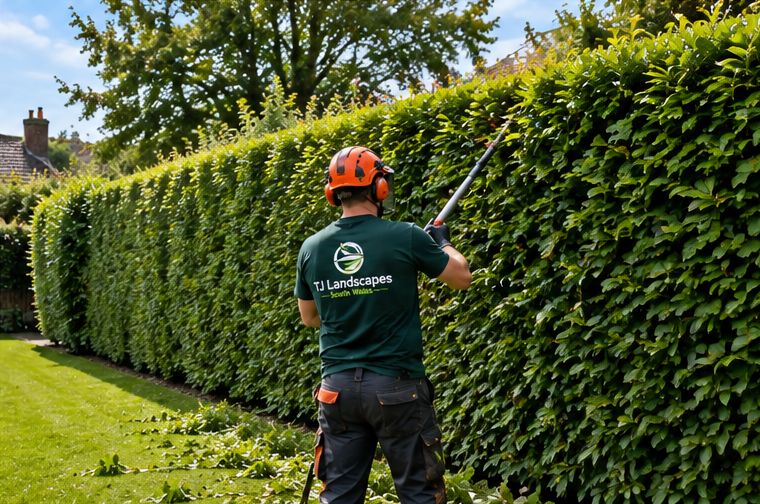
Shelter hedges near the coast are trimmed to stay dense from top to bottom, with the top kept slightly narrower than the base so wind and light reach the whole face.
Stumps on the lighter, sandy ground near Aberavon usually come out cleanly, which suits owners turning the space into a lawn or a sheltered seating area.
In a Port Talbot garden facing the bay, a line of trees or a thick hedge can be the only thing between a patio and a stiff sea breeze. Before we cut, we look at where the wind comes from and what the tree or hedge is sheltering. It is often better to thin a tree and reduce its weight than to take it out and lose that protection.
Where a tree does have to go, think about what will replace the shelter. A salt-tolerant hedge or a sturdy fence can do the job, and our fencing in Port Talbot page looks at fences built for sea wind. The local guide on planting for wind and salt in Port Talbot suggests hedges that cope.
Trees near the coast can look healthy from the house and still carry problems. These are the things we look for on a Port Talbot visit.
Further inland, towards the hills and Margam, trees tend to grow more evenly and the work is closer to what you would expect anywhere in the valleys. On the estates and terraces nearer the beach, though, even a modest garden tree can take a battering, and a check every few years is sensible.
We think about the wind before we pick up a saw, and our reviews on Google, Checkatrade and this site speak for the rest.
We aim to make a tree safer without leaving the garden open to every gust off the bay.
If a tree has to go, we suggest what will stand up to salt and wind in its place.
Bigger jobs are timed around calmer spells so cutting at height stays controlled.
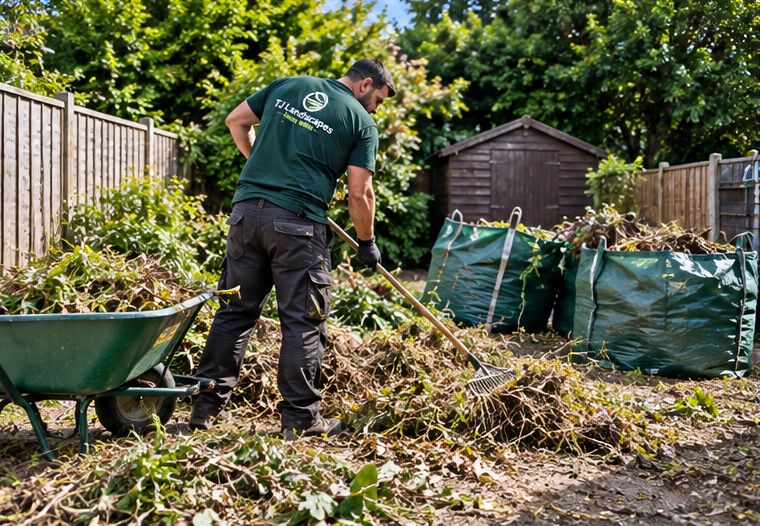
Brash, logs and leaves are cleared away, so the garden is ready to use straight after.
Many trees in Port Talbot are best pruned while dormant, but the worst of the winter gales also come then, so we plan heavier work around the weather. Hedges are usually trimmed from late summer, once birds have finished nesting. When should trees be pruned? and hedge trimming: how often and when cover the timing.
Some trees may be covered by a Tree Preservation Order or sit within a conservation area, so check with Neath Port Talbot Council before felling or major pruning. We are landscapers, not planners, so we will help you with the right question rather than give a ruling. See do you need permission to cut down a tree in Wales? and our local guide to tree work in Port Talbot gardens.
Real reviews from homeowners across Port Talbot — rated 4.8 out of 5 on Google from 69 reviews and 10/10 on Checkatrade.
“Had my patio done by the company and could not be happier. Top quality work done and quickly too.”
“I was pleased to find Tony and his lads were absolutely great! Tony responded quickly & was very polite.”
“We were delighted with the work and materials, which were of very high quality. Tony and team helped us.”
Local and practical guides to help you plan the work.
One team for the whole garden, so a single visit can price everything you have in mind.
We cover Port Talbot and the towns around it. Choose another area below.
T J Landscapes South Wales
24 Conway Road, Pontypool
Torfaen, NP4 6HL
We cover homes right across South Wales, from Cardiff and the coast up to the valleys and the Brecon Beacons.
Not necessarily. Many coastal trees grow with a lean and are perfectly stable. What matters is whether the lean has changed, and whether the roots and ground look sound. We can check it and suggest thinning or reduction if the crown is out of balance.
A good trim keeps a hedge dense, which actually improves shelter over time. Cutting too hard in one go can open it up, so we take a measured approach on exposed Port Talbot boundaries.
Where a tree is healthy and doing a job as shelter, pruning is usually the better choice. Our guides on tree felling or pruning and crown lifting, thinning and reduction explain the options.
The size and condition of the tree, how exposed the site is, how close it stands to the house or wires, how the waste leaves the garden and whether the stump comes out. A free quote after a visit gives you a clear figure.
We agree the plan, set up, cut from the top down and clear as we go. What happens on the day a tree surgeon visits covers it in full. If the rest of the garden needs clearing, see garden clearance in Port Talbot.
Tell us where in Port Talbot you are, how close to the sea, and what the tree or hedge is doing. A photo that shows the lean or the damaged side helps us plan.