
Tree Surgery in Monmouth
Tree pruning
Pruning a veteran Monmouth oak or beech is about removing what is dead or dangerous and leaving the rest, since old trees respond badly to heavy cutting.
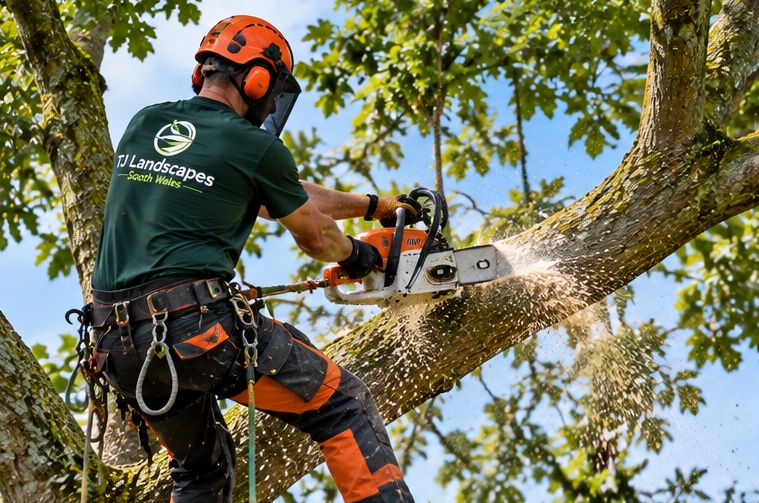
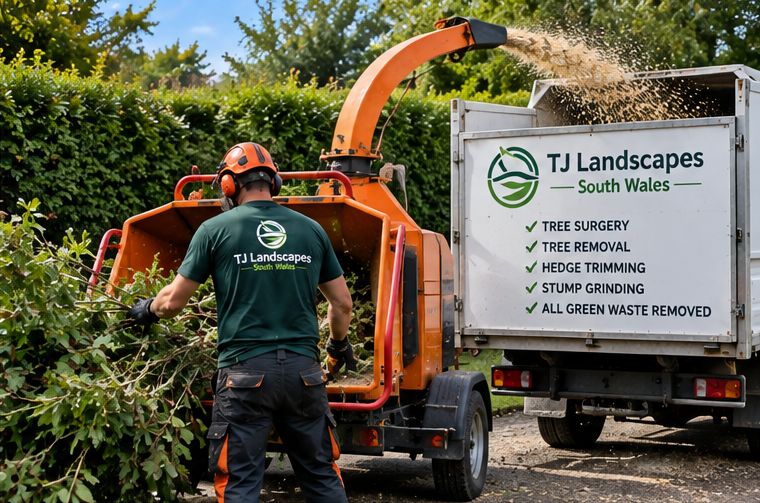

Monmouth gardens hold some of the oldest trees we work on. Around the edge of the town, plots that were once parts of farms or larger estates still have the oaks, beeches and limes that grew up with them, and long field hedges that now mark a garden boundary instead of a pasture. In the centre, period houses often keep one big specimen tree that has been there longer than anyone living.
T J Landscapes looks after these trees with a light hand. Tony and the team prune, lift, reduce and, where there is no better choice, fell, and we trim and restore long hedges around Monmouth and the villages nearby. Quotes and advice are free. See our tree surgery and hedge care page, the Monmouth landscaping page, or arrange a visit.
Six kinds of work, and how each fits a town of old trees, big plots and two rivers.
Pruning a veteran Monmouth oak or beech is about removing what is dead or dangerous and leaving the rest, since old trees respond badly to heavy cutting.
Crown lifting lets ride-on mowers, cars and people pass under the broad lower limbs of parkland-style trees, and gentle thinning lets light reach the lawn beneath.
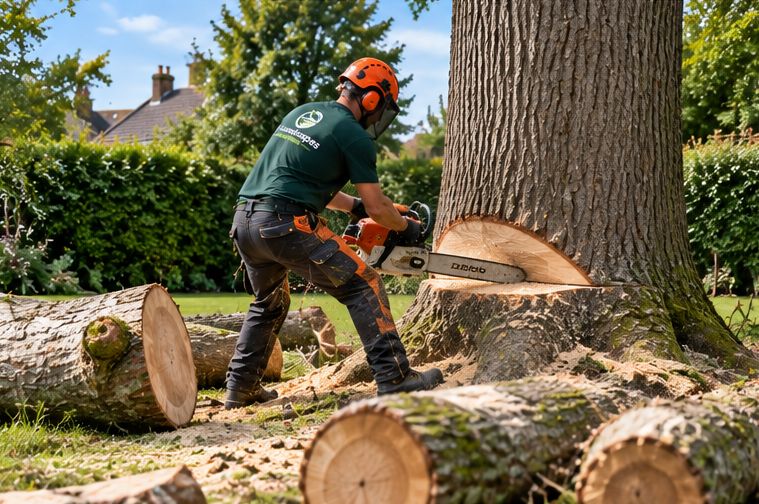
On larger rural plots there is sometimes room to fell a tree in one piece towards open ground, though in Monmouth town gardens we still take most trees down in sections.
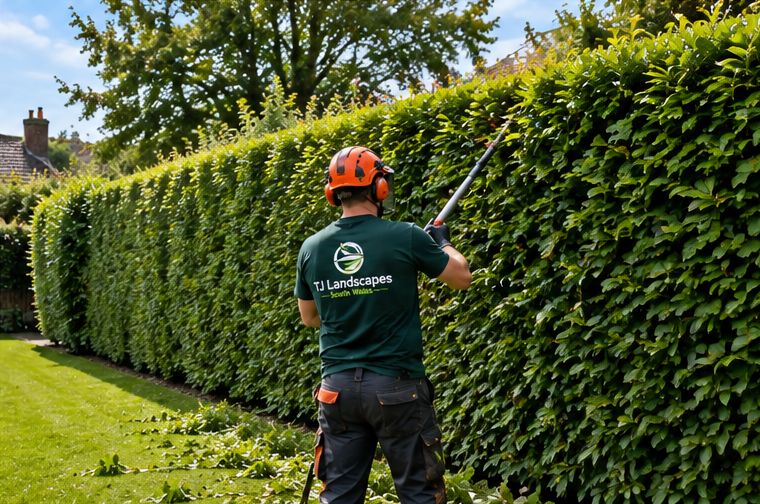
Topping is rarely right for the broadleaved trees that dominate around Monmouth; we keep it for conifer screens and suggest a proper reduction for everything else.
Long field-style hedges of hawthorn, hazel and blackthorn need a regular trim to stay thick, and neglected ones can be cut back hard or laid to bring them back.
Stumps on a big plot can often be left low to rot down as wildlife habitat, or ground out where you want lawn, a path or a new bed.
A big old tree is not a problem to be solved, and most of the time the best thing for it is very little. We look for deadwood over paths and seating areas, cracks where major limbs join, fungus at the base and signs that the roots have been disturbed by building work or a new drive. Where something needs doing, we cut as little as will do the job.
Our Monmouth guide on caring for mature trees explains what to look out for through the year, and crown lifting, thinning and reduction explained sets out the choices when a tree does need work. Old trees with holes and cracks can also hold bat roosts, which are protected, so we check before cutting.
Bigger gardens usually mean easier access than in the town centre. There is often room to bring a chipper close to the tree and space to stack logs where they will season. In the period houses of central Monmouth, though, a mature tree can stand in a narrow walled garden reached only through a side passage, and there we plan the job much more tightly. What happens on the day a tree surgeon visits walks through it.
Low-lying ground near the two rivers can stay soft for weeks after heavy rain. Dragging timber across a waterlogged lawn leaves ruts that take all summer to recover, so on these plots we time bigger felling jobs for firmer weather where the tree allows, and lay boards over the grass when we cannot wait.
Wet ground also changes how trees behave. Willows and alders thrive near the Monnow and Wye and grow fast, while trees on saturated soil can be more prone to leaning in a strong wind. For more on managing damp gardens here, read gardens near the Wye and Monnow.
Old trees and big gardens need patience. Our reviews on Google, Checkatrade and this site show how we go about it.
We cut as little as the tree needs, because veteran trees in Monmouth rarely benefit from heavy work.
The old centre has a conservation area and some trees carry orders, so we flag the checks at the first visit.
Boards on soft lawns, drier days for heavy work, and no machinery parked on root areas.
Once the trees are done, the same team can handle a garden clearance in Monmouth, new lawn or paths.
Out on the rural edge of Monmouth, a garden boundary can be a hundred metres of old hedge. Trimmed once a year, it stays thick and stockproof. Left for a decade, it becomes a row of small trees with gaps at the bottom. We can bring it back by cutting hard, or by laying it in the traditional way, and advise on which suits the hedge you have. See hedge trimming: how often and when for timing.
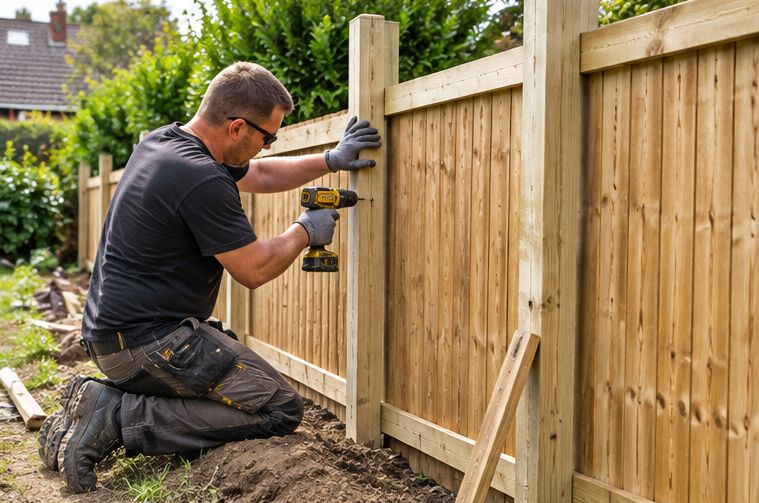
Where a hedge has gaps that will not close, a post and rail fence along the inside can do the job while the hedge thickens. Our page on fencing in Monmouth and the guide to post and rail or close board fencing cover the options.
Real reviews from homeowners across Monmouth — rated 4.8 out of 5 on Google from 69 reviews and 10/10 on Checkatrade.
“Had my patio done by the company and could not be happier. Top quality work done and quickly too.”
“I was pleased to find Tony and his lads were absolutely great! Tony responded quickly & was very polite.”
“We were delighted with the work and materials, which were of very high quality. Tony and team helped us.”
Local and practical guides to help you plan the work.
One team for the whole garden, so a single visit can price everything you have in mind.
We cover Monmouth and the towns around it. Choose another area below.
T J Landscapes South Wales
24 Conway Road, Pontypool
Torfaen, NP4 6HL
We cover homes right across South Wales, from Cardiff and the coast up to the valleys and the Brecon Beacons.
You may. Much of central Monmouth lies in a conservation area, and some trees are protected by preservation orders. Check with Monmouthshire County Council before booking. Do you need permission to cut down a tree in Wales? explains the general rules.
Not usually. Oaks shed dead wood naturally as they age. Removing the dead branches over places people use is often enough. We will look at the whole tree and tell you honestly, and tree felling or pruning: how to decide explains our thinking.
Most broadleaved trees are pruned when dormant, in late autumn and winter, but in wet Monmouth gardens we balance that with ground conditions. When should trees be pruned? has more detail.
Yes. We cut them to a handy length and stack them where you like. Fresh wood needs to dry out for a good while before it burns well. The brash and leaves go away with us.
The size and species of the tree, how close it is to buildings, access to the plot, how soft the ground is, how much wood leaves the site and whether you keep the logs. For a real figure, ask for a free quote.
Tell us what the tree or hedge is, how big your plot is and how we would reach it. Photos of the whole tree are a great help.