
Garden Decking in Monmouth
Ground-level decking
A ground-level deck is a neat way to give a small walled Monmouth town garden a flat, dry floor without disturbing old walls or digging deep.
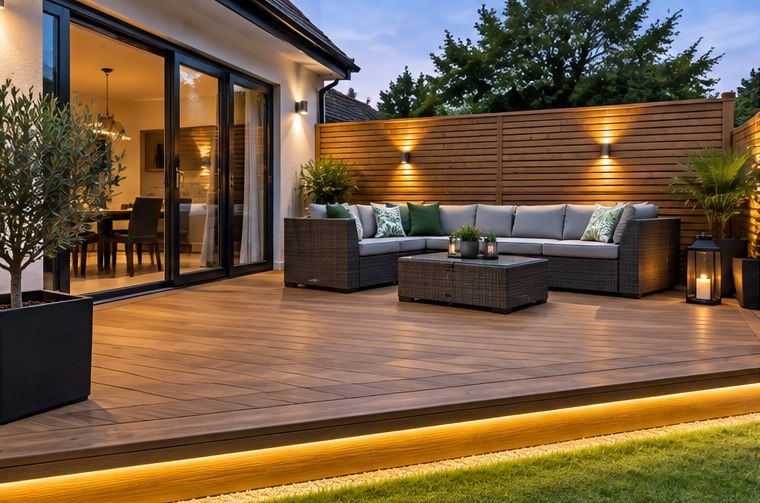
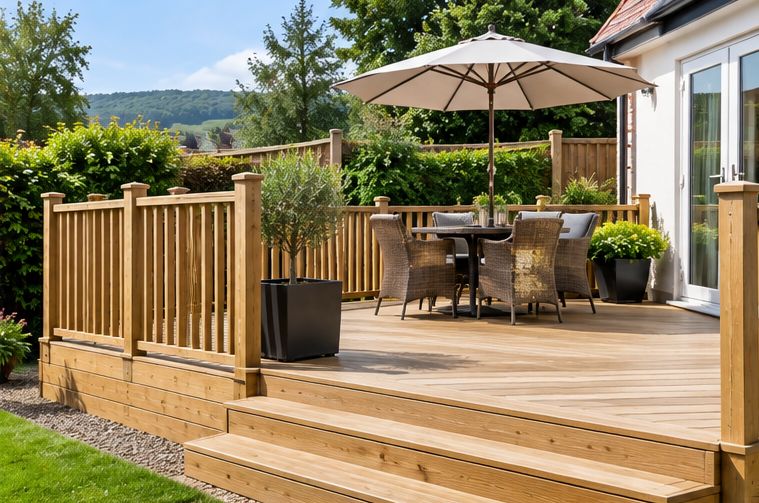
Monmouth gardens come in two very different sizes. In the old centre, behind period town houses, they are often narrow and enclosed, with stone boundaries and not much room to spare. Around the edge of town and out into the countryside they open up into long lawns, orchards and paddocks, where a deck is more likely to be a place you walk out to than a step outside the kitchen.
The rivers shape things too. With the Monnow and the Wye meeting here, some gardens sit on low, damp ground that stays wet for weeks. T J Landscapes builds oak, softwood and composite decks around Monmouth with all of this in mind. Tony and the team give free quotes and honest advice, and our Monmouth landscaping page covers the rest of what we do here. You can book a visit whenever suits.
Town house or country garden, these are the six kinds of decking we build and where they tend to sit best around Monmouth.
A ground-level deck is a neat way to give a small walled Monmouth town garden a flat, dry floor without disturbing old walls or digging deep.
Raised decking lets you sit above damp ground on a low-lying Monmouth plot, or step out level from a house that stands higher than its garden.
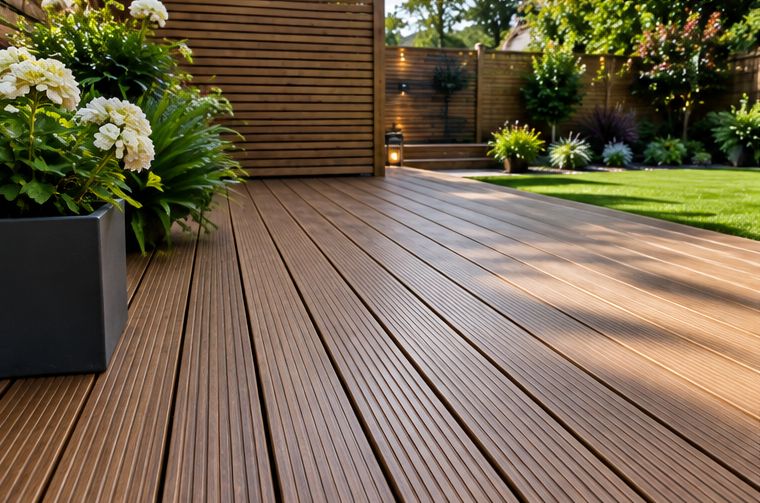
Composite boards suit Monmouth owners who would rather spend weekends in the garden than treating timber, and they cope well with damp riverside air.
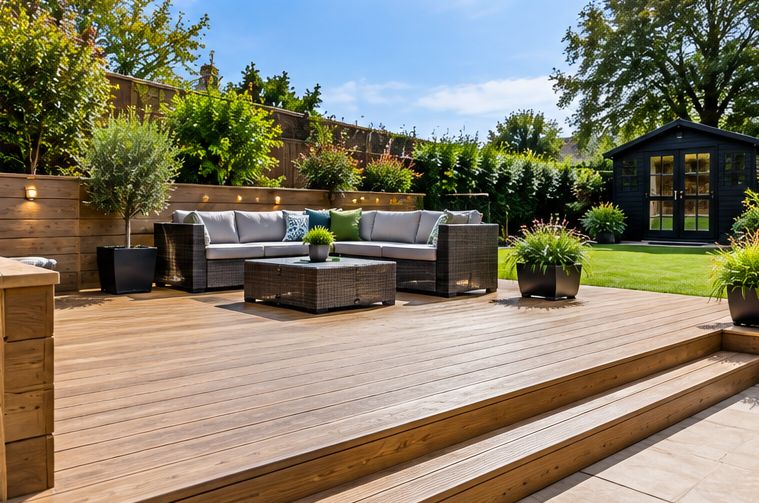
Timber is the traditional choice around Monmouth, from treated softwood on a family deck to oak or other hardwood that weathers to silver beside old stone.
Fascias, broad steps and simple balustrades help a deck look as if it belongs to a Monmouth period house rather than being added on.
Decks in the shade of big Monmouth trees often need new boards before their frames give out, so a careful check can save a full rebuild.
The most common question we hear about decking in Monmouth is whether to use oak or a treated softwood. Oak and other hardwoods are denser and tend to wear more slowly, and many people like the way they fade to a silver grey that matches old stone and slate. They are heavier to work and cost more to buy. Treated softwood is lighter, cheaper to start with and still lasts well when the frame is built properly and the boards are cleaned and oiled.
Composite is the third option for anyone who wants very little upkeep. Our local guide, oak or softwood decking for a Monmouth garden?, compares the two timbers, and how long should garden decking last? sets out what to expect from each material.
Low-lying gardens near Monmouth's rivers need a different approach from those on higher ground. A patio laid on wet soil can stay slick and green, while a deck lifted on footings stands clear of the worst of it and lets water drain away underneath. That is one reason decking works well on these plots.
It still needs care. Footings go down to firm ground, timber is kept well clear of the soil and nothing is built that would trap water against the house. On clay near the rivers, we also leave the ground beneath shaped so it sheds water rather than collecting it in a hollow under the deck, where it would sit and keep the frame damp all winter. If your garden is known to flood, please check the flood risk with Natural Resources Wales and talk it through with us before planning anything permanent. Our article on gardens near the Wye and Monnow covers wet ground in more detail.
From small period courtyards to big country gardens, we plan the deck around the place.
We will explain the real differences between oak, softwood and composite, and which suits your garden and how much upkeep you want.
Footings, airflow and drainage are planned for riverside plots that stay damp through the winter.
Low frames that leave old walls alone and a finish that sits well beside period stonework.
Across our area we score 4.8 out of 5 on Google and 10 out of 10 on Checkatrade. Have a look at our reviews page.
In the centre of Monmouth, a deck is often about making a small, shady space feel usable. We keep it low, fit it around old walls without fixing into them, and choose a board colour that sits quietly beside the house. Listed buildings and conservation area rules can apply in and around the historic centre, so check with Monmouthshire County Council before building anything raised. Our guide to garden design ideas for Monmouth period properties has more on suiting an older home.
On larger plots outside Monmouth, a deck can go wherever the view or the evening sun is best, with a path linking it back to the house. Mature trees are common in these gardens, and any pruning or crown lifting over a new deck is best done first through our tree surgery service in Monmouth. Our article on large rural garden makeovers around Monmouth shows how a deck fits into a bigger plan.
Real reviews from homeowners across Monmouth — rated 4.8 out of 5 on Google from 69 reviews and 10/10 on Checkatrade.
“Had my patio done by the company and could not be happier. Top quality work done and quickly too.”
“I was pleased to find Tony and his lads were absolutely great! Tony responded quickly & was very polite.”
“We were delighted with the work and materials, which were of very high quality. Tony and team helped us.”
Local and practical guides to help you plan the work.
One team for the whole garden, so a single visit can price everything you have in mind.
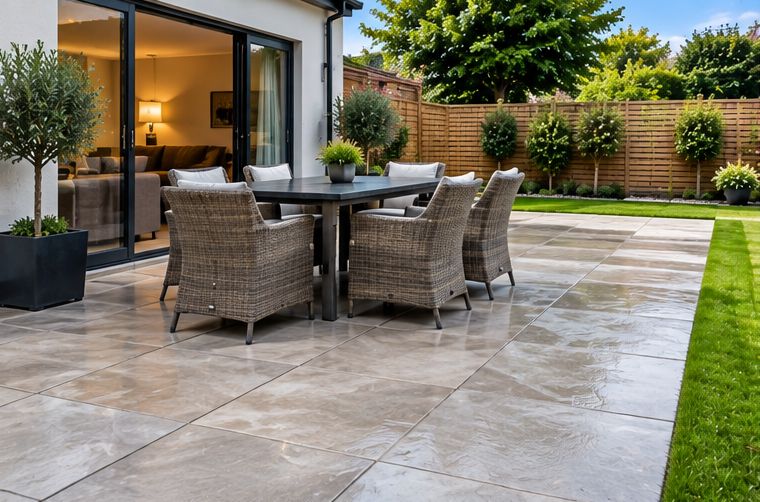
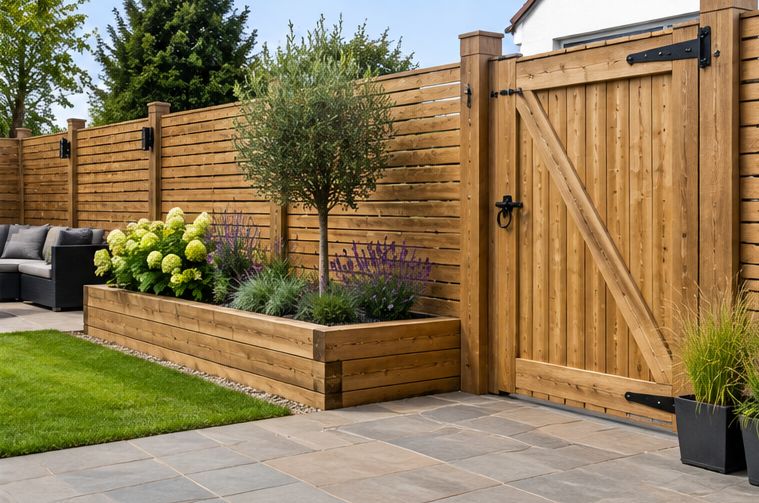
We cover Monmouth and the towns around it. Choose another area below.
T J Landscapes South Wales
24 Conway Road, Pontypool
Torfaen, NP4 6HL
We cover homes right across South Wales, from Cardiff and the coast up to the valleys and the Brecon Beacons.
It can be, especially beside an older house, as it is dense and weathers attractively. It costs more to buy and is heavier to work than softwood, so we will talk through whether the difference is worth it for you.
A deck on footings often copes better than paving on damp ground, but on land that genuinely floods we would want to understand the risk first. Check with Natural Resources Wales and we can plan around what you find.
If the house is listed or in a conservation area, extra rules may apply even to garden work. Please check with Monmouthshire County Council before building.
The material, particularly oak versus softwood or composite, the size and height, ground conditions, and how far materials have to travel from the road to the deck. We price it free after a visit.
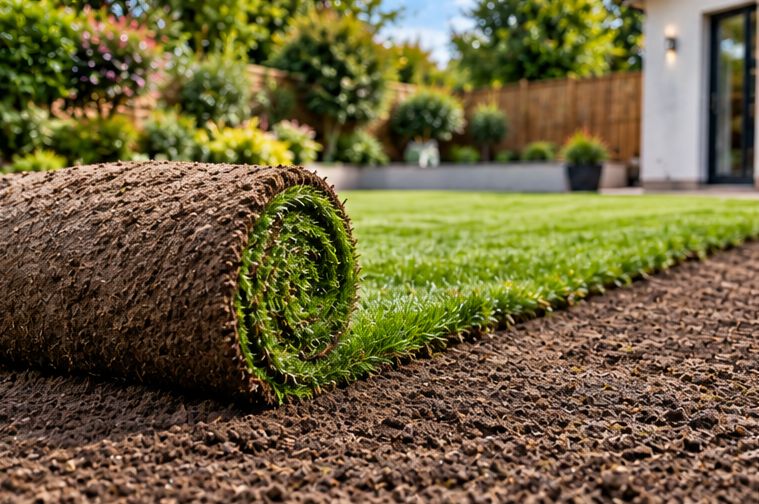
Yes. We often finish a deck with new turf in Monmouth so the whole area looks complete.
Tell us whether you are in the town or out in the countryside, how damp the ground gets and which material you are leaning towards.